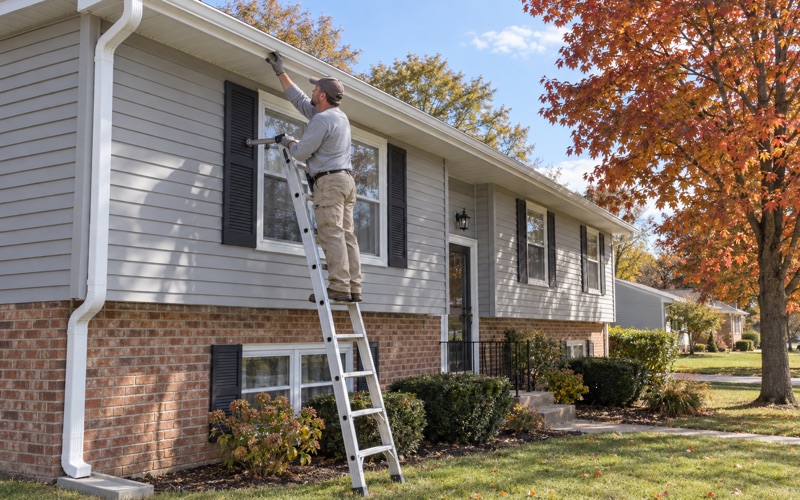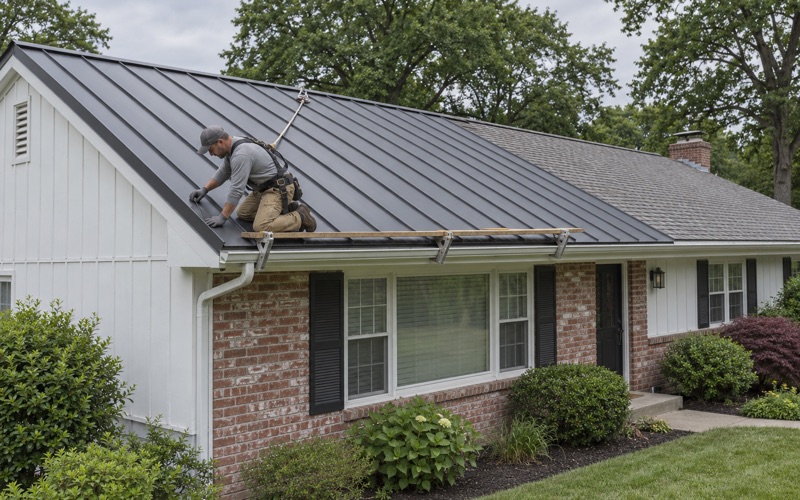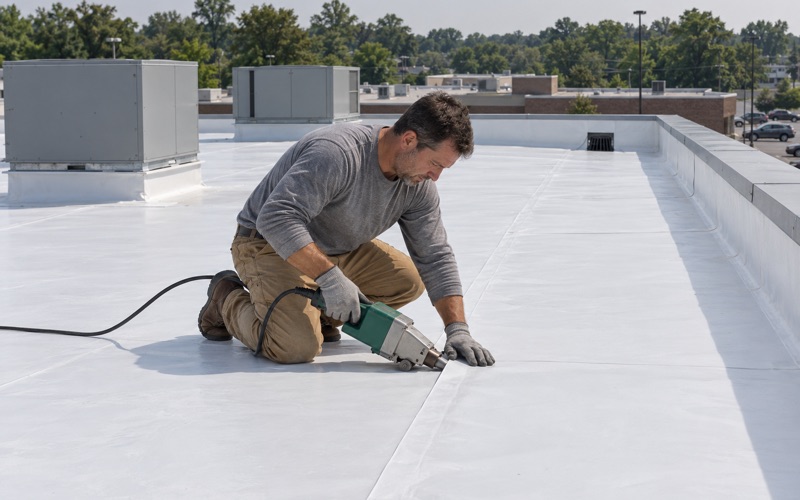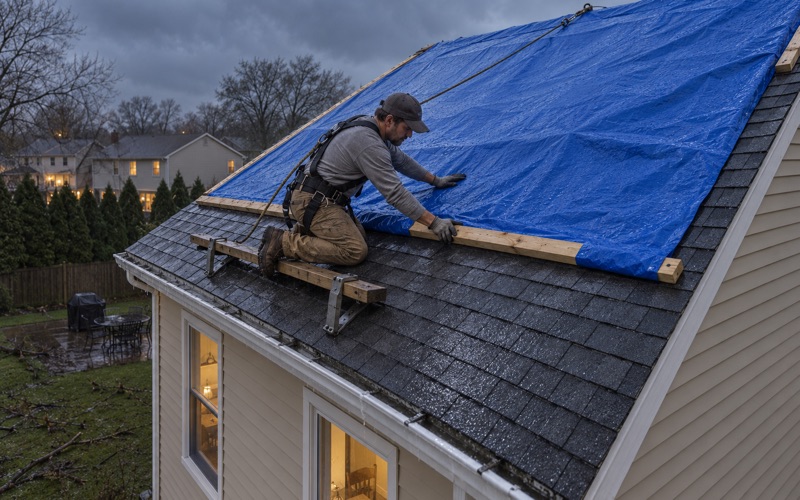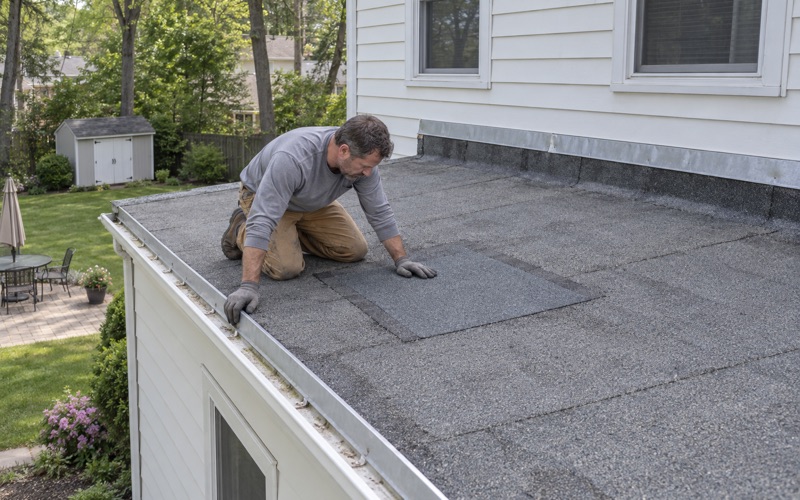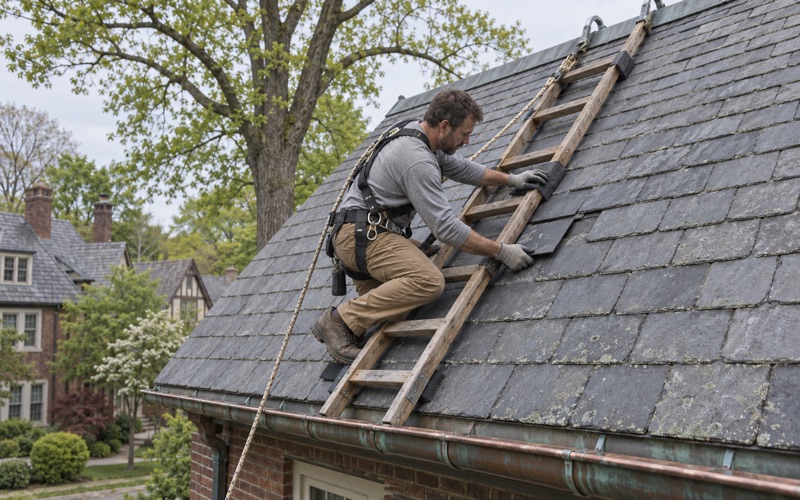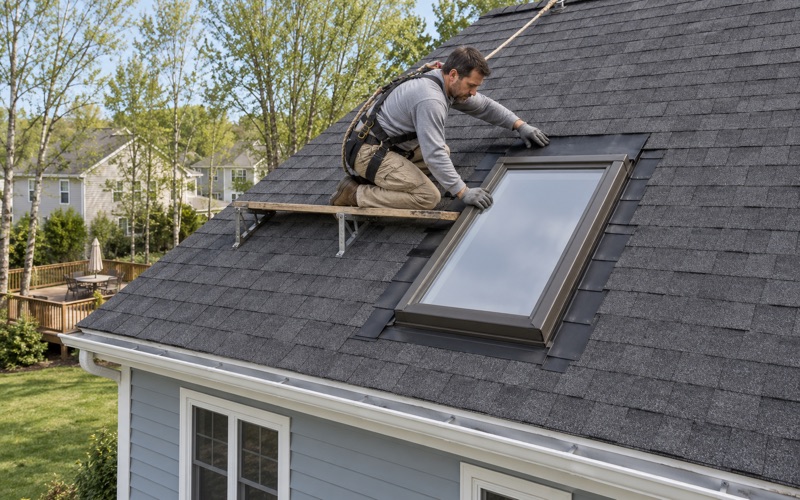
Cherry Hill Roofing approaches roofing in Woodbury with more than 20 years in the trade, and on houses like these the job is rarely only about shingles. Before we price a roof here, we look hard at what the roof edge carries: painted fascia, soffits, rake boards and trim that a tear-off, new drip edge or a gutter swap will open up.
That edge matters because of a federal rule, not a local one. EPA’s Renovation, Repair and Painting rule applies to work on houses and apartments built before 1978, and the roof job itself can be what crosses its line. Nobody can tell from the street whether a given board carries lead paint, so we plan the edge work as a question to answer, not an assumption.
Everything else follows from that. We still check the attic on every leak call, we still tell you plainly whether the roof can be repaired before replacement comes up, and our written scope still breaks tear-off, decking, underlayment, flashing, ventilation and gutters into separate lines. On an older Woodbury house, the edge work simply gets its own line too.
How Old Woodbury’s Houses Really Are
What the Census Counts Show
Woodbury’s housing stock is old by almost any measure. The Census Bureau’s 2024 five-year American Community Survey counts 4,718 housing units in the city, and 4,138 of them, or 87.7 percent, were built in 1979 or earlier. Of those, 3,569 units, 75.6 percent of the total, went up before 1960, and only 191 date from 2000 or later.
Those bands matter for one reason on a roof job. The survey’s age band stops at 1979, so the exact number of homes built before 1978 is not published, but the share that falls under the federal paint rule is plainly large. We treat the year your house was built as the first fact on the estimate.
The Oldest Layers
The oldest layer is big. The same survey counts 1,631 units built in 1939 or earlier, about a third of the city, and 2,523 built before 1950. The 1950s alone added 1,046 more. A house from any of those decades may carry several generations of paint on its trim, and that history is rarely written down anywhere.
None of that tells us what is on a particular board. A 1920s house may have had its fascia wrapped in aluminum decades ago, and a 1950s ranch may still wear its original painted rake. We look at the edge itself, board by board, before we decide how the job should be scoped, and we note what we find in writing.
What 1978 Means for a Roof Job
EPA’s Renovation, Repair and Painting rule, usually shortened to RRP, covers renovation work in houses, apartments and child-occupied facilities built before 1978. It is about disturbing paint, not about roofing as such. A re-roof only comes under it when the job disturbs painted surfaces beyond the rule’s minor-repair limits.
Built before 1978 does not mean lead is present. It means the rule’s requirements come into play once enough paint is disturbed. Paint on Woodbury houses has not been tested as a group, and we never tell an owner there is lead on their trim when nobody has checked. What we can do is measure how much painted edge the work will touch.
Looking for roofing closer to Lumberton? See Roofing in Lumberton.
Where the Paint Sits on a Roof Job
Not on the Shingles
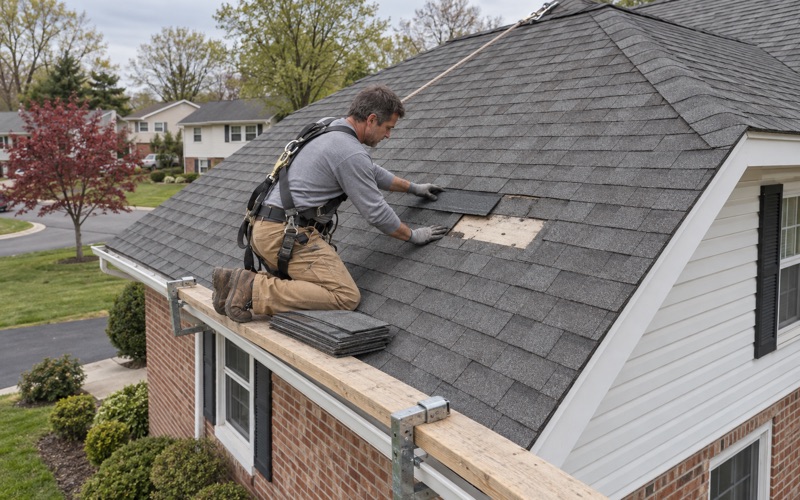
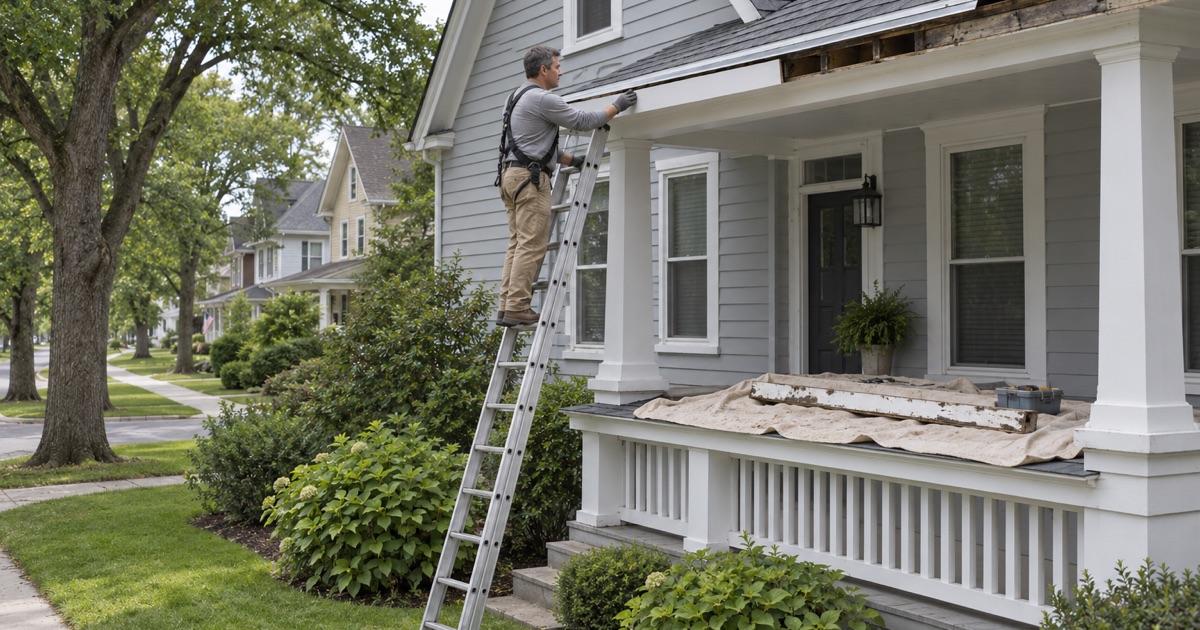
Asphalt shingles are not the painted part of a roof, and the paint rule has nothing to say about them. The painted surfaces sit at the edges and around the openings: the fascia board the gutters hang on, the soffit underneath the overhang, the rake boards that run up the gable ends, and the trim around dormers and cornices.
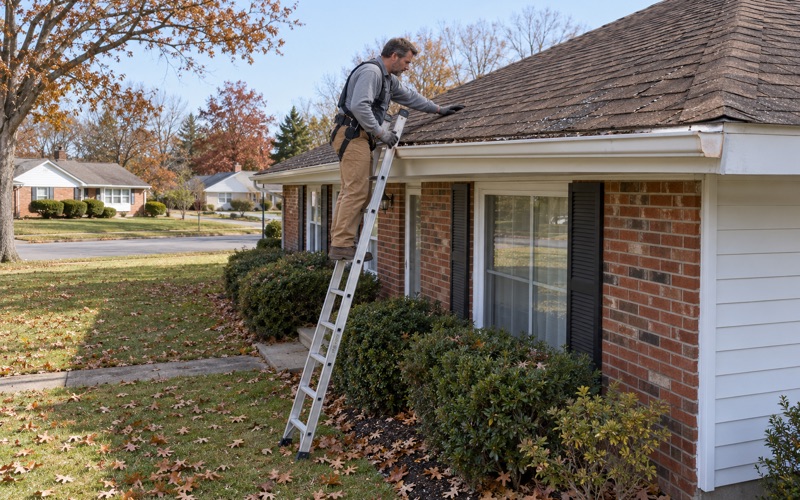
On many re-roofs, those boards are touched only lightly, if at all. On an older house the edge is often where the trouble has been building, though. Water that slipped behind a failed drip edge or an overflowing gutter tends to show up first as soft fascia and peeling paint along the eaves. That is the painted wood a roof job is most likely to disturb.
The 20 Square Foot Line
The rule has a minor-repair exemption. Outside a building, disturbing 20 square feet or less of painted surface falls under it, so a short run of fascia or a single damaged rake board can stay below the line. Past 20 square feet, the work is covered, and only a certified firm may perform it.
The count is for the whole project, not one board at a time. Twelve feet of fascia replaced on the front, a rake board on each gable and a section of soffit pulled to reach rot can add up quickly. That is why we total the painted area the scope will disturb before the estimate is written, not after the crew is on the ladder.
What That Means for the Estimate
We do not hold the EPA firm certification the rule requires, and we say so up front. When our measurement shows a Woodbury job will disturb more than 20 square feet of paint on a pre-1978 house, the written scope flags that edge work as covered by the rule, so you know before signing that it needs a certified firm.
Often the better answer is a narrower scope. If the fascia is sound, it can usually stay in place, with new drip edge set over it rather than the board being pulled, and gutters can sometimes go back on the same line. Where rot forces the issue, we show you the boards and price the options side by side.
Fascia, Soffits and Rake Boards at Tear-Off
Fascia Behind the Gutters
Fascia is the board that caps the rafter tails, and on most houses it carries the gutter. When a roof is torn off, the old drip edge comes off with it, and that metal usually laps over the top edge of the fascia. Pulling it can lift paint along the whole eave, which is why we count the eaves first.
Rotted fascia is a separate decision from the roof, and we keep it that way on paper. If a board is soft, we photograph it and show you before anything is replaced, the same way we handle damaged decking under the old shingles. The fascia replacement then appears as its own line on the written scope, with its own length in feet.
Soffits Under the Overhang
Soffits rarely need to come down for a re-roof. They matter when the plan adds ventilation, because a ridge vent works only with intake air coming in low, and on many older houses that means cutting or replacing soffit panels. Painted wood soffit cut for new vents counts toward the same 20 square feet as the fascia.
So ventilation is a trade-off we talk through rather than assume. A ridge vent with properly sized soffit intake, measured by net free area, helps a roof last, but on a pre-1978 house it may decide whether the project falls under the paint rule. We give you both versions of the scope so the choice is yours.
Rake Boards and Gable Trim
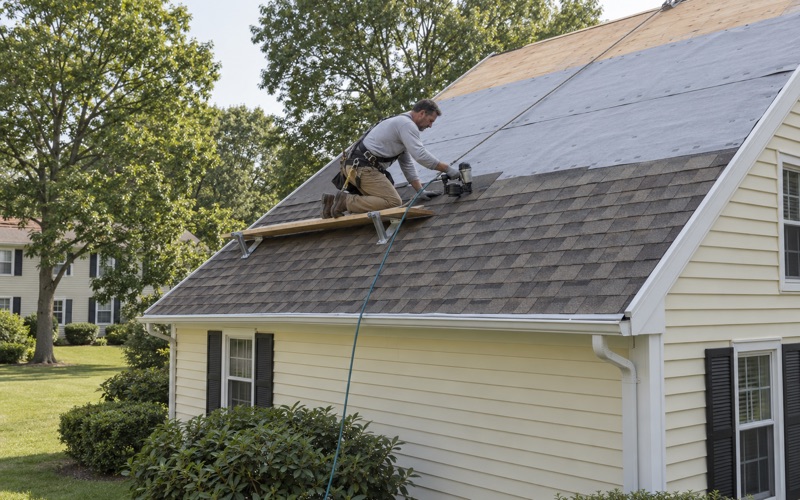
Rake boards run up the sloped edge of each gable, and they are often the most weathered painted wood on the house because nothing shelters them. At tear-off, the old rake drip edge and the edge shingles come away right along that painted face. When rake trim is split or cupped, replacing it adds up fast in square feet.
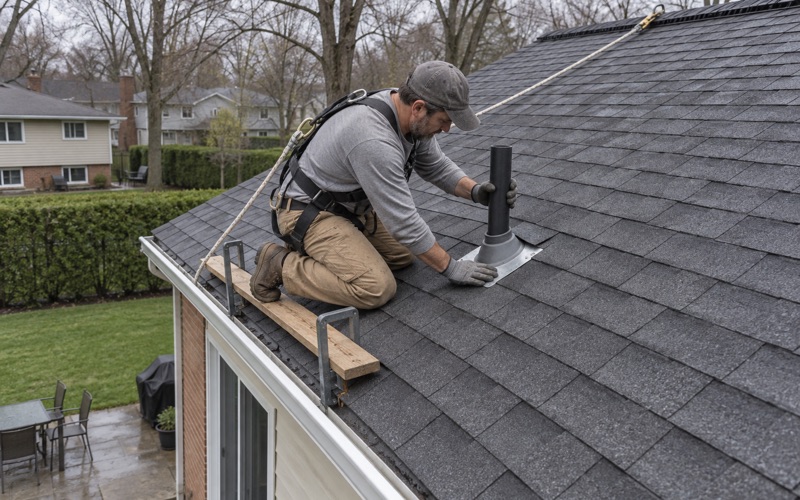
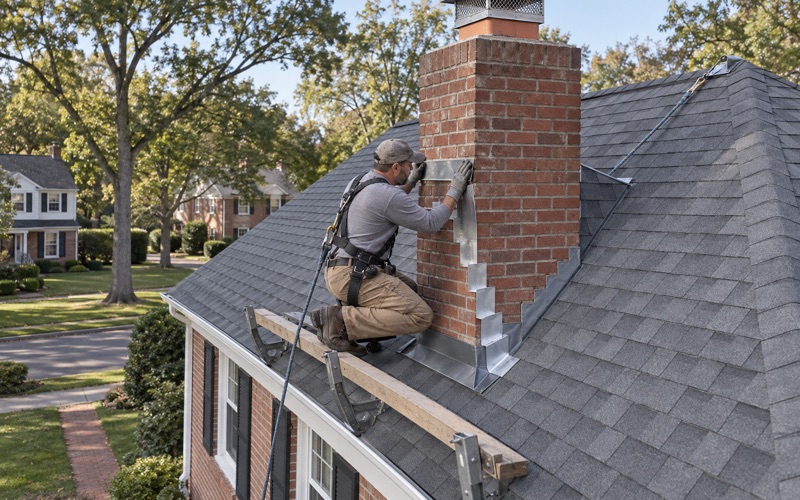
Dormers multiply the problem. Each one has its own small rakes, cheek walls and trim, and on some houses the dormer sides are painted siding rather than shingle. Where a dormer meets the main roof we replace the step flashing instead of caulking over it, so we plan that disturbance into the count from the start.
Drip Edge, Gutters and Multi-Unit Buildings
New Drip Edge on Painted Wood
Drip edge at the eaves and rakes is one of the cheapest parts of a new roof and one of the most useful, since it carries water past the fascia instead of letting it wick behind. On a house that never had it, adding drip edge means working tight against painted boards along every edge of the roof.
Where the top of the fascia is rotted, the drip edge has nothing sound to sit over, and the board has to be dealt with first. We would rather tell you that on the estimate than find it halfway through the eave. The goal is a straight answer on how much painted wood the job really opens.
Gutters and Leaders
Gutters hang from the fascia, so replacing them means pulling hangers and spikes out of painted wood. Seamless aluminum gutters and leaders are the usual replacement, and they need a solid board behind them. On our written scope, gutters stay a separate line from the roof, so you can decide whether to change them now or later.
Cleanup matters more here than on a newer house. Paint chips and debris from the edge work land where gutters drip, along the foundation and in the beds. Our crews clean the yard, driveway and gutters at the end of every work day, including a magnet sweep for roofing nails, rather than leaving it for the final day.
Two-Family Houses and Apartments
The rule names apartments as well as houses, and Woodbury has a real share of both. Two-unit buildings hold 381 of the city’s housing units, 298 of them rented, and 1,457 of 4,206 occupied homes are rented. For an owner who rents out a unit, the paint question is the same, with tenants living under the edge being worked on.
When a job does fall under the rule, it carries pre-renovation education requirements, meaning occupants get information about the work before it starts. That is one more reason we settle the square-foot count before signing rather than during the job. On any multi-unit house, we schedule the edge work so each household knows which side is being opened and when.
Planning the Whole Job Before It Starts
Woodbury, founded in 1683 and now the Gloucester County seat, has far more housing from before the paint rule than after it. Whatever street a house sits on, we start the same way: a look in the attic, a walk around the edge, and an honest call on repair versus replacement before any price is written.
The contract then follows New Jersey’s home improvement rules, cancellation notice included, and lists the edge work, decking at a set per-sheet price, flashing and gutters as their own lines. Shingle color is chosen against the brick or siding on your house with samples held up on site, so the new roof suits the old trim it sits above.
- 20+ Years on Local Roofs
- Repair-First Advice
- Itemized Written Scopes