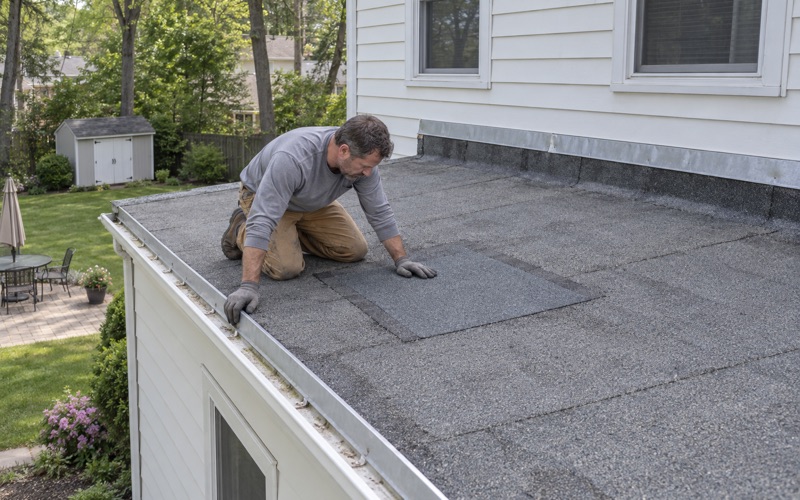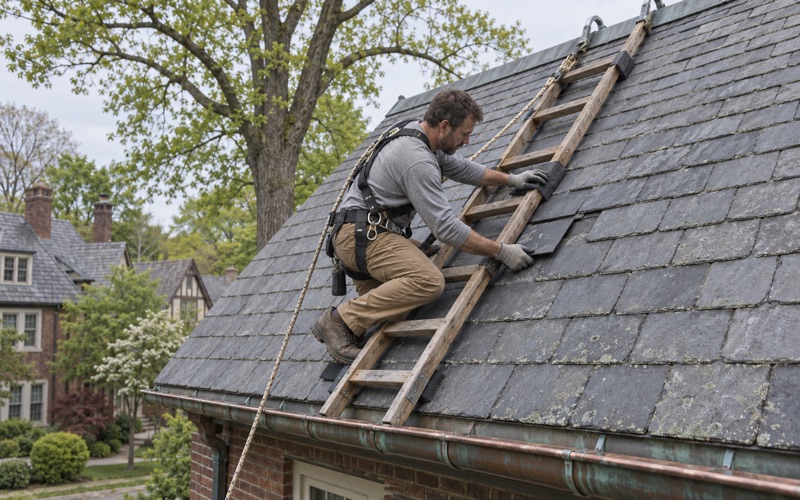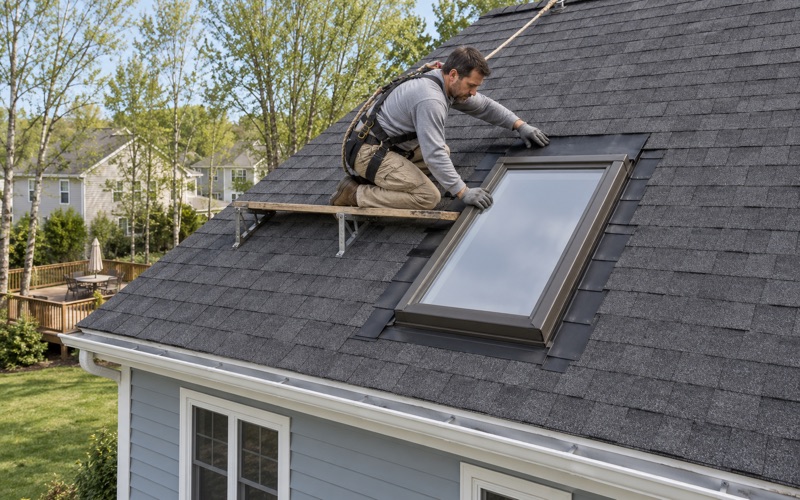
Cherry Hill Roofing brings more than 20 years in the trade to roofing in Waterford, where the work comes with a question most towns never raise: how well will this roof hold up if a brush fire burns close by? We repair and replace shingle, metal and flat roofs, and on a house here we treat the covering, the gutters and the attic openings as one system that faces the same risk.
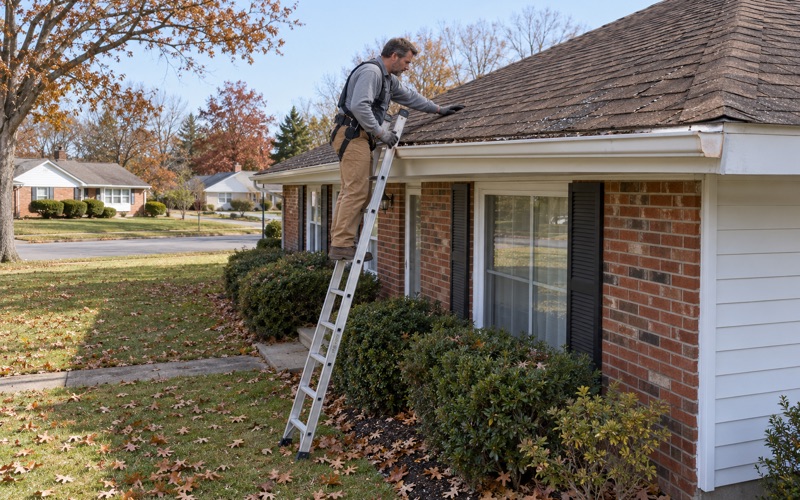
That does not mean every job here becomes a fire project. Most calls start with a leak, and every leak visit includes a trip into the attic as well as onto the roof, so we find where the water actually enters before we put a price on anything. You hear whether the roof can be repaired before anyone mentions replacement.
When replacement is the right answer, it is also the best moment to change what the roof is made of. The sections below cover what the township’s setting means for that choice, what the Pinelands Commission suggests for roofs, and how we plan a tear-off on the houses most common here.
Waterford Inside the Pinelands
A Township Surrounded by Pine Forest
Waterford Township in Camden County lies entirely inside the state-designated Pinelands Area, one of only two Camden County municipalities the Pinelands Commission lists that way. Wharton State Forest reaches into the township, so the forest here is part of the town itself rather than a park somewhere down the highway.
That setting is why we talk about fire on a Waterford roof when we might not raise it in a more built-up suburb. Pine needles, dry leaf litter and wind-carried embers can all reach a roof here more easily, and the materials on top decide how much of that the house can shrug off.
The 2023 Dragway Fire
On August 21, 2023, the Dragway Fire started in Wharton State Forest near Jackson Road and the former Atco Dragway. Camden County reported that it consumed more than 1,200 acres of pinelands in Waterford Township and parts of neighboring Burlington County, and later coverage put the total higher still. The New Jersey Forest Fire Service fought it, and Jackson Road was closed from Tremont Avenue to Atsion Road.
The county said the fire was not a threat to any structures, and no report we have seen describes a home or roof damaged. We mention it for a different reason: it shows that a large forest fire inside the township is recent history, not a story from decades ago, and it gives homeowners a recent, local reason to think about what is on their roof before the next fire season.
A Longer Memory of Pine Barrens Fires
The Pinelands Commission’s own wildfire sheet recalls a single fire in 1963 that burned close to 183,000 acres, consumed 186 homes and 197 buildings, and killed seven people. We read the roof advice on that same sheet as practical guidance rather than background reading, and the sections below explain how we put it to work.
None of this calls for alarm, and plenty of sound roofs in the township are ordinary asphalt shingle that will serve for years yet. The point is narrower: when a roof is coming off anyway, the choices that lower ember risk are easier to make then than at any other time in the roof’s life.
Looking for roofing closer to Southampton? See Roofing Services in Southampton.
What the Pinelands Commission Advises for Roofs
Class-A Coverings
The Commission’s ‘Protecting Your Home from Wildfire’ sheet asks homeowners to consider Class-A asphalt shingles, slate or clay tile, metal, or terra-cotta tiles for roof construction. Class A is the top fire rating under ASTM E108 and UL 790, the tests that measure how a covering resists flame spread and burning embers landing on it.
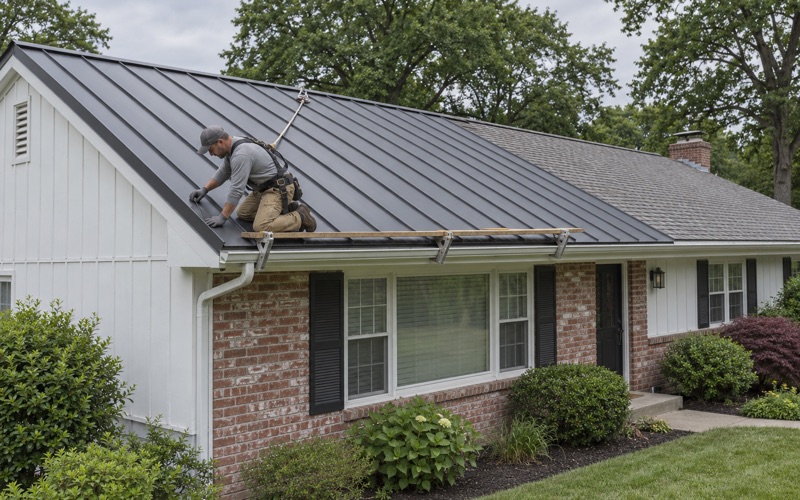
That wording is advice, not a rule a Waterford homeowner has to meet, and we present it that way. In practice it narrows the choice less than people expect: many architectural shingles such as GAF Timberline HDZ, Owens Corning Duration and CertainTeed Landmark carry a Class A rating, and standing seam metal is another common route.
What the Sheet Says About Cedar Shake
The same sheet is blunt on one point: ‘Do not use cedar shake shingles!’ Wood shakes are the covering most likely to catch from a wind-blown ember, which is the scenario the whole sheet is written around. That makes the shake roof the clearest case where a re-roof changes the house’s fire picture.
Cedar shakes are not banned, and we will talk through the choice honestly if an owner wants them. When the look is what matters, a dimensional shingle or metal panel can come close, and we hold color samples against the siding or brick of the actual house so the change does not read as a compromise.
Fire-Resistant Sub-Roofs
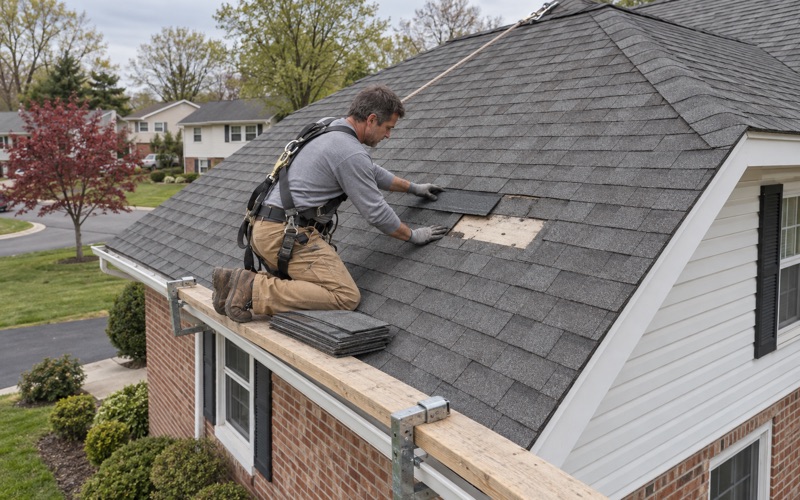
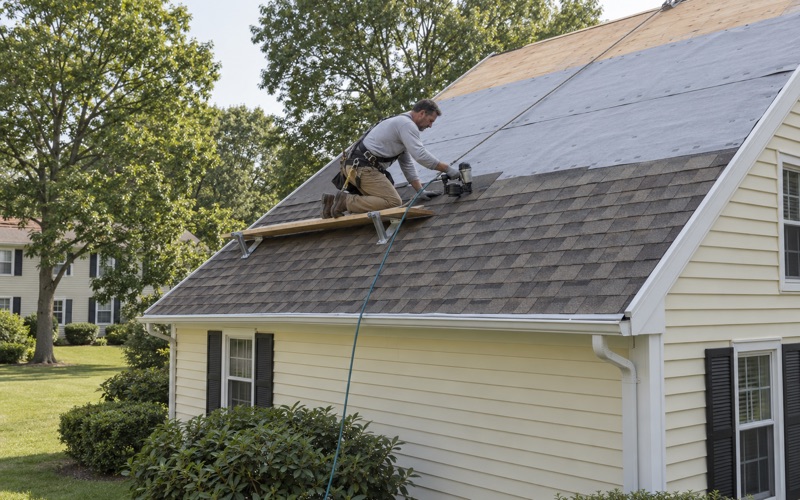
The sheet adds that fire-resistant sub-roofs can provide added protection. On a tear-off, that is the layer we can actually see and change: the decking, the underlayment and whatever sits between the shingles and the attic. A covering’s fire rating is earned as a tested assembly, so we build the layers underneath the way the manufacturer specifies.
If rotted decking turns up once the old roof is off, we photograph it and show you before any sheet is replaced, at the per-sheet price written into the contract. Upgrading the underlayment or decking is a choice we price openly, so you can see exactly what a fire-conscious build costs beyond a standard tear-off.
Pine Needles, Gutters and Roof Openings
Needles in Gutters and Valleys
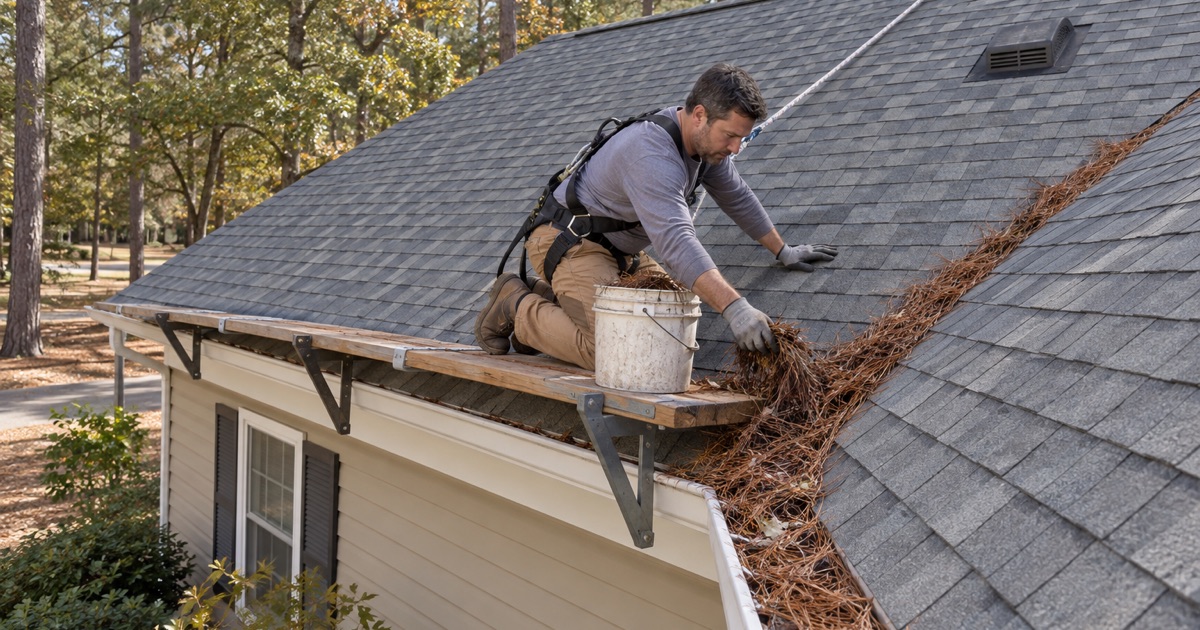
The Commission’s sheet tells homeowners to clean roofs and gutters regularly so pine needles do not build up. A gutter packed with dry needles is a ready bed for an ember, and the same mat that forms in a valley also holds water against the shingles long after a rain.
That makes needle buildup both a fire concern and a leak concern on the same roof. When we look at a leak on a wooded lot, we check the valleys and the gutter line early, and on a replacement we can fit seamless aluminum gutters and leaders pitched to drain cleanly, which makes them easier to keep clear.
Screening Roof and Attic Openings
The sheet also says to screen openings in the roof, attic and floors. Embers do not need a flame front to start trouble; they ride the wind and settle into any gap they find, and an open soffit or a torn vent screen leads straight into a dry attic.
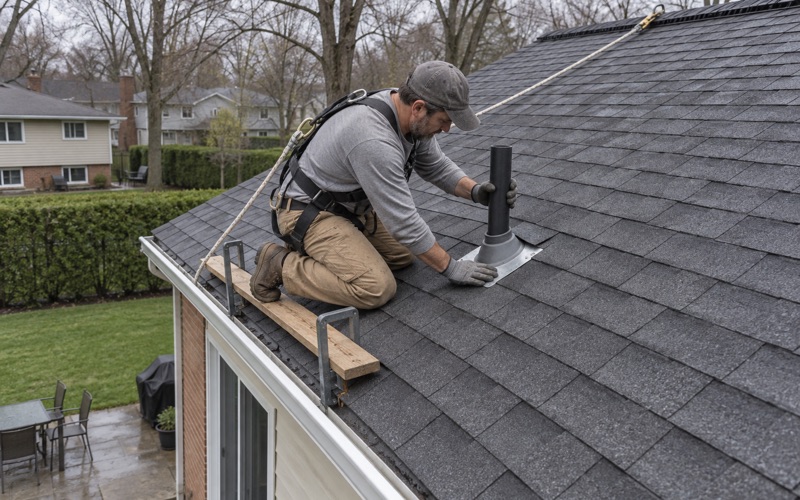
Since the attic is already part of how we inspect, we see the underside of these openings as a matter of routine. On a re-roof we plan the ridge vent and soffit intake for real net free area, then check that each opening is screened and that gable vents and pipe boots are sealed rather than left gapped.
Flashing and Edges Where Embers Lodge
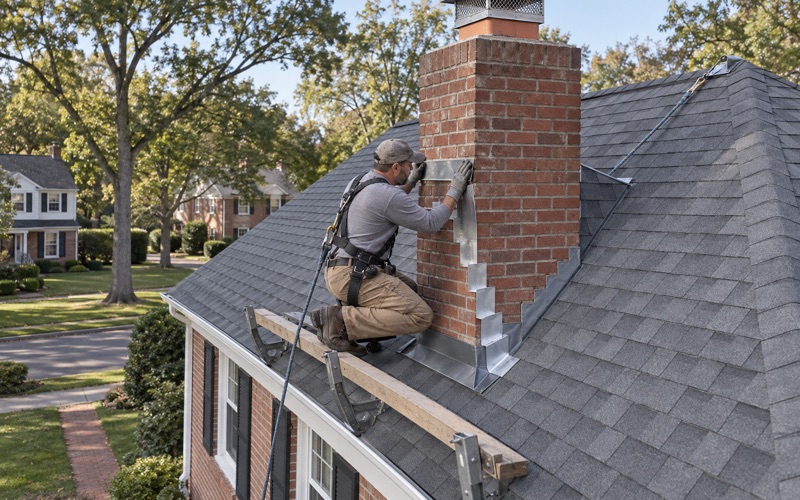
Embers and needles collect in the same places water does: along walls, around chimneys, in the crease where two roof planes meet. When we redo a roof, step flashing, counter flashing and the chimney cricket are replaced rather than caulked over, which leaves fewer open seams for anything to work into.
Drip edge at the eaves and rakes closes the gap between the deck and the fascia, and kick-out flashing keeps runoff off the siding below. Neither is exotic, but both are easy to skip on a quick job, and on a lot backing onto pine woods the small gaps are exactly where trouble begins.
Re-Roofing Waterford’s 1970s and 1980s Houses
What the Housing Stock Looks Like
Census figures show Waterford’s housing leans heavily on two decades. Of 3,797 housing units, 1,055 were built in the 1970s and 776 in the 1980s, and 3,135 are detached houses. A house from those decades may be on its second covering by now, sometimes with original flashing and vents still in place underneath.
That pattern shapes our estimates. A tear-off on a house of that age is where we expect to look closely at decking along the eaves, intake venting and flashing that may have been patched rather than renewed, and the written scope lists tear-off, decking, underlayment, flashing, ventilation and gutters as separate lines so nothing is buried in one total.
Choosing a Covering for a Wooded Lot
For a Waterford house near the forest edge, we usually walk owners through three Class A paths: a laminated asphalt shingle, standing seam metal, or, on a house framed for the weight, slate or tile. Each appears on the Commission’s list, and the right one depends on the frame, the budget and how much maintenance the owner wants to take on.
Metal sheds needles readily and offers no combustible surface on top, while a quality architectural shingle keeps a familiar look at a lower upfront cost. If the house has solar panels, removal and reinstall go into the schedule from the start rather than surfacing on tear-off day.
Getting to the Job and Cleaning Up
Waterford sits where U.S. Route 30, the White Horse Pike, meets Route 73 on the township’s west side, with County Routes 534 and 536 running through, so material deliveries to Atco, Atco Lake and the rest of the township are straightforward. We tell you up front when the dumpster arrives and when it leaves.
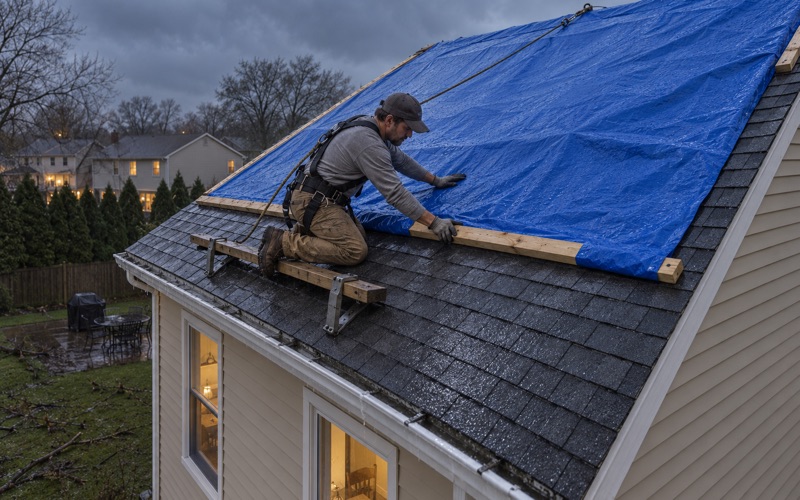
At the end of each work day the yard, driveway and gutters are cleaned and the ground gets a magnet sweep for nails. On a wooded lot that matters twice over: stray nails hide in pine litter, and loose shingle scraps left in a gutter are just more fuel. If storm damage prompted the call, we photograph and write it up for your own claim and will meet the adjuster on site.
- 20+ Years on Local Roofs
- Repair-First Advice
- Itemized Written Scopes