Cherry Hill Roofing handles roofing in Upper Providence Township with more than 20 years in the trade behind every estimate we write. We repair, re-roof and inspect residential roofs, and each leak call starts with a look inside the attic as well as on the roof itself, so the water is traced to the point where it actually gets in before anything is priced.
Our first job on any visit is an honest answer about repair. If a roof has years left in it, we say so and price the fix, and replacement only comes up when the roof genuinely calls for it. When it does, the written scope breaks tear-off, decking, underlayment, flashing, ventilation and gutters into separate lines, so a second estimate can be laid beside ours and compared one item at a time.
This page is about the storm that shapes roof planning here more than any other. A late-winter nor’easter can bring wind, heavy wet snow and falling limbs in the same night, and houses set among tall trees tend to feel that combination first. Below is what the local record shows, what we check afterward, and how we plan work on a wooded lot.
Winter Storms Riley and Quinn in Upper Providence
What the township recorded in March 2018
Upper Providence kept its own account of the March 2018 nor’easters. The township’s Spring 2018 newsletter described Winter Storm Riley as the third most destructive storm in PECO’s history, affecting 750,000 customers across the utility’s territory. Fire Marshal and Emergency Management Coordinator Alan Mancil called it the worst storm he, the fire chief and the police chief could recall.
The numbers behind that statement are specific. The township’s five-person public works crew cleared more than 45 fallen trees and worked around the clock for days, while downed trees closed more than 17 streets. Seven of the sewer authority’s nine central pump stations lost power, and a Pennsylvania Forestry team met at Rose Tree Park to help reopen the roads.
Baltimore Pike and Winter Storm Quinn
One closure in that record matters for anyone planning work afterward. Baltimore Pike was shut for two days by downed trees, a reminder that getting a crew and materials to a house can be harder than usual for a while after a storm like this. Winter Storm Quinn then followed Riley, the second of the March 2018 nor’easters the newsletter covered.
Two storms in a row change how we think about a roof check. A shingle loosened in the first storm may hold until the second one finds it, and a small opening can let in water for weeks before a stain shows on a ceiling. That is why we treat a late-winter storm sequence as one event and look at the roof once both have passed.
What the record does not say
The newsletter is careful, and we want to be equally careful. It reports fallen trees, closed streets, outages and no injuries; it does not describe damage to any house or roof, and it gives no wind speed or snowfall figure for the township. Anything we say about roofs and these storms is our own reasoning from what a tree-heavy storm tends to do, not a claim from the record.
Upper Providence sits in National Weather Service forecast zone PAZ070, served by the Mount Holly office. That zone is where storm watches and warnings for the township are issued, so it is the one worth following when a late-winter system is on the way, and a forecast is the right moment to clear gutters and note any shingles that already look loose.
Looking for roofing closer to Bordentown Township? See Bordentown Township Roofing.
Nor’easter Wind, Fallen Trees and Your Roof
Limbs, debris and punctures
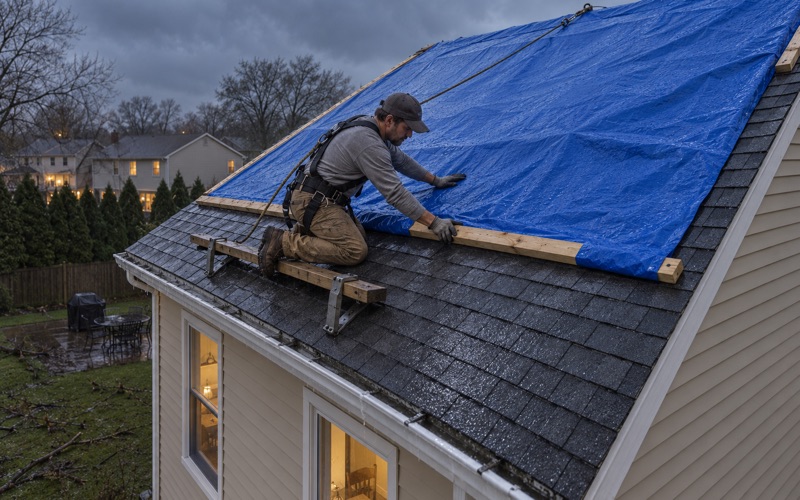
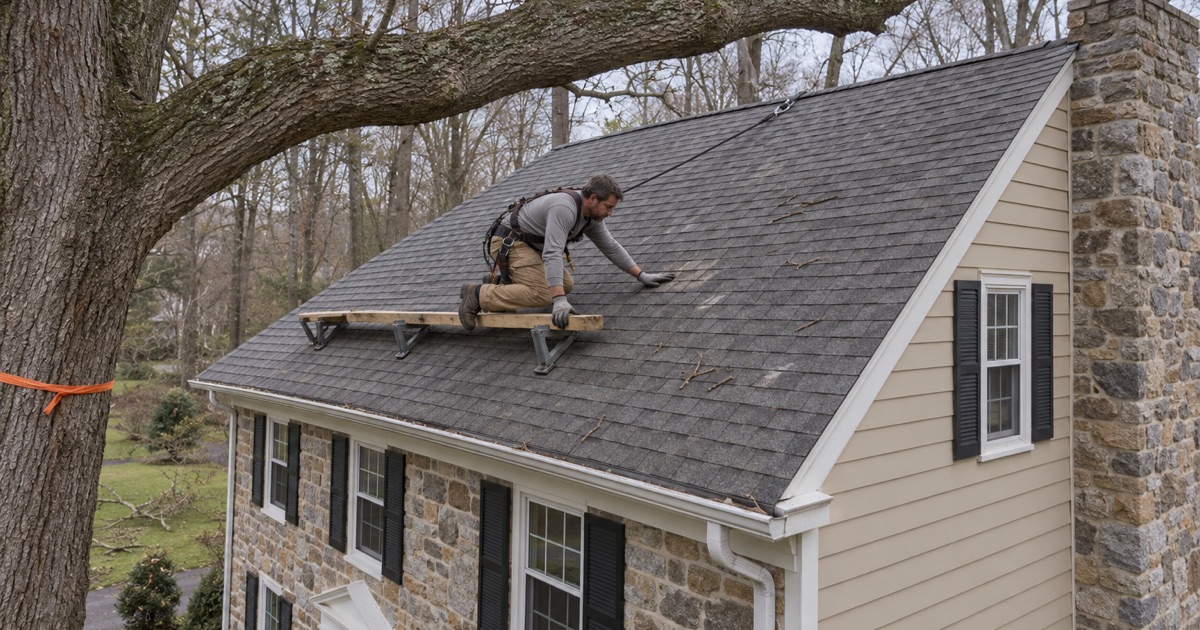
When a storm brings down more than 45 trees on public roads alone, limbs on private lots are a reasonable thing to worry about. A heavy branch landing on a roof can crack shingles, split a ridge cap or punch through to the decking, and the damage is not always visible from the driveway. Smaller debris piled in a valley or behind a chimney can hold water against the roof long after the storm.
Wind adds its own wear. Gusts working at the edge of a roof can lift shingles at the eaves and rakes, break the seal strip, and leave tabs that lie flat again once the wind drops. We look for creased shingles and missing granules along those edges, and we check that the drip edge is still fastened tight.
Checking a roof after a late-winter storm
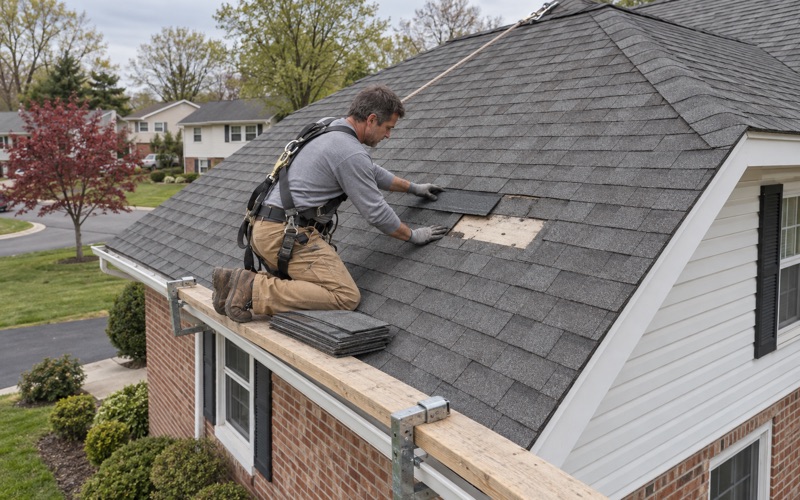
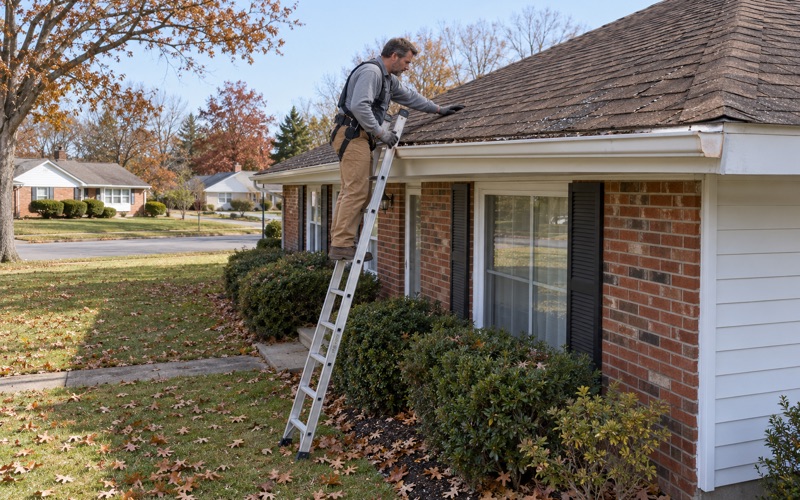
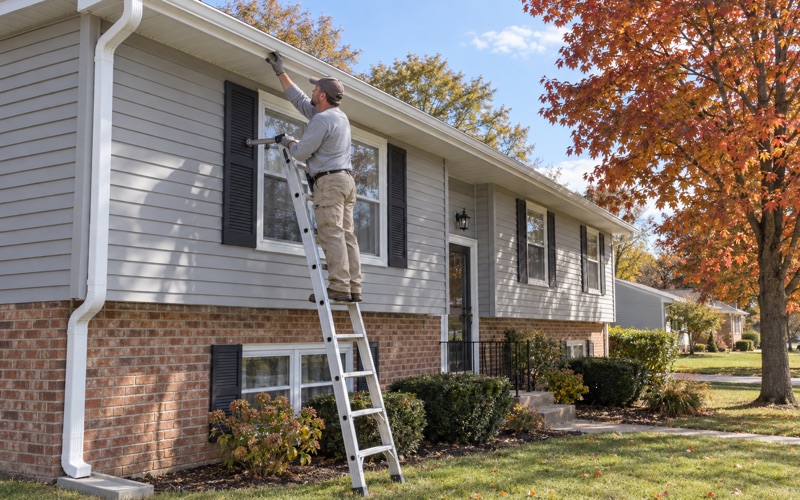
Our post-storm check starts in the attic. With a flashlight on the underside of the decking, fresh water marks, damp insulation and daylight around nails or vents show us where the outside damage really is, and that tells us which part of the roof deserves the closest look. Then we go up and walk the roof itself, or inspect from a ladder where the pitch calls for it.
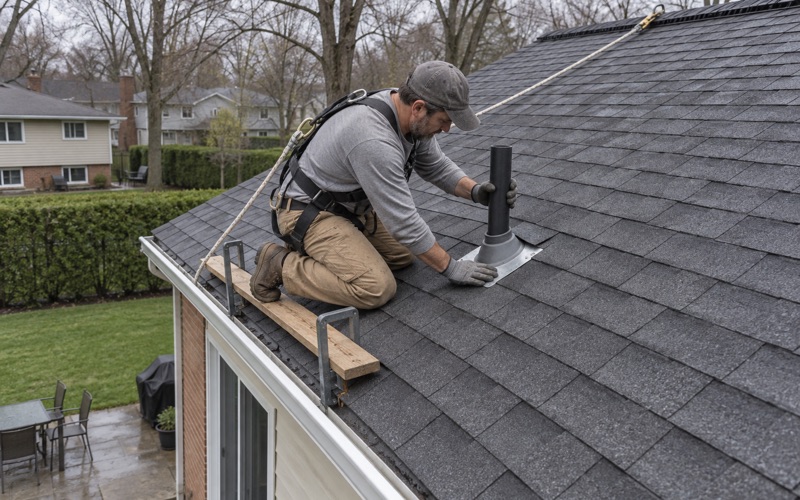
On the roof we follow the places storms usually find first: flashing at chimneys and walls, pipe boots, skylight curbs, valleys and the ridge. Gutters and leaders get checked for bent hangers and for debris that will send meltwater back under the shingles. Everything we find is photographed and written up so you have a clear record of the condition after the storm.
Storm documentation for your own claim
If the check turns up storm damage, the photographs and written notes are yours to use with your insurer. We put them together for the owner’s own claim rather than filing anything on your behalf, and when you ask, a member of our crew will meet the adjuster at the house to walk the roof together.
We also tell you plainly when a storm has done no real harm. A few loose granules or a single lifted tab calls for a repair at most, not a new roof, and we would rather say so on the first visit than let a small fix grow into a large estimate.
Wooded Lots Near Ridley Creek State Park
Detached houses among mature trees
Most homes in Upper Providence are detached houses. Census figures count 3,079 detached units out of 4,288, and 2,761 of those detached houses are owner-occupied. A detached house has its roof exposed on every side, with no shared wall, and on a lot with tall trees it often has branches over more than one slope.
The township lies between Ridley Creek on the west and Crum Creek on the east, and most of Ridley Creek State Park sits within it toward the northern edge. Houses near the park and along the creek corridors are where we most expect overhanging limbs, shaded roof planes that stay damp, and leaves gathering in gutters and valleys through the fall.
Shade, moss and clogged gutters
A roof plane that rarely sees direct sun dries slowly after rain and snow. Over time that can encourage moss and algae, which hold moisture against the shingles and lift their edges. We clear what is there, look at whether trimming back the canopy would help, and point out any area where the shingles are wearing faster than the rest of the roof.
Gutters under trees fill quickly, and a packed gutter in late winter can hold ice and meltwater at the eave. Where the roof is being redone, we add a self-adhering ice and water barrier along the eaves and size seamless aluminum gutters and leaders to carry what the trees and the roof send their way.
Working safely on a tree-covered lot
Mature trees also shape the work day itself. We plan where the dumpster and material delivery go so they avoid root zones and low limbs, protect plantings around the house, and keep tear-off debris off the lawn as much as possible. At the end of each day the yard, driveway and gutters are cleaned, and a magnet sweep picks up stray roofing nails.
Shingle color matters on a wooded lot too, because a roof seen through trees reads differently than one in open sun. We bring samples to the house and hold them up against the actual brick, stone or siding, so the choice is made in the light the roof will live in.
Replacing a Roof in Upper Providence
The township roofing permit
The township lists a roofing permit among the permits required before starting any project, with inspections handled by its third-party inspection agency, Linn Architects. Under the 2026 fee schedule, residential roofing is charged at $25 per $1,000 of cost with a $200 minimum, and work done without a permit carries a $200 residential penalty.
We build the permit into the schedule and the written scope from the start, so it is a known line rather than a surprise. The permit cost is a small share of a re-roof, and skipping it is a false saving, since the penalty is charged in addition to the fee.
Decking and flashing at tear-off
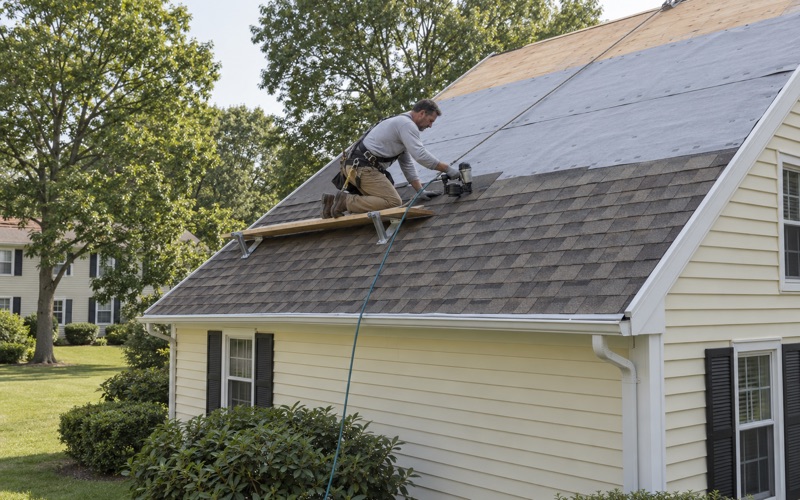
Once the old roof is off, the decking underneath finally shows its condition. If a sheet is soft or rotted, we photograph it and show you before it is replaced, at the per-sheet price already written into the contract, so the final bill holds no unexplained lines.
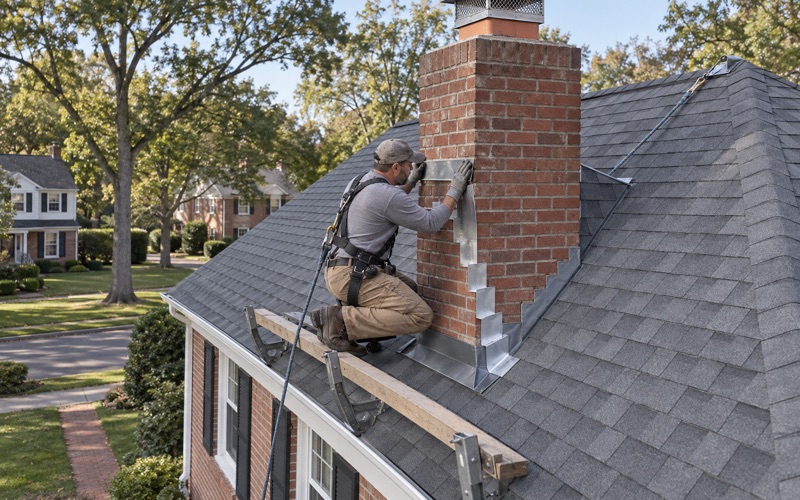
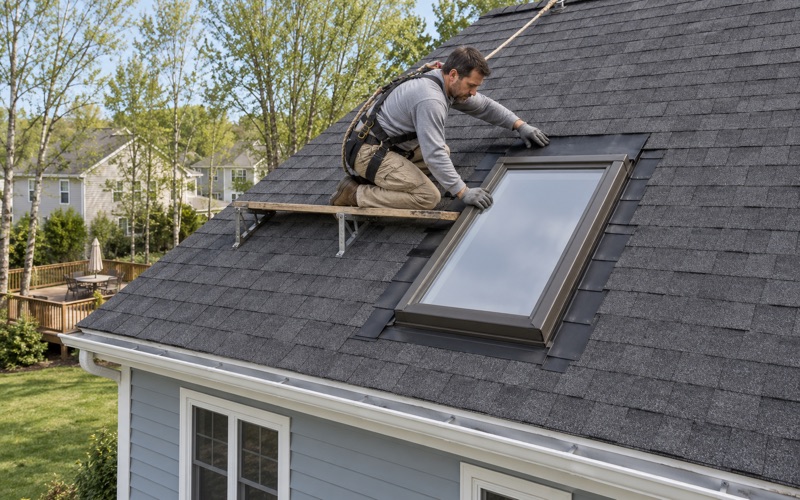
Flashing gets the same attention. At chimneys, sidewalls, skylights and anywhere two roof planes meet, we replace the step flashing, counter flashing and apron pieces with new metal instead of caulking over the old, and we add a cricket behind a wide chimney where water tends to pool. Those are the joints a wind-driven storm tests hardest.
Materials, slate and solar
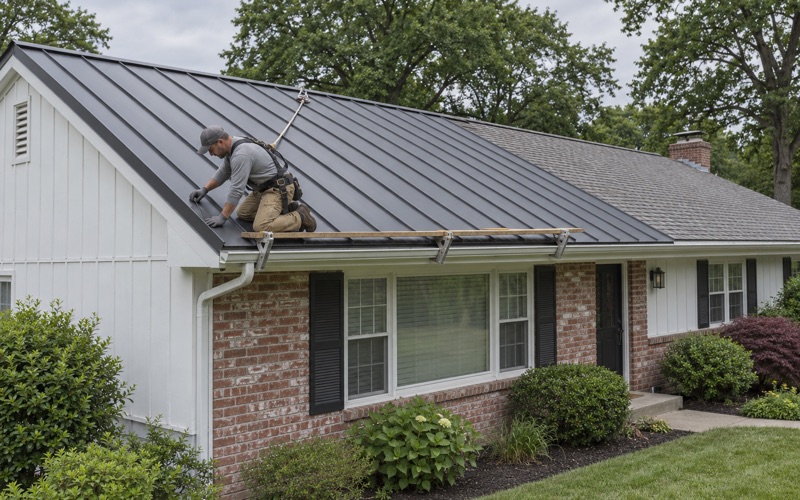
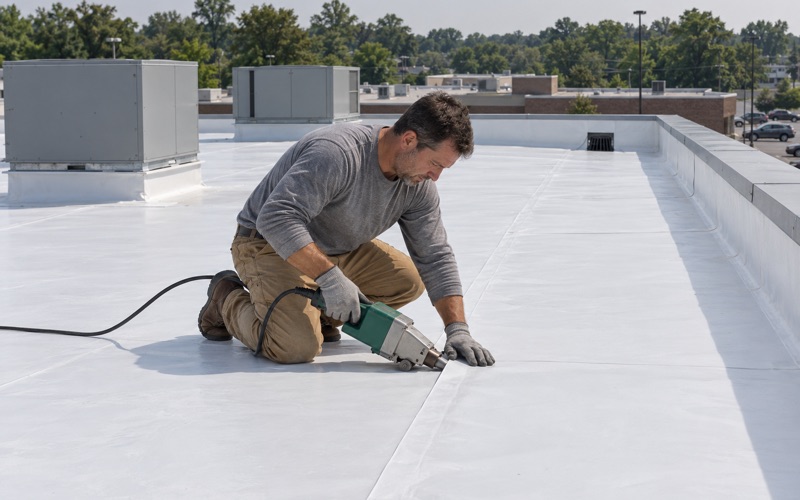
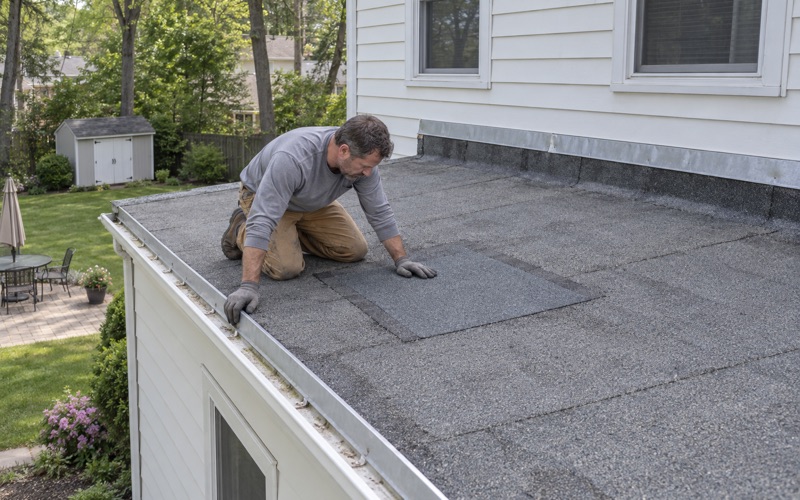
For most pitched roofs we install architectural shingles such as GAF Timberline HDZ, Owens Corning Duration or CertainTeed Landmark, and we can point you to products tested to ASTM D7158 Class H for wind resistance. Standing seam metal is an option for owners who want a longer-lived roof, and low-slope sections over porches or additions take EPDM or TPO membranes.
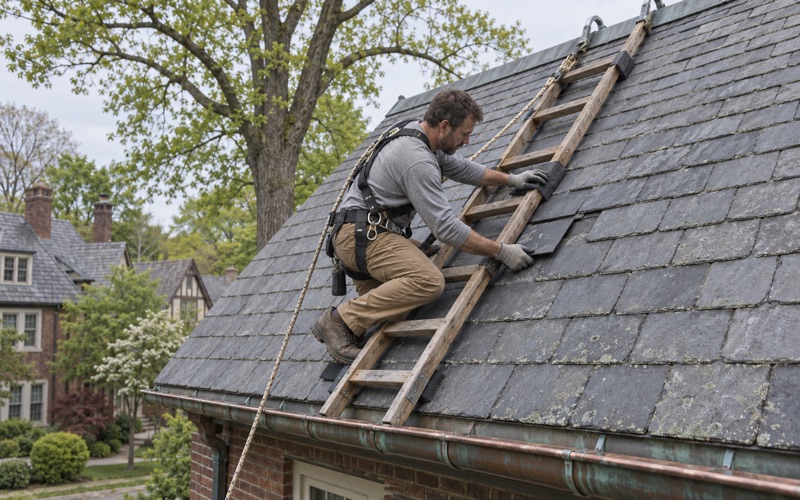
Where a house has a slate roof, we repair it with matching slate and slate hooks when the material can be found, rather than patching with whatever happens to be on the truck. If solar panels sit on the roof, their removal and reinstall go into the schedule at the estimate stage, so nobody discovers them on the morning of the tear-off.
- 20+ Years on Local Roofs
- Repair-First Advice
- Itemized Written Scopes