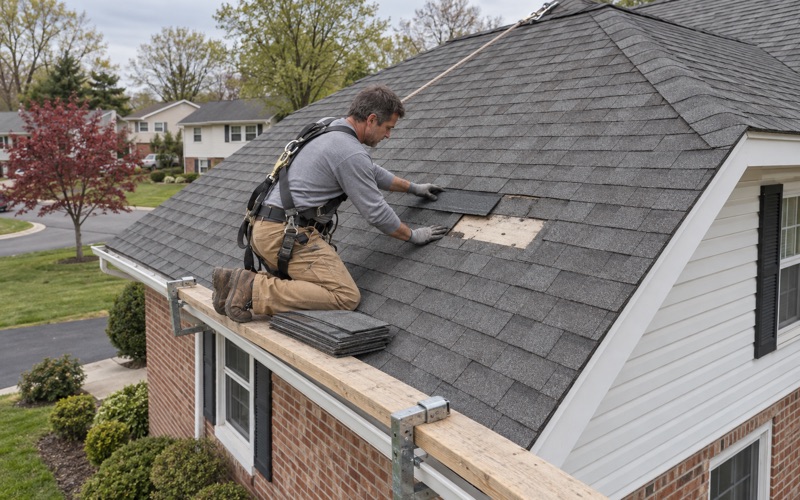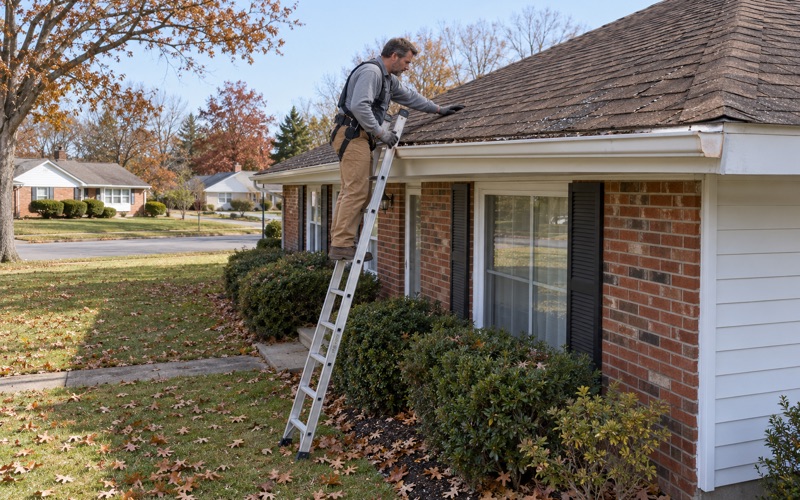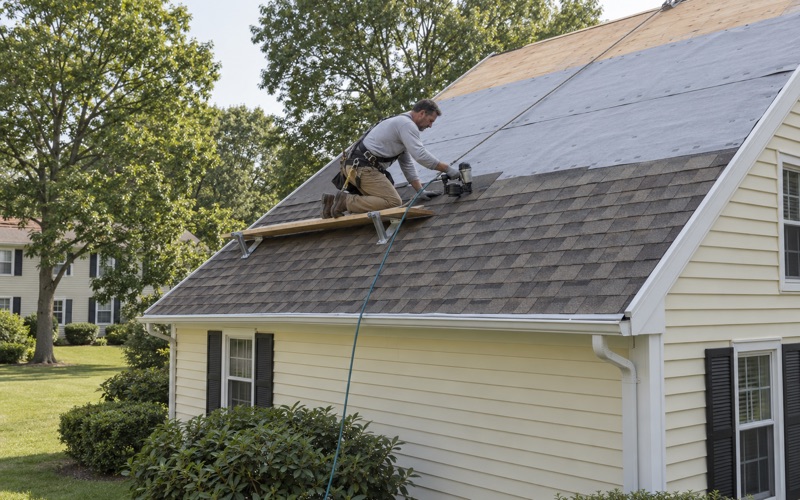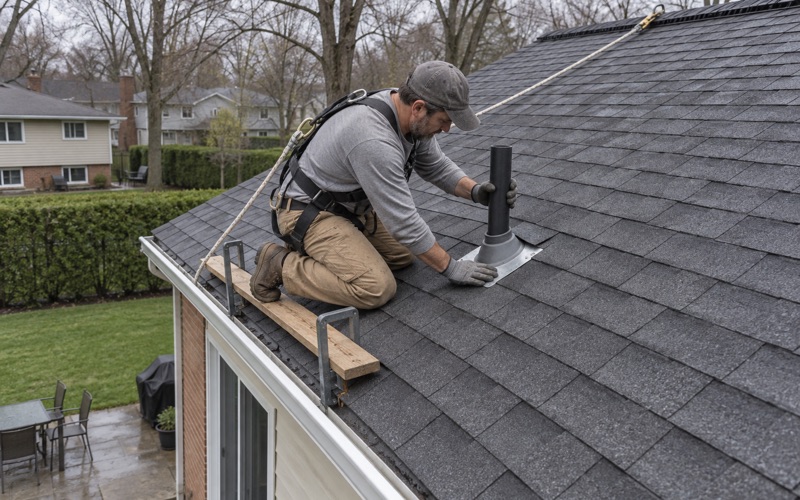
Cherry Hill Roofing brings more than 20 years in the trade to roofing in Southampton, and our first visit to any house starts the same way. Before a new roof enters the conversation, we tell the owner plainly whether the one overhead can be repaired, and we explain what we saw that led us there.
A leak call gets two inspections, not one. We go into the attic as well as onto the shingles, because water often travels along rafters and decking before it shows on a ceiling, and the spot it drips from is rarely the spot it gets in. Nothing is priced until we have traced the path.
When replacement is the honest answer, our written scope breaks the job into separate lines for tear-off, decking, underlayment, flashing, ventilation and gutters. That format lets an owner set our estimate beside anyone else’s and compare the two item by item, instead of weighing one lump sum against another and guessing at the difference.
Leisuretowne’s 1970s and 1980s Houses
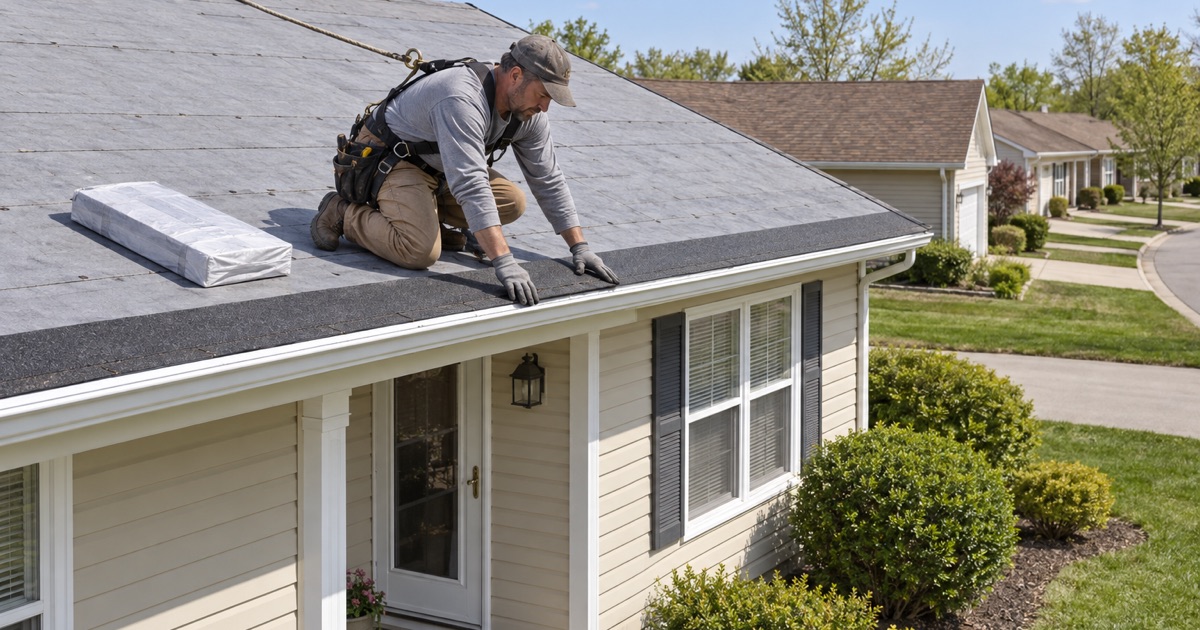
Built by One Builder in Fifteen Years
Southampton’s largest neighborhood is Leisuretowne, a 55-and-over community where buyers must be 55 to purchase. A 55places listing describes it as about 2,255 homes built by Orleans Homes between 1971 and 1986, so most of the community went up inside a fifteen-year window and under one builder’s name.
The census reads the same shape from a different angle. The American Community Survey’s 2024 five-year estimates count 2,188 housing units in the Leisuretowne census-designated place, with 946 built in the 1970s and 469 in the 1980s. That is 1,415 units, or 64.7 percent, from those two decades alone.
Mostly Detached, Mostly Owned
The same survey counts 2,052 of those units as detached houses, and 1,959 of 2,028 occupied homes as owner-occupied, or 96.6 percent. In practical terms, most of the roofs here sit on stand-alone houses lived in by the people who own them, which shapes who calls us and how a decision gets made.
The counts do not agree with each other, and we do not pretend they do. The listing says about 2,255 homes, the ACS estimate says 2,188 units, and the 2020 census recorded 2,457 housing units. Each source counts differently, and what matters for a roof is the year a given house was built, not the exact total.
What That Means on the Roof
After fifty years, the roof on a given Leisuretowne house could be on its second covering or its third, and the only way to know is to look. Individual listings report replacement roofs, including a 1971 house advertised with a brand-new one and others with dimensional shingles, so we never assume what is up there before we climb.
Our inspection begins under the roof, not on it. In a house built in the 1970s or 1980s, the attic shows us how the decking has held up over decades, whether past leaks left stains on the rafters, and whether soffit intake still feeds air to the ridge. That look, done before any price, separates a repair from a replacement.
Looking for roofing closer to Lansdowne? See Lansdowne Roofing.
Same-Age Roofs, Same Replacement Cycle
On one house, roof age is a single number. Across a neighborhood built this quickly, it becomes a pattern, and that pattern changes how owners should think about timing, about comparing prices and about what an estimate has to cover.
Neighbors Reaching the Decision Together
When most of a community is built inside fifteen years, a large share of its roofs can reach the end of their service life in the same stretch of years. That is our inference, not a measured fact, because each house carries its own history of repairs and replacements, but it is the pattern a build window that narrow tends to produce.
What it means on the ground is that a street can see several tear-offs within a few seasons. Owners comparing notes over the fence may hear different prices for what sounds like the same job, and the reason is usually hidden in decking, flashing and ventilation, which is why our scopes split those out.
Decking on Houses From the 1970s
Once the old shingles come off, the decking underneath is the one part nobody could see during the estimate. On houses of this age we sometimes find sheets that have softened around old nail holes, past leaks or vent openings, and we would rather say so up front than surprise anyone.
Any damaged sheet is photographed and shown to the owner before it is cut out and replaced. The per-sheet price is already written into the contract, so the number on the final invoice follows from photos the owner has seen rather than from a figure we name after the fact.
Flashing and Vents Done Once
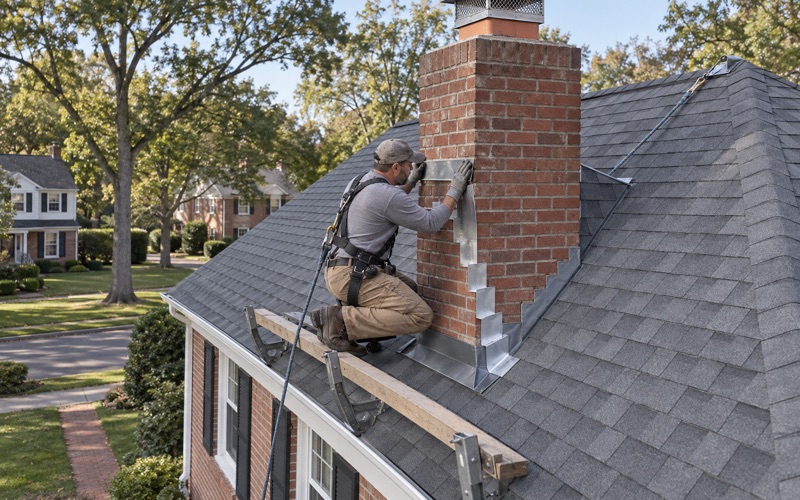
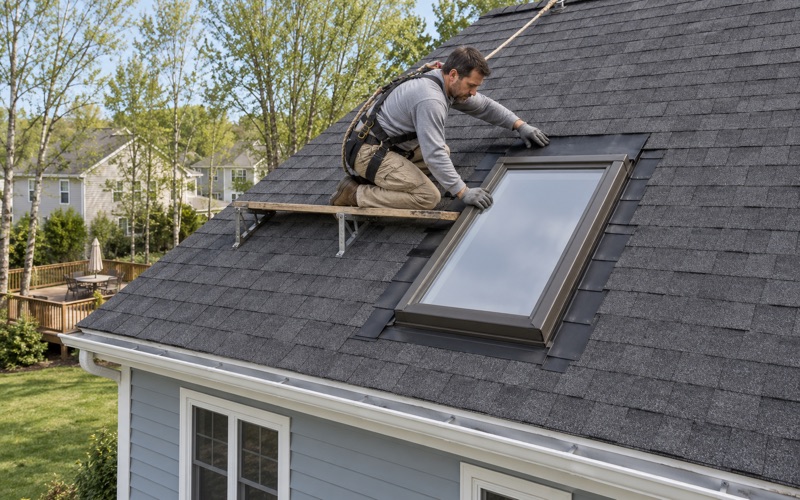
Even a plain gable roof has pipe boots to seal, and many houses add a chimney, a wall where an addition meets the main roof, or a skylight put in by a later owner. When we redo a roof, flashing at each of those spots is replaced rather than caulked over, because caulk is a short-term patch on a long-term roof.
Ventilation gets the same attention. A ridge vent only works with enough soffit intake to match its net free area, and a house whose soffits were painted shut or blocked by insulation over the decades can overheat its new shingles from below. We check both ends before the scope is written.
Who Answers for the Roof
Roofing in a planned community has one step that a roof on a farmhouse does not. Before materials, before price, someone has to establish whose decision this is, and we would rather slow the first conversation down than build a scope for the wrong signer.
A Question for the Community’s Documents
In Leisuretowne, our first question has nothing to do with shingles: who is responsible for this roof, the homeowner or the community association? We have not seen that settled anywhere we can point to, and we will not guess at it on anyone’s behalf.
The answer belongs in the community’s own governing documents and in the owner’s deed and closing papers. We ask owners to check those first, or to ask the association directly, so that the person who signs our contract is the person with the authority and the obligation to do so.
What the Monthly Fee Is Described as Covering
Listings describe the Leisuretowne fee as roughly $88 to $93 a month, covering items such as the bus, the pools, common areas and the security gate. Roofs are not named in those descriptions, but a listing is not a governing document, and silence in a sales sheet does not answer the question either way.
The same goes for appearance. If the documents say anything about roof color or material, the owner will want to know before choosing, and if they say nothing, the choice is open. Either way, we bring shingle samples to the house and hold them against the actual brick or siding rather than picking from a brochure.
Paperwork That Follows New Jersey Rules
Our contracts follow New Jersey’s home improvement rules, including the written notice of the owner’s right to cancel. If the house is titled to a trust or to a relative rather than to the person living there, tell us early, so the contract names the party who actually holds the decision.
A full roof replacement can qualify as a capital improvement in New Jersey, and Form ST-8, the Certificate of Exempt Capital Improvement, is the document that records it. We explain where that form fits when we hand over the written scope, so the sales tax line is never left vague.
Planning the Job, and Southampton Beyond Leisuretowne
The last stretch of planning is practical: when the crew arrives, what the household should expect each day, and what else is on the roof besides shingles. The same habits carry to every corner of the township, from Leisuretowne to the farm roads.
Scheduling Around the Household
A re-roof is loud, and it keeps a crew on the house for a day or more depending on size and decking. We set the start date with the owner well in advance, say which rooms will hear the most of it, and keep them posted as the work moves from tear-off to final cleanup.
Cleanup happens at the end of every work day, not only at the end of the job. The yard, driveway and gutters are cleared, and we run a magnet sweep for roofing nails across the lawn and walk, so a tire or a morning walk to the mailbox does not find a stray nail.
Storm Damage and Solar Panels
When wind lifts shingles, we photograph the damage and write it up for the owner’s own insurance claim, and we will meet the adjuster on site when asked. We document; the claim stays the owner’s, and the conversation with the insurer stays theirs to lead. Southampton’s forecasts come from the National Weather Service office in Mount Holly, which places the Leisuretowne area in its Northwestern Burlington forecast zone.
Where a house carries solar panels, a re-roof has to include taking them down and putting them back. We put that removal and reinstall into the schedule at the estimate stage, so the day of the tear-off does not begin with a surprise. We coordinate one agreed date with whoever handles the panels.
Vincentown, Red Lion and the Farms
Southampton is far more than one retirement village. The township covers about 44 square miles of Burlington County, and it was first created as Coaxen Township in March 1845 before taking its current name a few weeks later. Vincentown, its other census-designated place, is home to the Bishop-Irick Farmstead, and U.S. 206 and Route 70 meet at the Red Lion Circle.
Across the whole township, the ACS five-year estimates count 4,347 of 4,680 housing units as detached, 116 as mobile homes, and 352 as built in 1939 or earlier. A farmhouse outside Vincentown, a house in Hampton Lakes and a Leisuretowne home all get the same attic-first inspection and the same straight answer on repair, and an older roof gets matching material where it can be sourced.
- 20+ Years on Local Roofs
- Repair-First Advice
- Itemized Written Scopes