
Cherry Hill Roofing provides slate roof repair in Cherry Hill, NJ, serving surrounding cities including Haddonfield, Haddon, Collingswood, Bellmawr and Gloucester City. Over more than 20 years, we have repaired slate roofs on older houses throughout South Jersey and the Philadelphia suburbs, many of them on homes built long before asphalt shingles were common.
A natural slate roof is one of the longest-lasting roofs a house can have. The stone itself can outlast several generations of asphalt shingles, which is why a leaking slate roof should not automatically be replaced. In most cases, what has failed is the nails holding the slates, the flashing around the chimney and valleys, or a handful of pieces cracked by falling branches or foot traffic.
We repair slate roofs with matching material where it can be sourced, set with slate hooks or copper nails, rather than patching them with asphalt shingles, sheet metal or tar. That keeps the roof watertight and keeps it looking like the roof the house was built with.
Why Slate Roofs Leak
Rusted Nails and Slipped Slates
Many older slate roofs were installed with iron nails that eventually rust through. When a nail fails, the slate slides down the roof, leaving a gap in the course above, and sometimes falls into the gutter or the yard.
A slipped slate is usually still a good slate. We reset it with a slate hook or copper nail and check the surrounding pieces, since nail failure tends to happen in clusters rather than one slate at a time.
Broken and Cracked Slates
Falling branches, ice, and people walking on the roof crack slates. A single broken piece may not leak right away, but it exposes the felt or deck beneath to water and sun.
We remove the broken pieces with a slate ripper, which cuts the old nails without disturbing the slates around them, and slide replacements into place. Broken slates are replaced one at a time, without stripping the surrounding roof.
Failed Flashing and Valleys
Slate roofs often outlast their original flashing. Copper and lead flashing can last a long time, but soldered seams crack, and galvanized steel valleys eventually rust through.
Valleys and chimney flashing are frequent leak sources on slate roofs. Replacing them means carefully removing and relaying the slates around them, and we use metal suited to the life of the slate rather than a material that will fail long before the roof does.
Slate Repair Methods
Matching Replacement Slate
Slate varies by color, thickness, size and how it weathers over time. A good repair uses replacement pieces that match the existing roof as closely as possible, which may mean salvaged slate on an older roof.
We look for matching material and show you the replacement slates before installing them. Where an exact match cannot be found, we discuss the closest available options with you before any work begins.
Slate Hooks and Copper Nails
Replacement slates are held with slate hooks or copper nails. Hooks support the bottom edge of the new slate without exposing a nail, while copper nails resist the rust that caused many original failures.
Both methods let us replace individual pieces without disturbing the surrounding roof. We choose the method based on the slate size, the roof pitch and how visible the repair will be from the ground.
Working Without Damaging the Roof
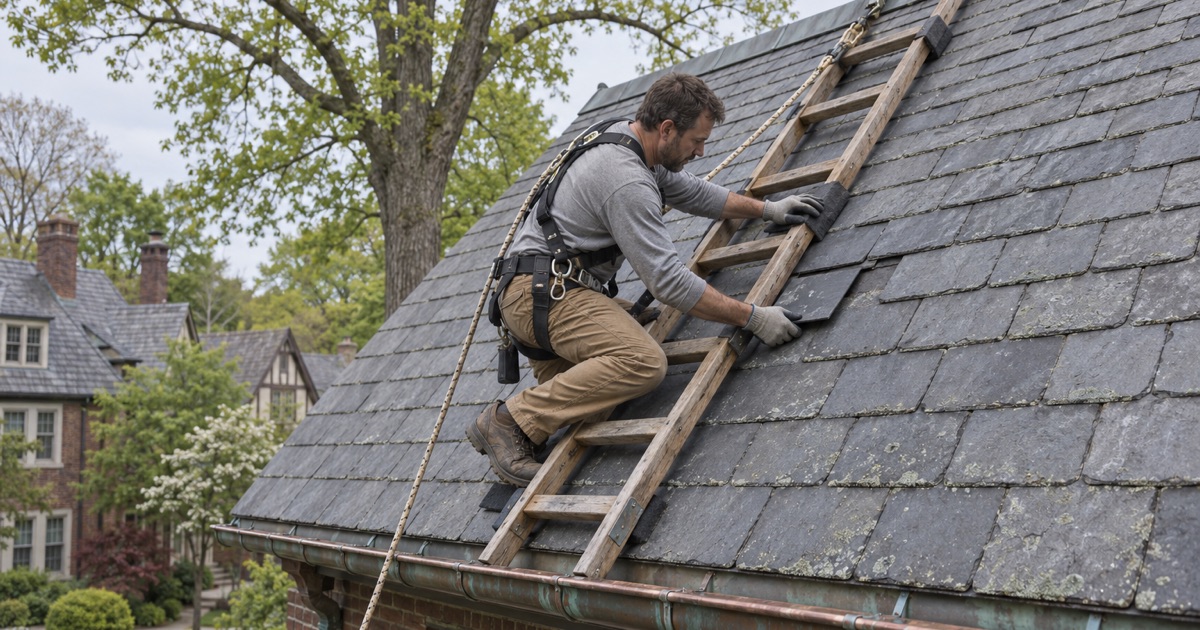
Slate cracks under concentrated weight, so careless repair work can do more damage than it fixes. We use ladders, roof hooks and brackets to spread weight and avoid stepping directly on slates.
On steep or high slate roofs, we may work from the edges and use lifts or staging. That costs more time but avoids the cracked slates that are a common sign of an inexperienced crew.
Snow Guards and Gutters on Slate Roofs
Snow slides off a smooth slate roof in sheets, and the weight can tear gutters loose or break slates on a lower roof below. Snow guards set into the slate courses hold the snow in place so it melts gradually instead of releasing all at once.
Gutters on slate houses also take a beating from sliding ice. We check the gutter hangers and the slates along the eave together, since a gutter pulled down by ice often drags the bottom course of slate with it.
Is the Slate Worth Keeping?
Signs the Slate Is Still Sound
Sound slate rings when tapped and does not flake or crumble. If the slates are firm and only a scattering are broken or slipped, the roof is a strong candidate for repair.
A roof in this condition can often be made watertight for many more years by resetting slipped slates, replacing broken pieces and renewing the flashing. That work usually costs far less than replacing a slate roof.
Signs the Slate Is Failing
Slate that flakes into layers, known as delamination, or that has softened and crumbles at the edges, is reaching the end of its life. When large areas of the roof show those signs, repairs become a never-ending cycle.
We tell you honestly when that point has arrived. Options at that stage include a full slate roof with new or salvaged stone, or a substitute material chosen to suit the house.
Slate in Historic Districts
Many slate roofs in the area are on houses inside local historic districts, where exterior changes may need approval. Rules vary by town, and some are less strict about materials than homeowners expect.
Haddonfield’s design guidelines, for example, recommend repair rather than replacement and do not require slate to be replaced in kind, but they ask that the color and pattern of a replacement duplicate the original as closely as possible, including any decorative patterns. We help you understand what applies before work begins.
- 20+ Years on Local Roofs
- Repair-First Advice
- Itemized Written Scopes