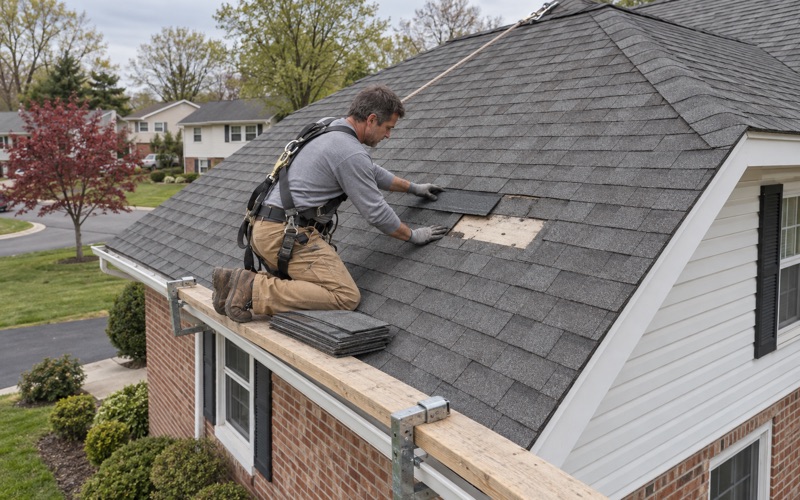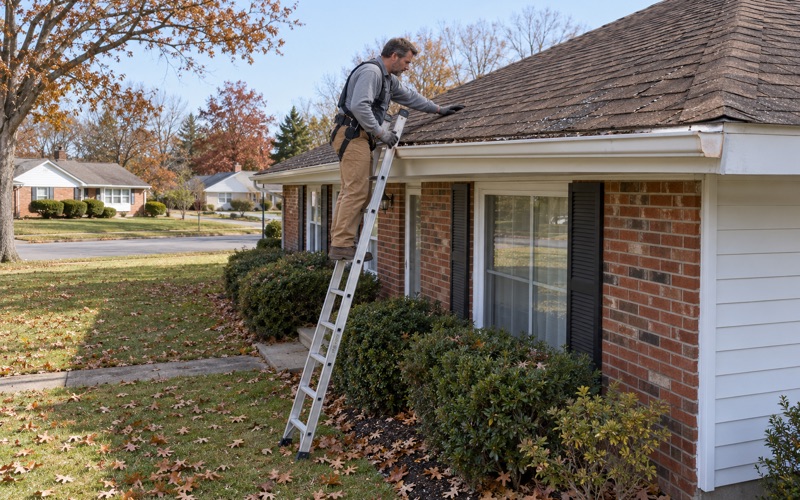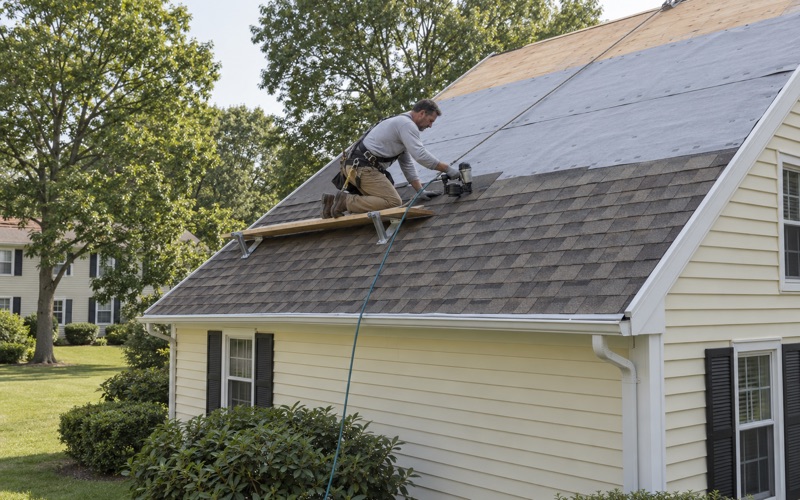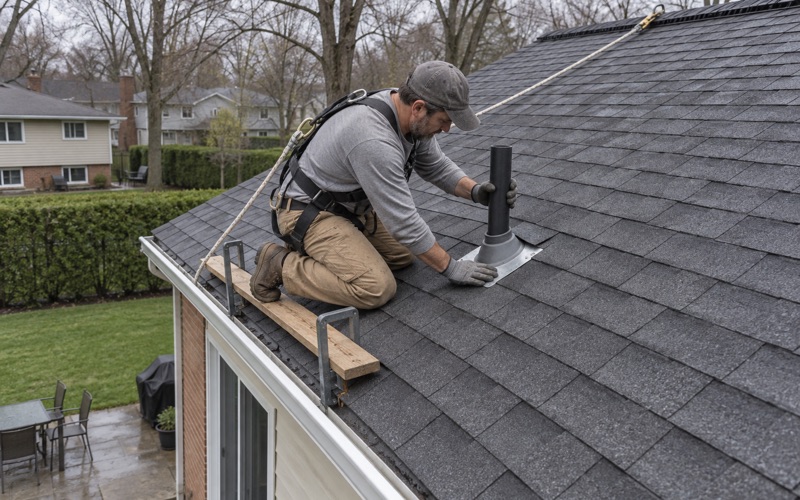
Cherry Hill Roofing has spent more than 20 years on roofing in Pine Hill and the rest of the area around our hub, and most of the work we see here is a first or second roof on a house built well after the borough began. That shapes the job. Instead of peeling back three generations of shingles, we usually remove one layer, look hard at the decking underneath, and put the new system down on a sound base.
Before anyone talks about replacement, we tell you whether the roof can simply be repaired. When a leak is the reason for the call, we go into the attic as well as onto the shingles, because water rarely shows up on a ceiling directly below the spot where it gets in. The price comes after we know the path.
When replacement is the right call, our written scope breaks tear-off, decking, underlayment, flashing, ventilation and gutters into separate lines. That lets you set our estimate beside anyone else’s and compare the same items, rather than two lump sums that may cover different work without saying so.
Pine Hill’s 1970s and 1990s Houses
What the Census Count Shows
The borough was incorporated in 1929, created from Clementon Township, but its housing stock is much younger than that date suggests. Of the 4,733 housing units counted in the Census Bureau’s 2024 five-year American Community Survey, 1,354 were built in the 1970s, which is 28.6 percent of the total. Only 302 date from 1939 or earlier.
A second wave followed. The same survey counts 694 units from the 1990s and 643 from 2000 through 2009, together 1,337 homes or 28.2 percent. Put the two eras side by side and well over half of Pine Hill’s housing comes from three decades of building, which is why the roof questions here tend to repeat.
What a 1970s House Usually Needs
A house from the 1970s has had roughly fifty years of weather, and a roof that old is rarely still the original. More often it is on its first replacement, and the question is whether that replacement went over the old shingles or replaced them. We cannot tell you that from the driveway, and we will not guess on the estimate.
If a tear-off finds a single layer, the job stays simple and the decking gets a full inspection. If it finds a second layer, both come off before anything new goes down, and the scope says so in writing rather than surfacing as a change halfway through the day.
Where the Older Stock Fits
The 302 prewar units, along with 512 units from the 1950s and 521 from the 1960s, make up a smaller share of the borough’s roofs. A house from those years may hide more than one layer, and we price it on what the tear-off actually uncovers. They are the exception in Pine Hill, though, and we do not quote every house as if it were one of them.
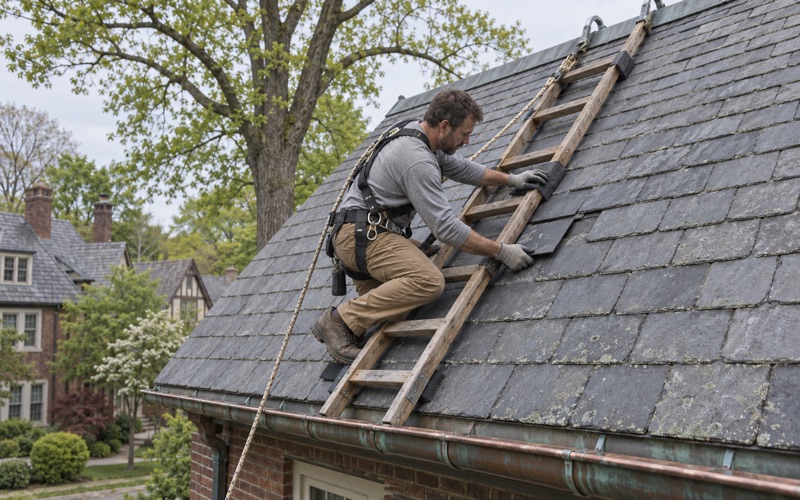
The Isaac Tomlinson House on Blackwood-Clementon Road, listed on the National Register of Historic Places in 2005, is a reminder that some older buildings do stand here. On an older roof, we repair with matching material where it can still be sourced, rather than patching with whatever happens to be on the truck.
Looking for roofing closer to Woodbury? See Woodbury Roofing.
A First Roof Replacement, Done in Order
Repair or Replace on a 1990s or 2000s Roof
A house built between 1990 and 2009 is typically on its original roof or its first replacement. That puts many of these roofs at the age where an owner starts asking whether to fix a leak or start over, and the honest answer depends on what the attic and the shingles show together.
We look at granule loss, lifted tabs, pipe boots and the flashing at walls and chimneys, then at the underside of the deck for staining or soft spots. A sound roof with one failed pipe boot gets a repair. A roof that is losing its surface everywhere gets a replacement quote, with the reason written down.
The Single-Layer Tear-Off
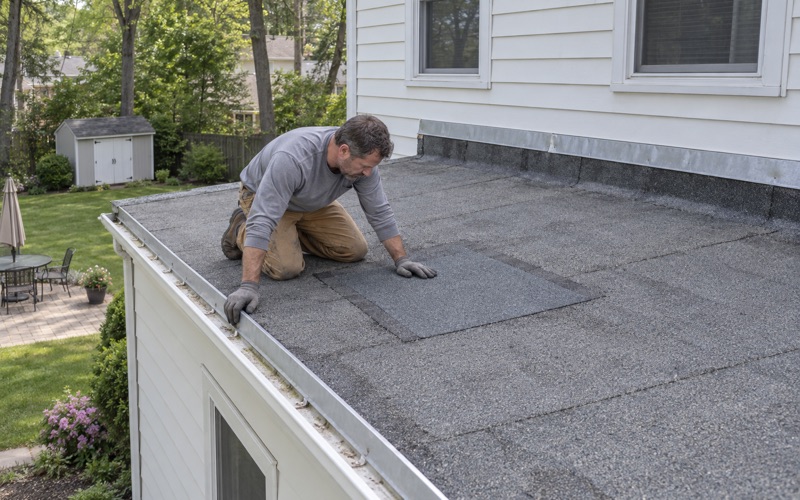
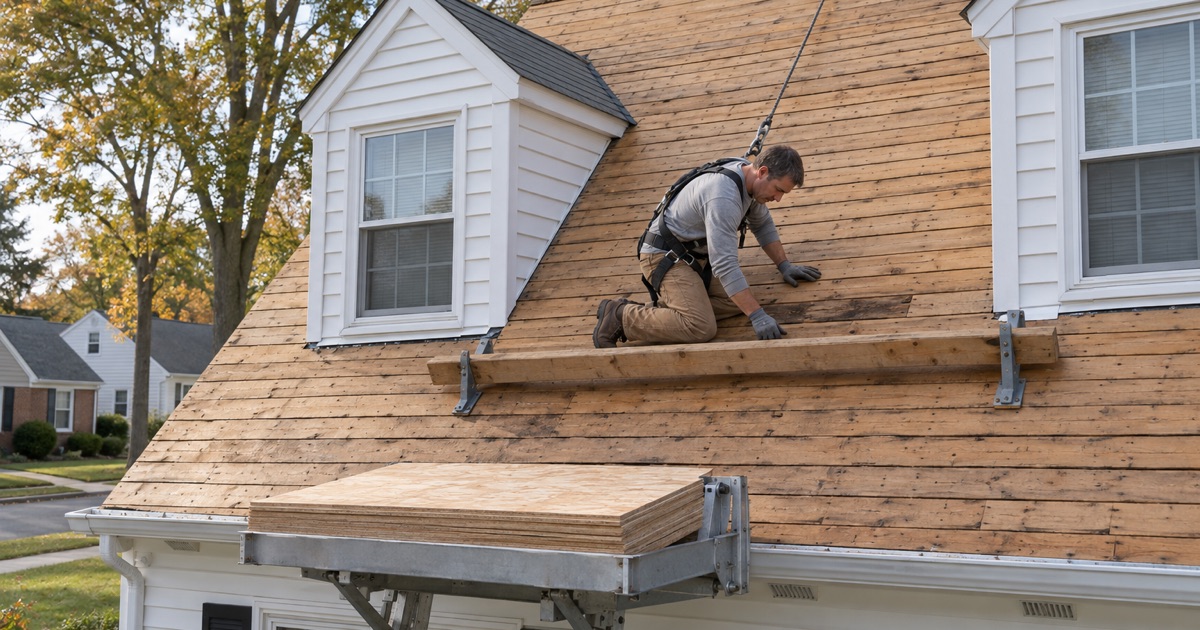
On a first replacement, the tear-off is usually the shortest part of the day. With one layer to strip, the crew can reach bare decking quickly, which leaves time to do the inspection properly instead of rushing it to stay on schedule. A rushed deck check is where soft sheathing gets covered up and missed.
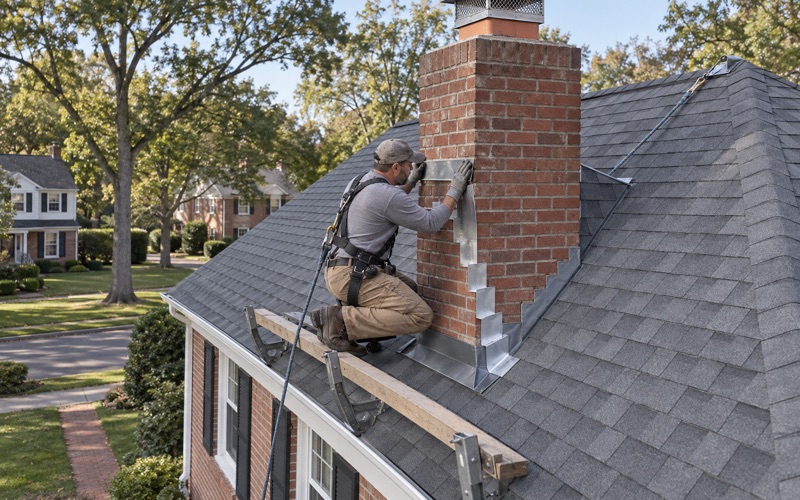
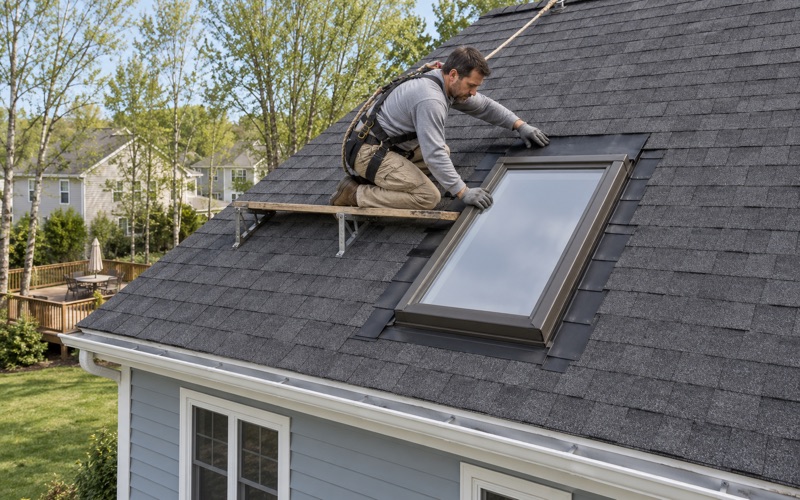
Flashing comes off with the shingles. At chimneys, sidewalls, skylights and any spot where two roof planes meet, we install new step flashing, counter flashing and apron pieces rather than caulking over the old metal, because a first replacement that reuses tired flashing is often where the next leak starts.
Choosing the New Shingle
Whether a house has siding, a brick front or a mix, the shingle color should work with what is actually on the wall. We bring samples to the house and hold them up against it, so the choice is made in daylight on site rather than from a small chip in a brochure.
Architectural laminated shingles such as GAF Timberline HDZ, Owens Corning Duration and CertainTeed Landmark are common choices for this kind of house. If wind rating matters to you, we can point to products tested to ASTM D3161 Class F or ASTM D7158 Class H and note the rating on the scope.
Planning Around Solar Panels
A roof due for its first replacement sometimes already carries solar panels. When panels are in the way, we plan their removal and reinstallation into the schedule from the start, so the day the crew arrives is not the day anyone discovers the array has to come off.
Panels are usually reinstalled on the new roof after the underlayment and shingles are down and the mounting points are sealed. Coordinating that sequence ahead of time keeps the house from sitting with an open section of roof while everyone waits for the next trade to arrive.
Townhouses: Owner Roof or Association Roof
Who Holds the Roof
The Census survey counts 821 one-unit attached houses in Pine Hill, 621 of them owner-occupied. For a townhouse, the first question is not shingle brand or color. It is whether the owner or the association is responsible for the roof over that unit, and the answer changes who signs our contract.
Local listings show it going both ways. One townhouse listing reports the owner’s roof as two years old, with a small monthly fee covering common-area maintenance, while another says the roof is the responsibility of the condo association. Neither is a rule for the borough, and we have not read any community’s governing documents.
Checking Your Own Community’s Documents
Before we quote a townhouse roof, we ask the owner to pull the master deed, bylaws or rules for their community and look for the roof language. If the association holds it, the board or its manager is our client. If the owner holds it, we still want to know about any color or material standards the community sets.
Our contracts follow New Jersey’s home improvement rules, including the written cancellation notice, whether the signer is a single owner or a board. That matters on a shared building, where one unit’s decision may need sign-off from more than one person. We would rather sort that out at the kitchen table than on the roof.
Work Where Roofs Join
On attached houses, one unit’s roof meets its neighbor’s at a party wall, and the transition there takes care. We tie the new underlayment and shingles into the adjoining roof cleanly and flash the joint properly, and we talk to the owner about the neighbor before the crew arrives, since work on one side is visible from the other.
At the end of each work day, the crew cleans the yard, driveway and gutters and runs a magnet across the ground for nails. On a row of townhouses with shared walks and close parking, that cleanup protects the neighbors’ tires as much as your own.
Decking, Ventilation and Weather on High Ground
The Deck Check
We do not assume what decking sits under a Pine Hill roof before it is open. A house from the 1970s may have plank boards or early panels, and a 1990s or 2000s house may have panel sheathing, but the tear-off is what settles it. We walk the bare deck and probe anything that looks stained, soft or delaminated.
Any damaged sheet we find is photographed and shown to you before it is replaced, and the per-sheet price is already set in the contract. You see the board, you see the number, and the decking line on the final bill matches what was actually swapped out.
Ventilation and Underlayment
A first replacement is the natural time to correct attic airflow. We check the soffit intake against the ridge exhaust, figure the net free area the attic needs, and add or open ventilation where the original build left it short. A balanced ridge vent and soffit system helps the new shingles and the attic below them.
Underneath the shingles, we lay a self-adhering ice and water barrier meeting ASTM D1970 at the eaves and in valleys, synthetic underlayment to ASTM D8257 across the field, and new drip edge at eaves and rakes. Each item appears on its own line of the scope, so you can see what the money buys.
Gutters are the last line on the scope. If the existing ones are sagging or pulling away from the fascia, we price seamless aluminum gutters and leaders separately, so you can decide on them apart from the roof itself. A new roof draining into a failing gutter only moves the problem down the wall.
Weather on Camden County’s Highest Ground
The borough’s own history page, citing the New Jersey Almanac, says Pine Hill holds the highest point in Camden County at 214 feet, with views toward the Philadelphia skyline. The same history recalls early residents showering in summer rain with “the water that would run off the roof of the house.”
For forecasts, the borough sits in National Weather Service forecast zone NJZ018, Camden, served by the Mount Holly office. We watch that forecast when scheduling a tear-off so a roof is never left open ahead of rain. We have no record of the elevation changing how storms treat roofs here, and we do not sell on that idea.
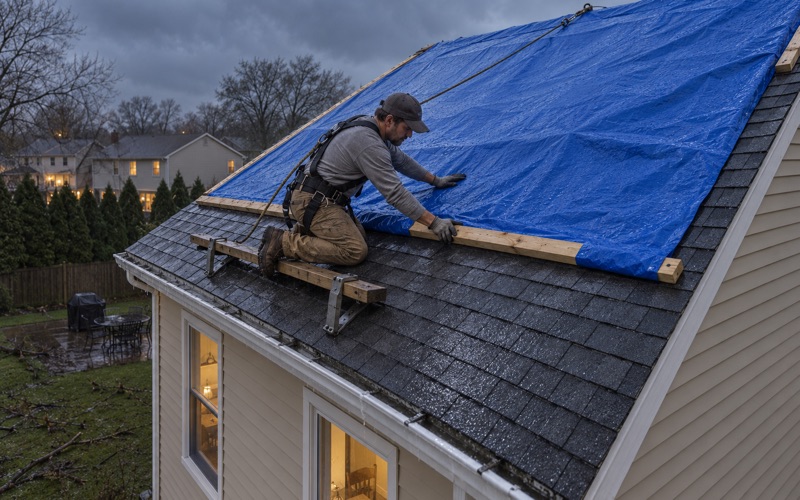
When a storm does damage a roof, we photograph it and write it up for the owner’s own insurance claim, and we will meet the adjuster on site if you ask. The claim stays yours; our part is a clear record of what the roof shows, with dates and photos you can hand over.
- 20+ Years on Local Roofs
- Repair-First Advice
- Itemized Written Scopes