Cherry Hill Roofing approaches roofing in Mount Holly with more than 20 years in the trade, and the first question we ask about any job here is a simple one: who is under this roof while it is open? On a detached house the answer is usually one household. On a building with a shop at street level and apartments above, the answer is a business owner, the customers walking in the door and the tenants living upstairs.
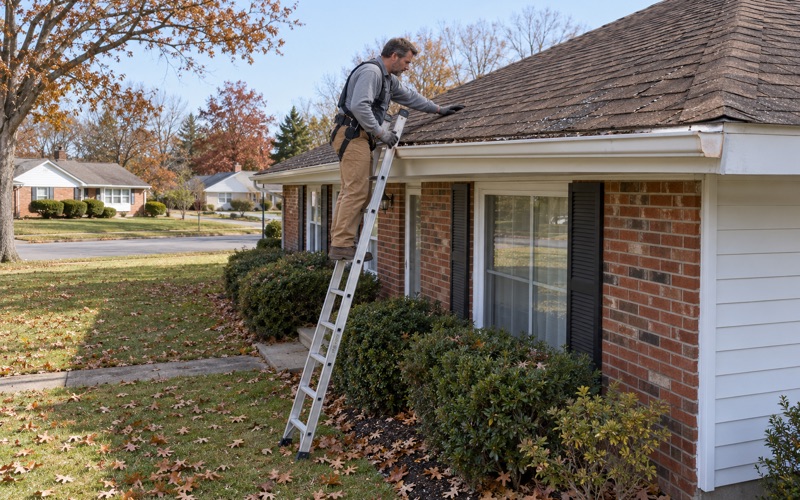
That difference changes how a roof is inspected, priced and scheduled. Every leak call we take starts with a look from inside as well as from the roof surface, because water that shows up on a ceiling has often traveled some distance from where it got in. We trace it to the entry point first and only then talk about cost.
We also give a straight answer on repair before replacement comes up at all. Plenty of roof problems come down to a section of flashing or a failed seam, not a whole new roof, and when that is the case we say so. When replacement is the honest answer, our written scope breaks the job into separate lines so an owner can set it beside another estimate and compare item by item.
A County-Seat Downtown Where People Live Above the Shops
High Street and the Courthouse Blocks
Mount Holly is the county seat of Burlington County, and the county courthouse complex sits in its downtown. The courthouse itself dates to 1796, and the Mount Holly Historic District covers 260 acres. High Street runs through that downtown, and some of the older buildings along it mix businesses and homes under one roof.
For us the historic district is background rather than a rulebook. What the age of these blocks does tell us is to expect older framing, layers of repairs from past decades and details worth matching rather than swapping for whatever stock part is closest. Where an older roof calls for slate or another original material, we look for a match that can be sourced before we reach for a substitute.
One Building, Three Kinds of Occupant
A listing for 40 High Street shows the pattern clearly. The building is dated to about 1900 and sits directly across from the courthouse complex. It has a restaurant of roughly 3,166 square feet on the ground floor, an apartment of about 1,598 square feet on the second floor, and a third-floor apartment of 986 square feet, all under a roof the listing describes as flat.
That is one building, and we do not assume every storefront on High Street is built the same way. But it shows what a roofer has to plan for in a mixed-use building: a restaurant below, two households above, and a roof that protects all three. These are not one- or two-family houses, and we do not plan them as if they were.
Where Renters Make Up a Large Share
Downtown buildings like that sit inside a town where renting is common. Census estimates show 1,347 of Mount Holly’s 3,414 occupied homes are rented, about 39.5 percent, and 462 renter households live in buildings of three or four units. That means a good number of roofs here cover someone who did not choose the roofer and may not know a repair is planned.
For an owner, that changes the job. The owner signs the contract, but the tenants live with the noise, the access and any water that came in before the call. We write our contracts to New Jersey’s home improvement rules, including the cancellation notice, and we keep the scope plain enough that an owner can explain it to a tenant without guessing.
Looking for roofing closer to Mantua? See Mantua Roofing.
Flat Roofs Over Occupied Top Floors
Why the Top-Floor Apartment Hears About It First
On a flat roof, water that gets past the membrane tends to spread across the deck before it finds a way down. In a building like the one on High Street, the space directly under that roof is an apartment, so a leak reaches a tenant’s ceiling well before anyone downstairs notices. The restaurant may never see a drop while the people upstairs are moving furniture.
That is why we start inside. We look at where the stain sits, check the ceiling cavity where we can reach it, and then go up and read the roof surface against what we found below. The spot on the ceiling and the spot on the roof are often several feet apart, and patching the wrong one only buys a few dry weeks.
Membranes, Seams and Drainage
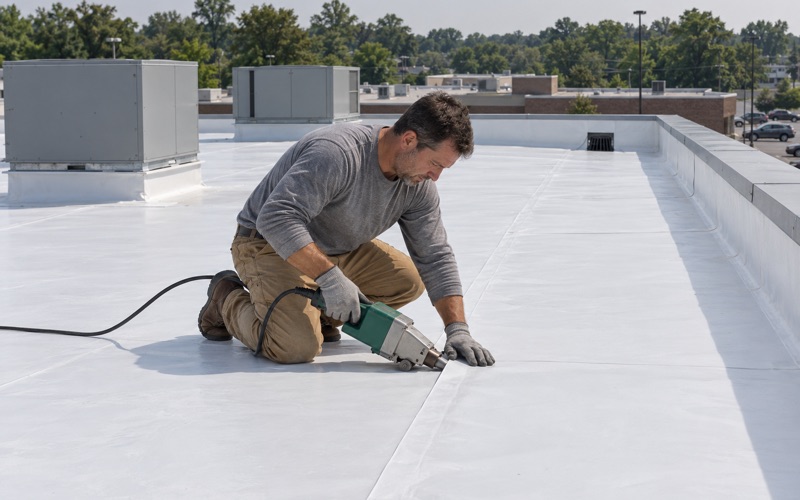
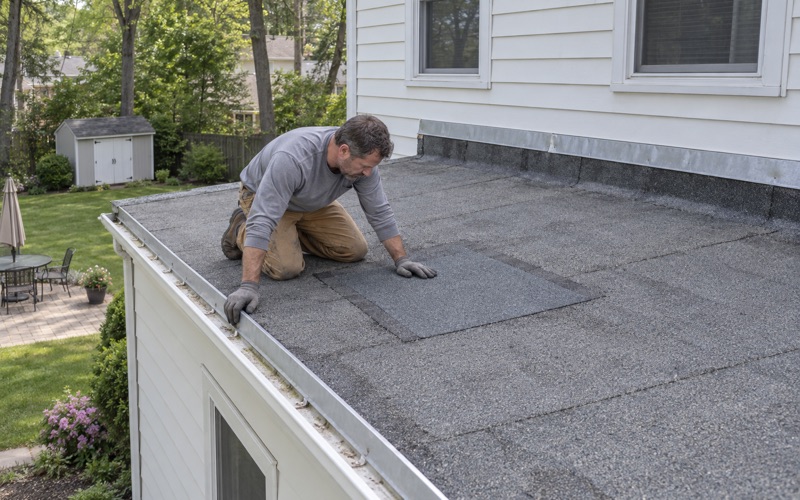
Low-slope roofs over apartments are usually covered with a membrane rather than shingles. Depending on what is already there, that may be torch-down modified bitumen, EPDM rubber, or a TPO or PVC single-ply sheet. Each has its weak points, most often at seams, at the edges and wherever a pipe, vent or hatch passes through, and we repair or replace in the same material where that makes sense.
Drainage matters as much as the membrane. The 2003 International Property Maintenance Code, which Mount Holly’s housing code points to, says the roof and flashing must be sound and tight, and that roof drainage must keep dampness out of walls and interiors. On a flat roof, that means confirming water actually reaches the drain or scupper instead of sitting in a low spot over someone’s bedroom.
Flashing Where the Roof Meets the Walls
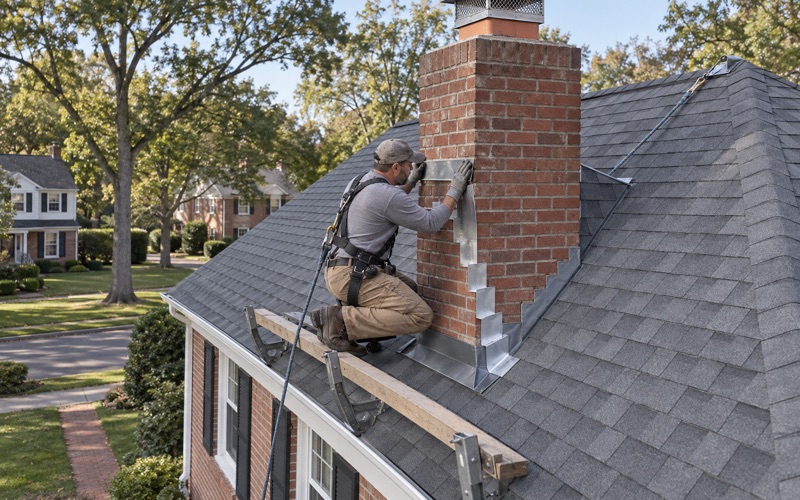
Mixed-use buildings often have parapet walls, chimneys or a neighbor’s wall rising above the roof line, and those joints are where flat roofs leak most stubbornly. When we redo a roof, we replace that flashing rather than smearing caulk over the old metal. Counter flashing set into a reglet, properly lapped base flashing and a sound edge detail last far longer than a bead of sealant.
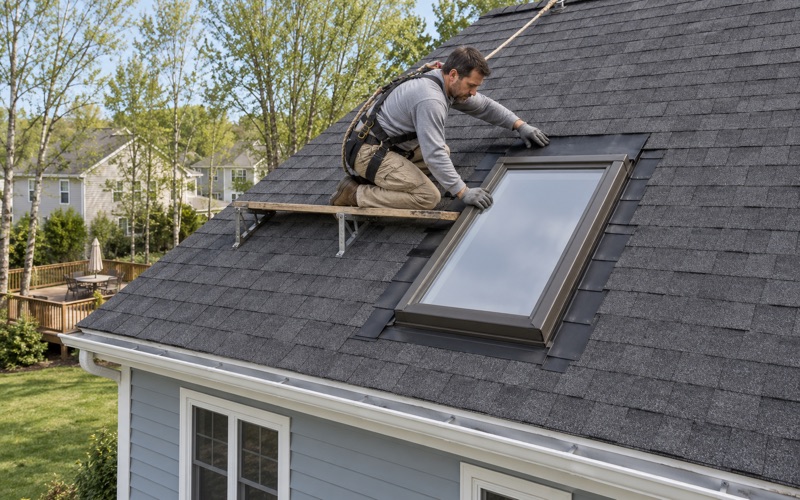
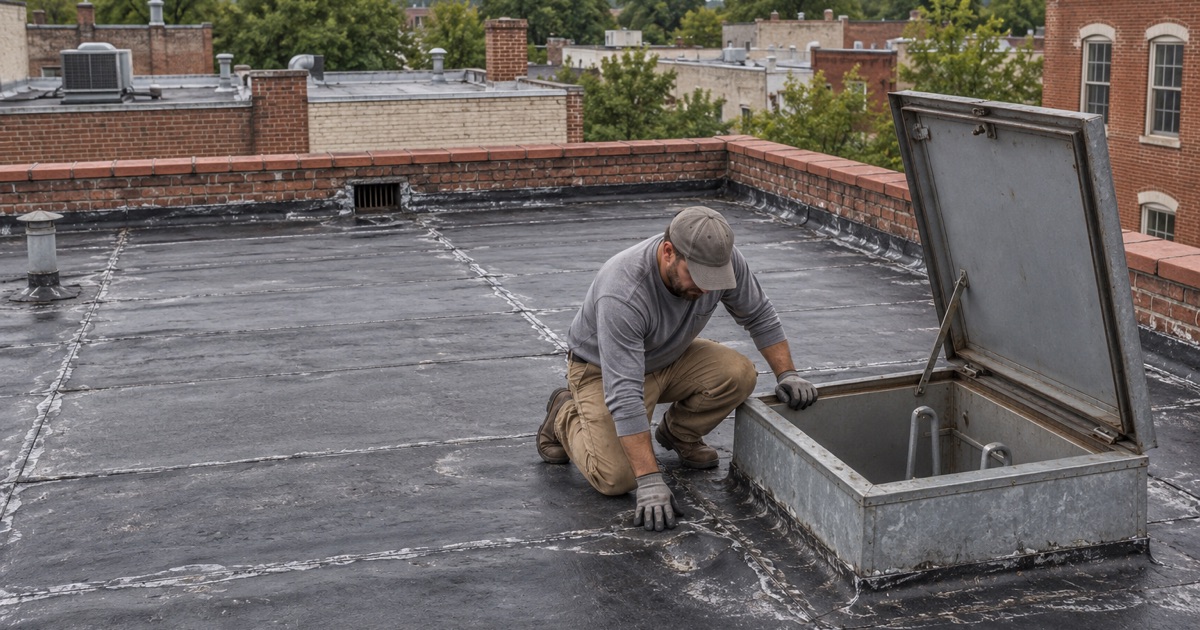
The same goes for skylights and roof hatches, two openings that often sit in a flat roof over an apartment. A curb that has been resealed every few years is usually a sign the flashing underneath has given up. We would rather rebuild the curb flashing once, during the roof work, than send someone back up after the next heavy rain.
Scheduling Roof Work Around a Business and Its Tenants
Working While the Doors Stay Open
A restaurant or shop on the ground floor usually cannot close for a roof job, and we do not ask it to. We plan staging, material deliveries and debris removal around the business’s hours, keep the sidewalk entrance clear, and talk with the owner about which days carry the heaviest customer traffic. Noisy tear-off can often be pushed to the hours before opening.
Safety at street level is part of the plan, not an afterthought. Our crews follow OSHA fall protection rules, which set the threshold at 6 feet for residential roofing, and on a building that fronts a downtown sidewalk we also plan for what could fall below. Chutes, covered containers and a clean edge at the end of every shift keep the entrance usable.
Giving the Tenants Upstairs Fair Warning
The people living in the top-floor apartment hear every step of a roof job directly over their heads. We give the owner a schedule early enough to pass along to tenants, with the days that will be loud, the days the roof will be open and the window when access to the stairs or a hatch is needed. Nobody should learn about a tear-off from the first hammer blow.
We also never leave a section open overnight over an occupied room. Tear-off is sized to what can be closed back in the same day, and we check the National Weather Service forecast for the Northwestern Burlington zone, where Mount Holly sits, before opening anything. A roof that is watertight every evening matters more than finishing a day sooner.
Clean Sidewalks and a Clear Record
At the end of every work day we clean the sidewalk, the alley, the gutters and any yard behind the building, and we run a magnet sweep for roofing nails. In front of a restaurant, a stray nail is a problem for customers, delivery drivers and the tenants coming home, so the sweep happens daily rather than once at the end of the job.
If the deck under an old flat roof turns out to be damaged once the covering is off, we photograph it and show the owner before any of it is replaced. The per-sheet price is already set in the contract, so there is no on-the-spot negotiation while a tenant waits for the roof to close. The owner gets the photos for their own records.
Older Houses Beyond High Street
A Housing Stock With Deep Roots
Away from the downtown blocks, most of Mount Holly’s homes are detached or attached houses, and a large share of them are old. Census estimates count 1,089 homes built in 1939 or earlier, close to 30 percent of the town’s housing, and another 956 from the 1950s. That mix means a roofer here can expect anything from steep older roofs with original details to postwar houses on a later generation of shingles.
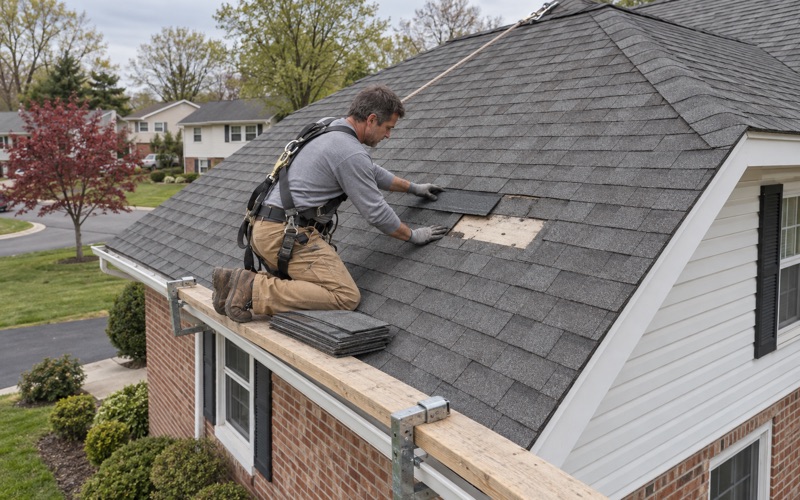
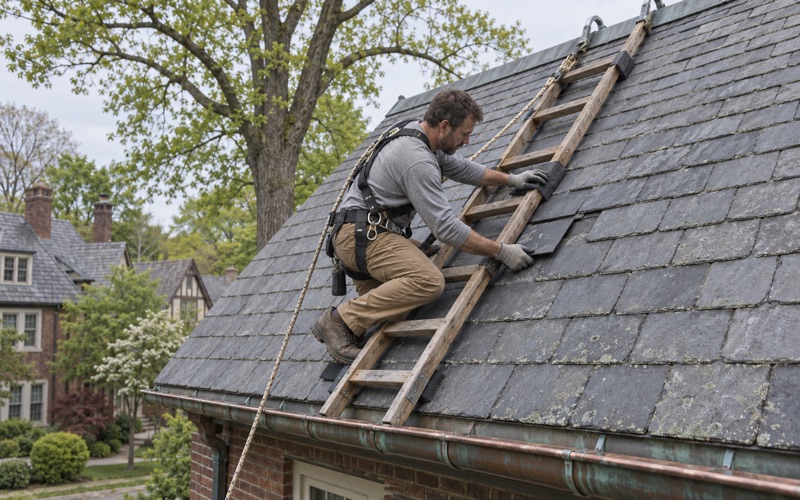
On the oldest houses, we repair with matching material where it can be found, whether that is natural slate set with slate hooks or an older profile of metal. Patching a slate roof with whatever is on the truck tends to create the next leak. When a full replacement is the right call, architectural shingles such as GAF Timberline HDZ, Owens Corning Duration or CertainTeed Landmark are common choices.
Rowhouses and Small Multi-Unit Buildings
Census figures count 712 attached single-family homes in Mount Holly and 506 units in buildings of three or four. On attached houses, the roof does not stop at the property line, and the joint where one owner’s roof meets the next is a common source of trouble. We flash that transition properly and talk with the owner about what the neighboring roof is doing.
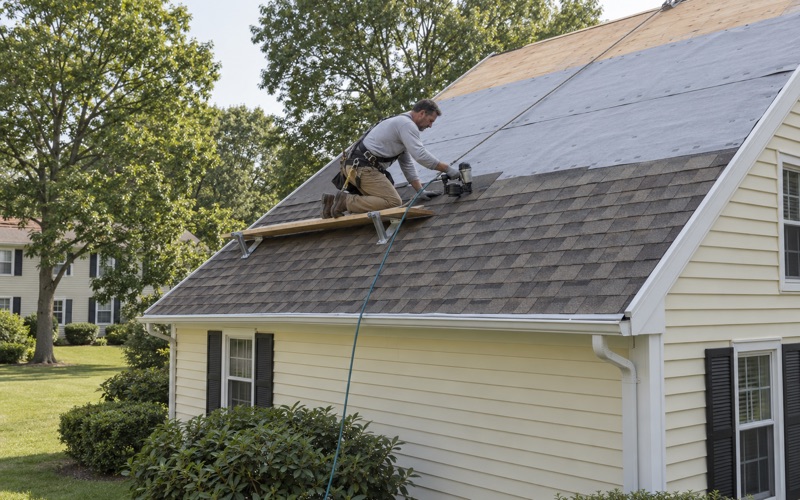
A small three- or four-unit building sits somewhere between a house and the mixed-use blocks downtown. It often has one roof over several households and one owner making the decisions, so the same scheduling care applies at a smaller scale. Our written scopes list tear-off, decking, underlayment, flashing, ventilation and gutters as separate items, which helps an owner budget across several units.
Gutters, Ventilation and Storm Damage
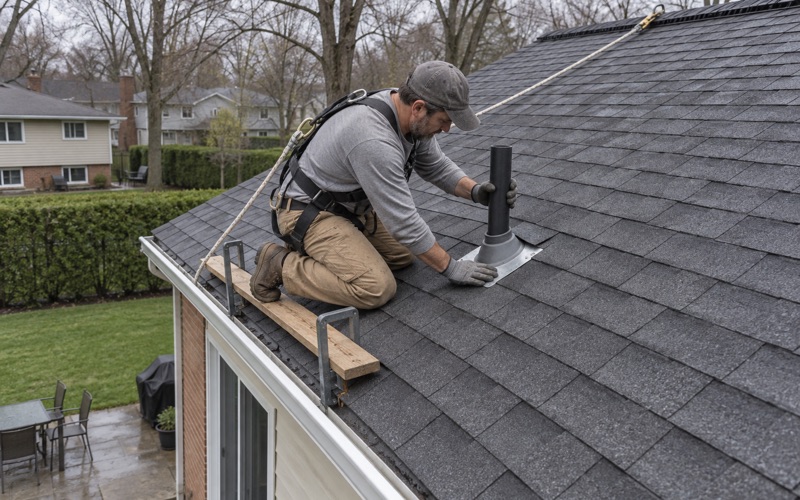
On houses with attics, a lot of what looks like roof failure starts with ventilation or drainage. We check that soffit intake and a ridge vent are balanced, that pipe boots are intact, and that gutters and leaders carry water away from the walls. Seamless aluminum gutters are a straightforward upgrade when the old ones are leaking at every joint.
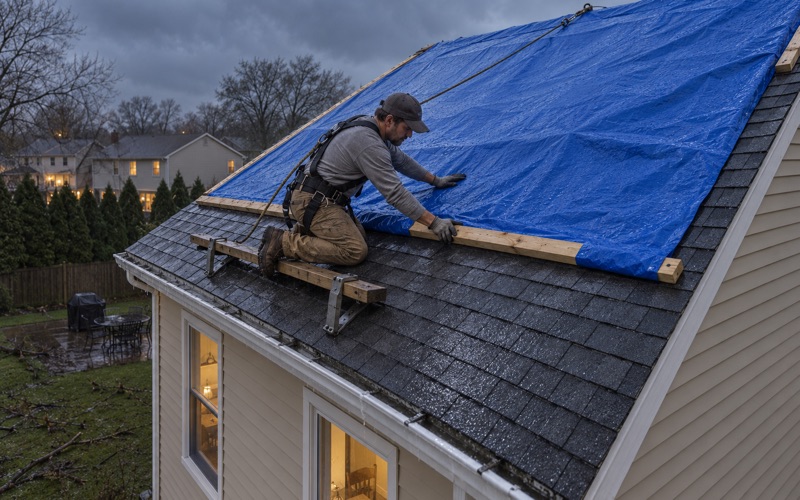
After a storm, we photograph the damage and write it up so the owner has a clear record for their own insurance claim, and we will meet the adjuster on site when asked. For shingle replacements, we bring samples to the house and hold them against the brick, stone or siding, because a color that looks right in a brochure can look very different on the actual wall.
- 20+ Years on Local Roofs
- Repair-First Advice
- Itemized Written Scopes