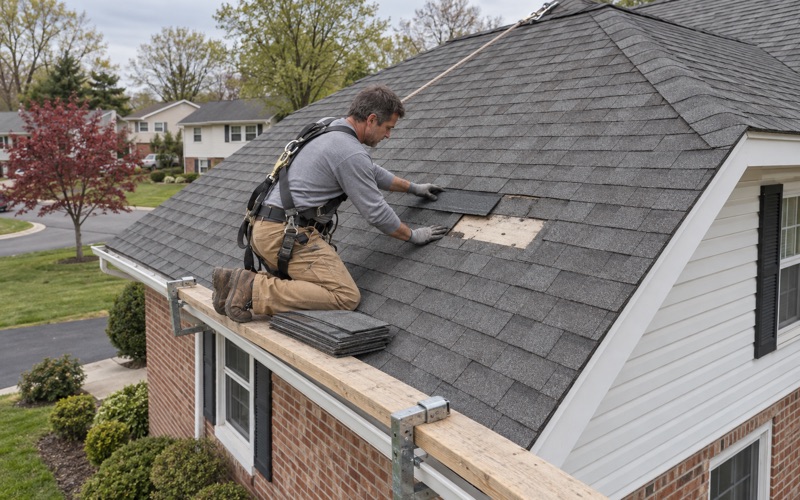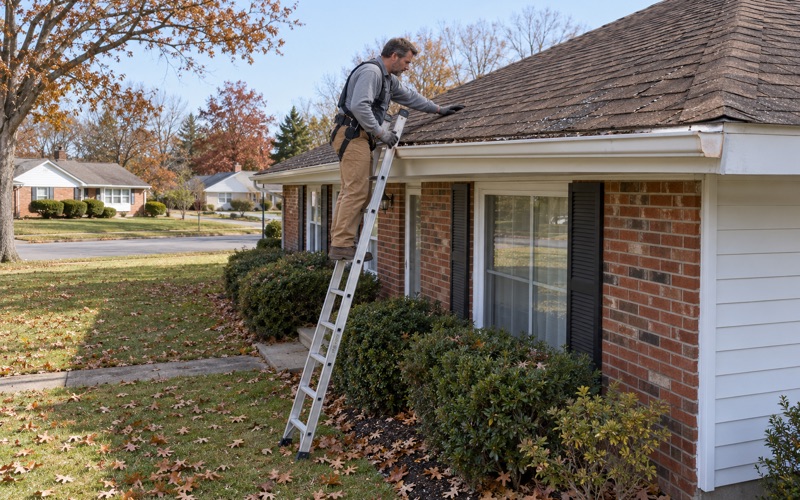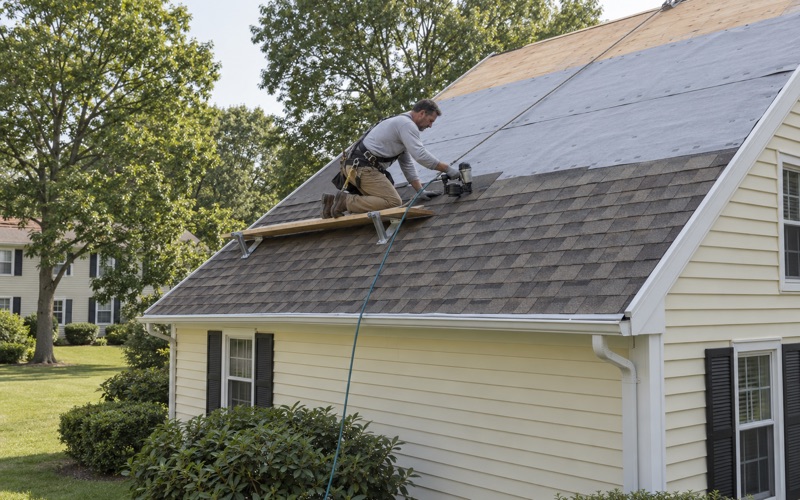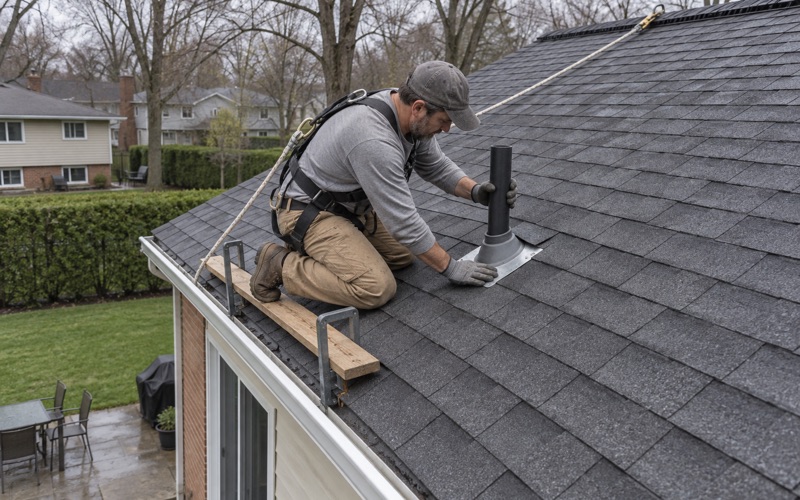
Cherry Hill Roofing handles roofing in Mantua for owners of manufactured homes and site-built houses alike, and we have spent more than 20 years learning that the two are not the same job. A leak in a single-section home on a leased lot and a worn shingle field on a two-story colonial call for different questions before anyone climbs a ladder. We ask those questions first.
Every leak call starts in two places: on the roof and underneath it, in the attic or the ceiling cavity, so we find where water actually enters before we put a price on anything. You get a plain answer on whether the roof can be repaired before replacement comes up at all, and if it cannot, our written scope breaks tear-off, decking, underlayment, flashing, ventilation and gutters into separate lines you can hold against any other bid.
This page covers what changes about the work here: the township’s manufactured homes and the questions they raise, the seams and penetrations that tend to leak on a factory-built roof, the detached houses from the 1990s, and what the 2021 tornado did inside the township. Each part is written for an owner deciding what to do next, not for a code inspector.
Manufactured Homes in Mantua Township
433 Mobile Homes in One Township
Mantua Township has 433 mobile homes, 7.0 percent of its 6,161 housing units, according to the Census Bureau’s 2024 five-year American Community Survey. Of those, 296 are lived in by their owners and 137 are rented. That is a real share of the township’s roofs, and it means a roofer working here has to be as comfortable on a manufactured home as on a two-story house.
A directory of manufactured-home communities lists three with Mantua 08051 addresses: Cedar Grove on Whippoorwill Way, Marathon Estates on Marathon Drive, and Maplewood Village on Tony Circle. We could not find how many homes each one holds, so we will not guess. What matters for a roof is less the community’s name than the arrangement the owner lives under, which is the next point.
Owning the Home but Not the Lot
A manufactured-home owner may own the house itself and still rent the land beneath it. That split can matter before a roof job starts, because a lease or a set of community rules may say something about exterior work, contractor access, parking a dumpster or the hours a crew can be on site. We do not know what any Mantua community’s rules say, so we will not guess at who is responsible for your roof.
What we do instead is ask you to check your lease and talk to the community office before we schedule anything. If a manager needs to approve the work, a written scope makes that conversation shorter. If you own the land as well, none of this applies and we can move straight to the inspection.
How a Factory Roof Differs From a Site-Built One
On a site-built house, a framing crew cuts rafters or sets trusses on the lot, and the roof pitch is whatever the plans called for. On a manufactured home, the framing and pitch were set at the factory before the house was ever trucked in, and the slope is often lower than on a typical colonial or ranch. That changes which materials make sense and how water behaves at every seam.
We do not assume a construction we have not seen. Before we recommend shingles, a membrane or a metal system, we look at the existing covering, the pitch, the condition of the decking where we can reach it, and how the home’s sections join. The answer depends on that home, not on what the house next door had done.
Looking for roofing closer to Yeadon? See Roofing in Yeadon.
Leaks, Seams and Roof-Overs on a Manufactured Home
Where the Water Gets In
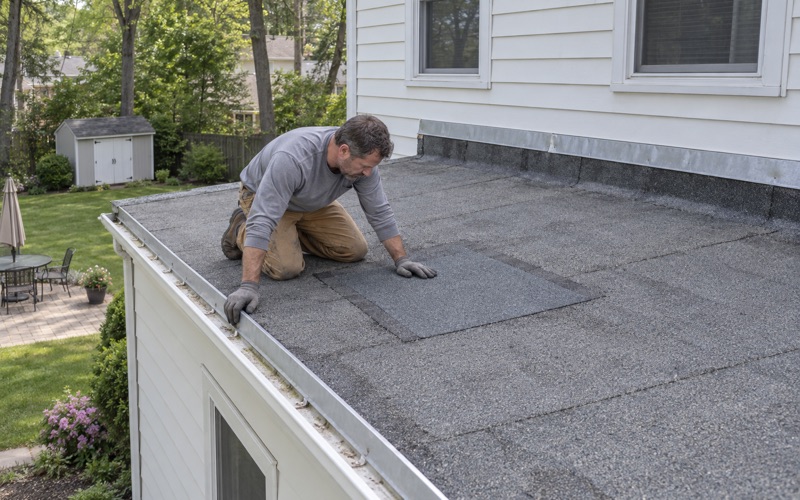
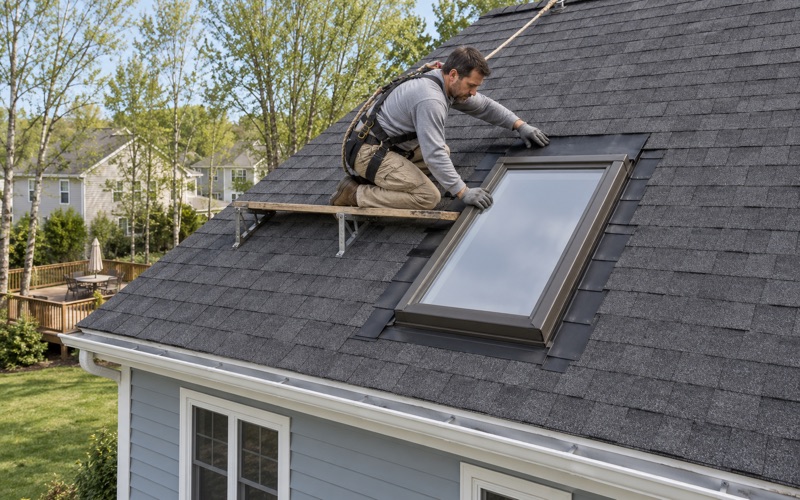
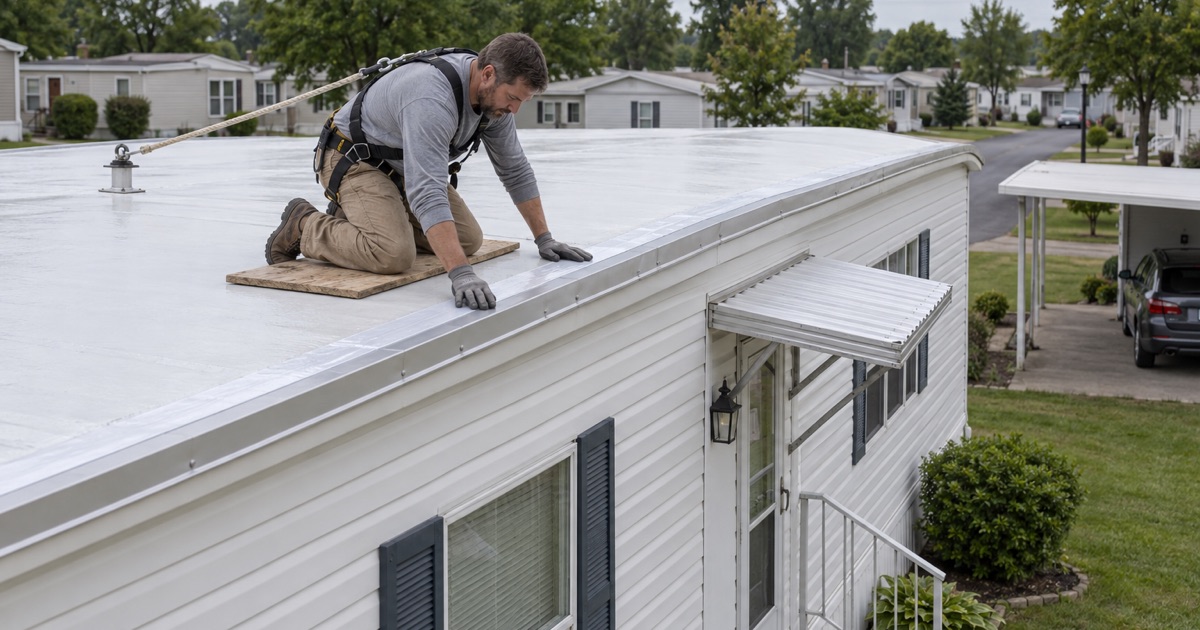
On a manufactured home, a leak often starts somewhere other than the open middle of the roof. The usual suspects are the marriage line where two sections meet, the pipe boots around vent stacks, skylight curbs, and the edges where the roof turns down to the walls. A cracked sealant bead or a lifted seam can let water travel along the underside well away from where the stain appears.
That is why the inside look matters as much as the outside one. We check the ceiling cavity or whatever access the home offers, follow the staining back toward its source, and only then talk about what the fix costs. Sealing the spot where the drip lands is how a leak gets paid for twice.
Repair First, Replacement Second
Many manufactured-home roof problems are local: one failed boot, one stretch of seam, one section of flashing that has pulled away. When that is what we find, we say so, and we price the repair rather than steering the conversation toward a whole new roof. An owner weighing a lease and a budget may have good reasons to keep the spend small, and we respect that.
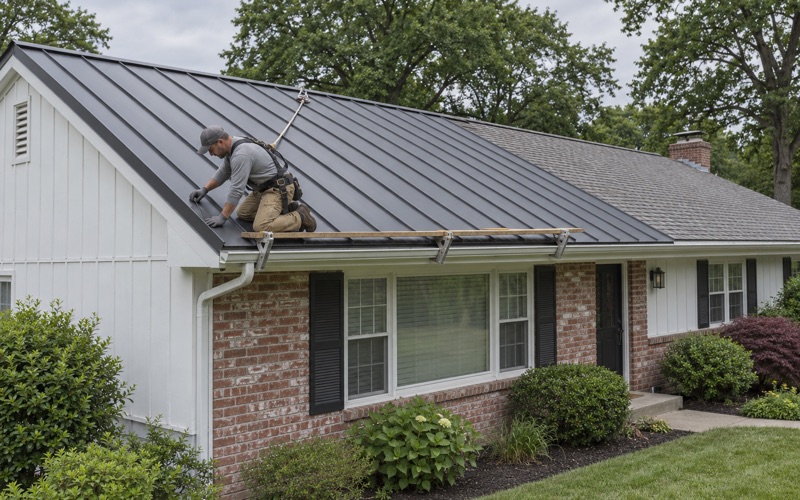
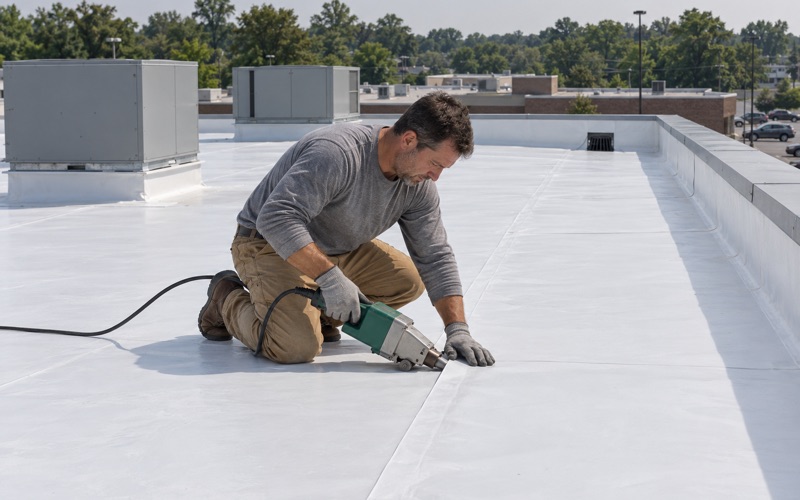
When the covering is worn across the whole surface, repair stops being honest advice. At that point we explain why, show you what we saw, and lay out the replacement options that suit the pitch you actually have, from a torch-down modified bitumen or TPO membrane to standing seam metal where the structure and budget allow it.
Roof-Overs and What Sits Under Them
A roof-over is a new roof system built over the old one, and on manufactured homes it is one way owners deal with a tired original roof. Some add a framed layer that raises the pitch; others go straight over with metal or a membrane. Each approach adds weight and changes how the roof drains, so it is not a decision to make from a brochure.
If your home already has a roof-over, we need to know what is underneath before we touch it. Trapped moisture between layers is a real risk, and a soft spot can mean the original deck has rotted. Any damaged decking we uncover is photographed and shown to you before it is replaced, at the per-sheet price written into the contract.
Mantua’s 1990s Detached Houses
The Township’s Biggest Building Decade
The 1990s were Mantua Township’s biggest decade for housing: 1,523 of its 6,161 units date from then, about a quarter of the stock, and another 937 went up in the 1980s. Most of the township’s housing is detached single-family, alongside 604 attached units such as townhouses. Those houses share the township with its manufactured homes, and they call for a different kind of visit.
A house of that age may be on its first roof or its third, and the only way to know is to look. What we can say is that a roof from that era was built to the ventilation and flashing habits of its time, which is where our inspection spends most of its attention.
Ventilation and Flashing
An attic that cannot breathe cooks shingles from below in summer and holds moisture in winter. We check whether the house has a ridge vent with enough soffit intake to feed it, measured as net free area, and whether insulation has been pushed over the soffit openings during later work. A re-roof is the cheapest moment to fix a ventilation problem.
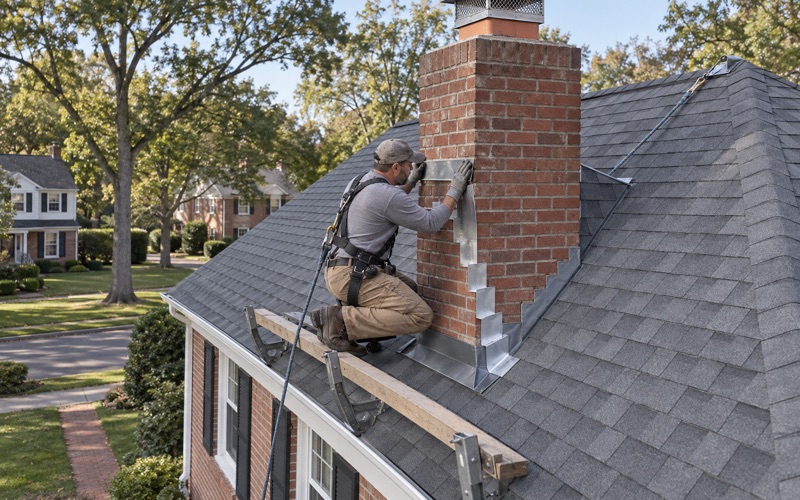
Flashing gets the same treatment. Where a chimney, a sidewall, a skylight or a second roofline meets the main roof, we replace the step flashing, counter flashing, apron and kick-out pieces when the roof is redone instead of running a fresh bead of caulk over the old metal. Caulk buys a season; new flashing is part of the roof.
Matching the Roof to the House
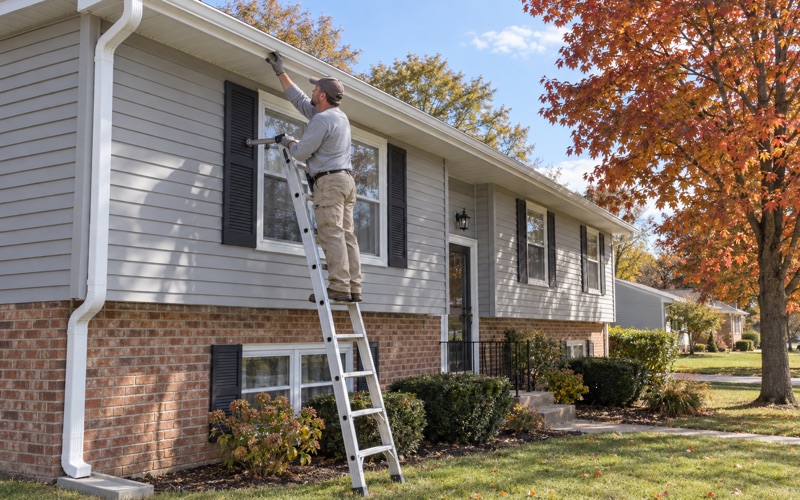
Color is easy to get wrong from a sample board. We hold actual shingle samples against your brick, stone or siding in daylight, so a laminated architectural shingle such as GAF Timberline HDZ, Owens Corning Duration or CertainTeed Landmark is chosen against the house it will sit on. On an attached townhouse, the neighbors’ roofs are part of that picture too.
At the end of every work day, the yard, driveway and gutters are cleaned and the ground gets a magnet sweep for loose nails. On a lot with children, pets or a tight driveway, that habit is the difference between a roof job and a flat tire. It applies on a manufactured-home lot just the same.
When the 2021 Tornado Reached Mantua
What the Weather Service Recorded
On September 1, 2021, the EF-3 tornado that the National Weather Service tied to Harrisonville, Mullica Hill and Deptford ran into Mantua Township. The survey from its Mount Holly office found trees snapped or uprooted near Main Street and the Delaware Valley Florist greenhouse mostly destroyed. Near Wenonah, the survey noted a few homes that lost roofs and one structure that collapsed.
We are careful with that last detail. The survey does not say which side of the Wenonah line those homes stood on, so we do not describe them as Mantua roofs. What it does place in the township is the tree damage near Main Street and the greenhouse loss, which is enough to take the storm seriously here.
Checking a Roof After a Storm
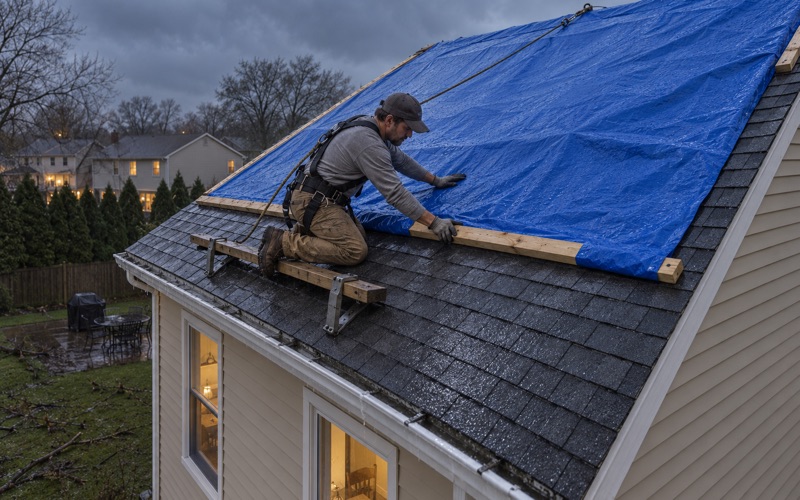
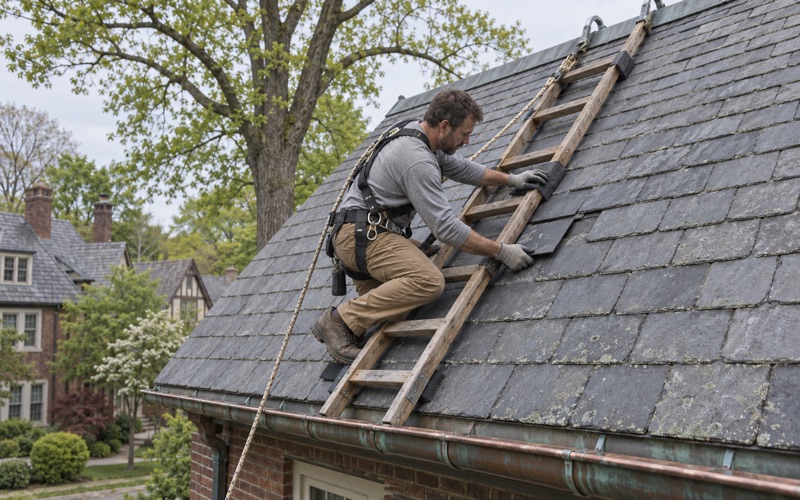
Fallen limbs do more roof damage than people expect, and some of it is invisible from the yard: a cracked rafter on a site-built house, a punctured membrane or a bent seam on a manufactured home. After a wind event, we look for impact marks, lifted or creased shingles, displaced flashing and any new staining inside before we tell you whether the roof needs work.
Mantua sits in the National Weather Service’s Gloucester forecast zone, so that zone’s forecast is the one to watch here. When a storm passes and you suspect damage, an early look keeps a small opening from turning into wet insulation and a stained ceiling. We would rather tell you nothing is wrong than find the problem a year later.
Documenting Damage for Your Claim
If a storm does damage your roof, we photograph what we find and write it up so you have something concrete to hand your insurer. That record is yours to use on your own claim, and we are not your adjuster. New Jersey sets deadlines insurers must meet in handling a claim, in N.J.A.C. 11:2-17.
When you ask, our crew will meet the adjuster at the house and walk the roof with them, pointing out what we documented. On a manufactured home in a community, let the office know the date so access is not a surprise. Every contract we write follows New Jersey’s home improvement rules, including the notice of your right to cancel.
- 20+ Years on Local Roofs
- Repair-First Advice
- Itemized Written Scopes