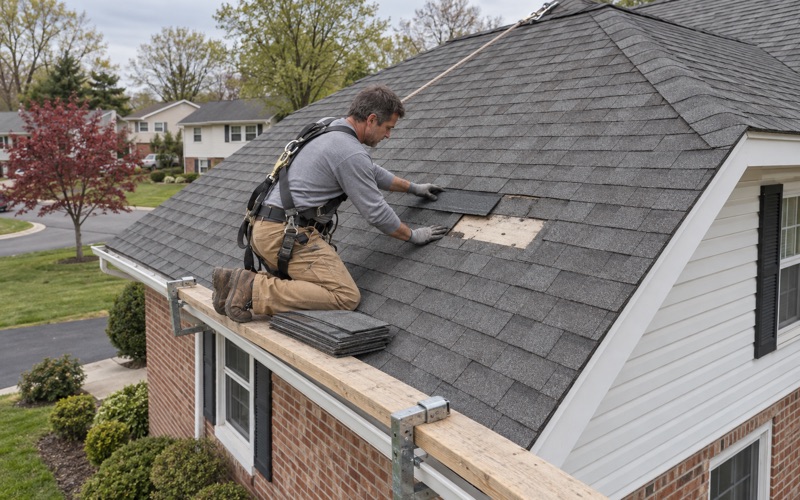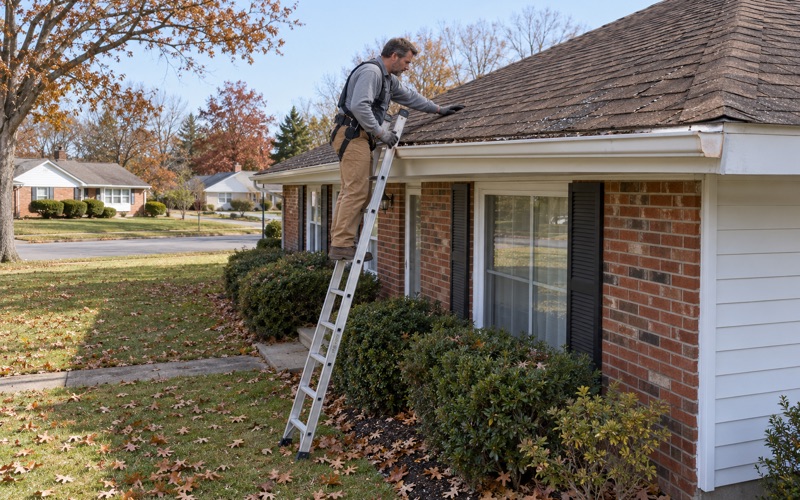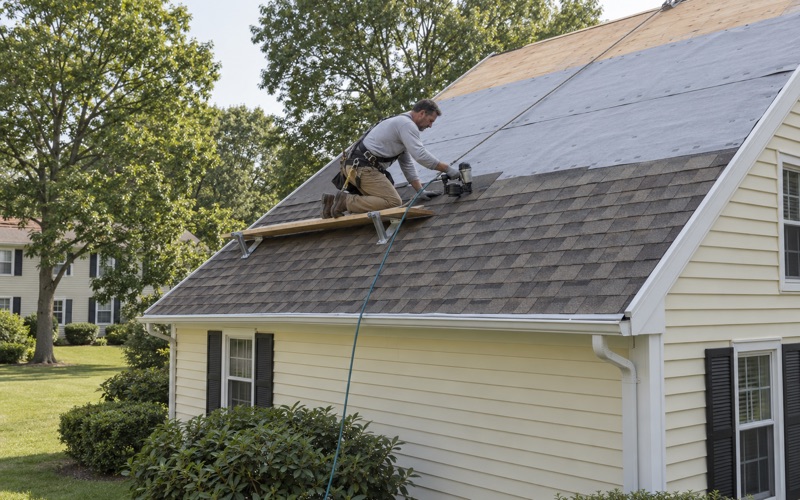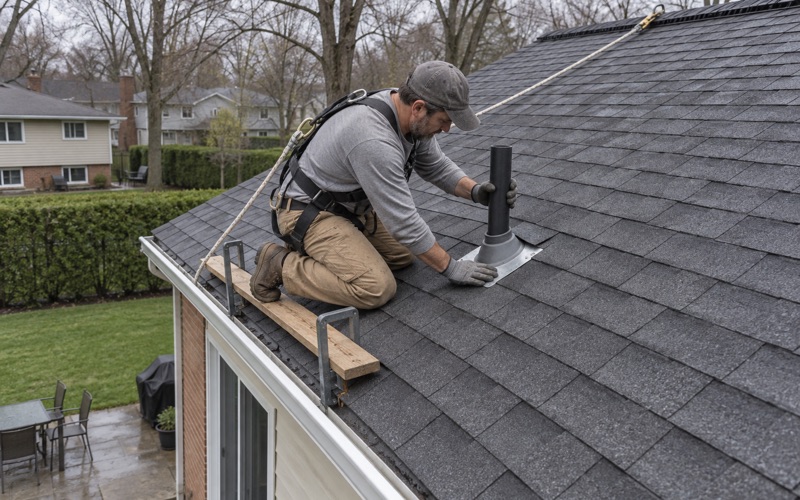
Cherry Hill Roofing brings more than 20 years in the trade to roofing in Lower Moreland, and a good share of the calls that matter here come after a thunderstorm rather than before a season. We repair, replace and inspect pitched residential roofs, and we tell an owner plainly whether a repair will hold before anyone talks about a new roof.
A wind event leaves damage that is easy to miss from the driveway. A shingle can lift, break its seal and settle back down looking normal, and the leak it allows may not show on a ceiling for weeks. That is why every leak call we take includes time in the attic as well as on the roof, so the water is traced to the spot where it really gets in before a price is written.
This page covers what the township’s own storm record shows, what straight-line wind and falling limbs do to a roof, and how we check a house once the power is back on. If your roof took a hit, start with the section that matches what you can see.
The June 2025 Bow Echo Over Lower Moreland
What the Storm Reports Recorded
On the evening of June 19, 2025, a bow echo crossed Lower Moreland. A bow echo is a curved line of thunderstorms that drives straight-line wind out ahead of it, and this one produced a measured 71 mph gust in the township at 5:41 p.m., according to the Storm Prediction Center’s report log for that day.
A second report at the same time and place describes significant tree damage, with one tree falling onto a house and badly damaging the structure. No tornado was reported. This was straight-line wind from an unnamed summer storm line, not a named storm. That distinction matters, because a storm without a name rarely prompts anyone to go up and look at a roof.
Why the Reports Came In Late
Both Lower Moreland reports were filed late, and the log gives the reason: the power was out. The reports came through the Mount Holly office of the National Weather Service, which covers the township. When a storm knocks out power, the people living through it are dealing with dark houses and fallen limbs, not looking at shingles.
We bring this up because the same thing tends to happen with roof damage. A lifted shingle or a cracked rafter tail gets noticed days or weeks later, usually after the next rain. If you lived through that June evening and never had the roof checked, it is not too late to have someone look.
A Storm Line, Not a Single Street
The same storm line produced other reports across Montgomery County that evening, including trees onto homes and part of a building’s roof blown off. A bow echo travels, so a house that escaped the worst of it in one corner of the township may still have taken a gust strong enough to loosen shingles.
Lower Moreland sits in the National Weather Service’s Eastern Montgomery forecast zone. When that zone is under a severe thunderstorm warning, the useful step afterward is a walk around the house with an eye on the roof line, not a wait to see whether water appears. Ground-level clues are covered further down this page.
Looking for roofing closer to Harrison Township? See Harrison Township Roofing.
What a 71 mph Thunderstorm Gust Does to Shingles
Lifted Tabs and Broken Seal Strips
Asphalt shingles are held down by nails and by a strip of sealant that bonds each course to the one below. A strong gust can get under an edge, peel that bond loose and fold the shingle back, sometimes creasing it. Once the seal is broken, the shingle is far easier to lift in the next storm, even a modest one.
A creased shingle often lies flat again and looks fine from the street, which is why wind damage goes unreported so often. On a roof we look for a faint horizontal line across the tab, missing granules along a fold, and shingles that lift when touched. Those are the signs a 71 mph gust can leave behind.
Edges, Ridges and Flashing
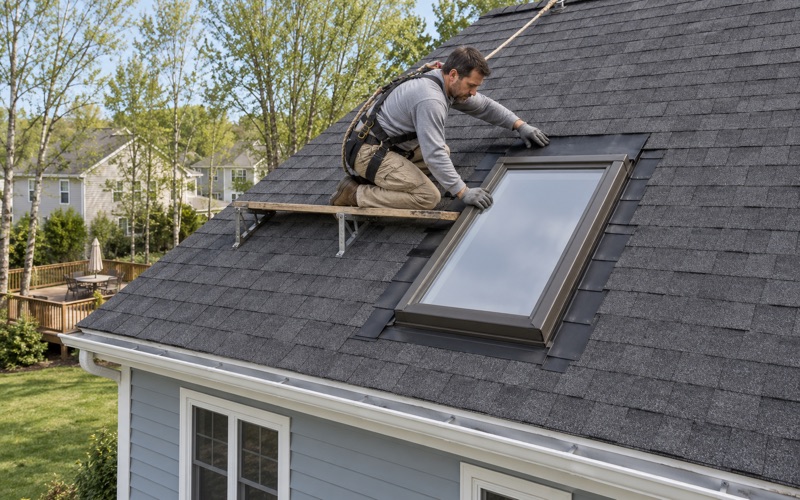
Wind works hardest at the edges of a roof. The eaves, the rakes along the gable ends and the ridge are where shingles are most exposed, and where a missing drip edge or a loose ridge cap lets the gust get a grip. We check those lines first, along with the pipe boots and any skylight curbs.
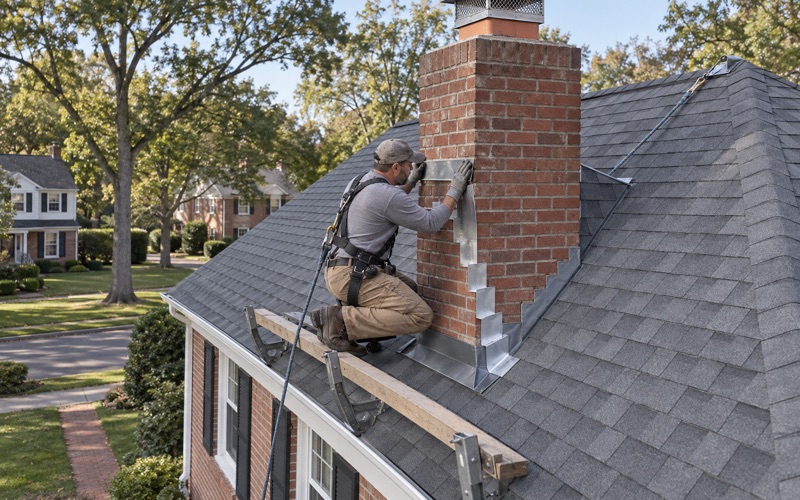
Flashing at chimneys and walls can also shift when the shingles around it move. If we end up redoing a roof, the step flashing, counter flashing and chimney flashing are replaced rather than smeared with caulk, because a sealant bead over tired metal is a repair that tends not to last.
Repair Before Replacement
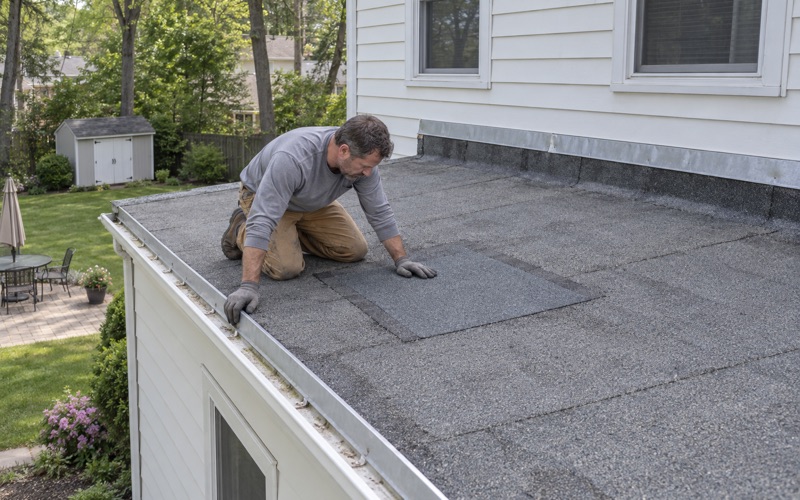
Wind damage on an otherwise sound roof is often repairable. Replacing a handful of creased or missing shingles, resealing tabs that have lost their bond and resetting a ridge cap are ordinary jobs, and we say so before any conversation about a new roof begins. An honest repair answer is the first thing you get from us.
Replacement makes sense when the damage is spread widely, when matching shingles cannot be found, or when an older roof was already near the end of its life. If that is the case, our written scope lists tear-off, decking, underlayment, flashing, ventilation and gutters on separate lines, so you can set our estimate beside another one and compare them item by item.
When a new roof is the right call, we quote architectural shingles carrying ASTM D7158 Class H or ASTM D3161 Class F wind ratings. The rating label tells you how a shingle performed in a standardized test; it is not a promise about any single storm. Installation matters as much: correct nailing and a sealed starter course at the eaves and rakes.
When a Tree Comes Down on the Roof
Safety Before Shingles
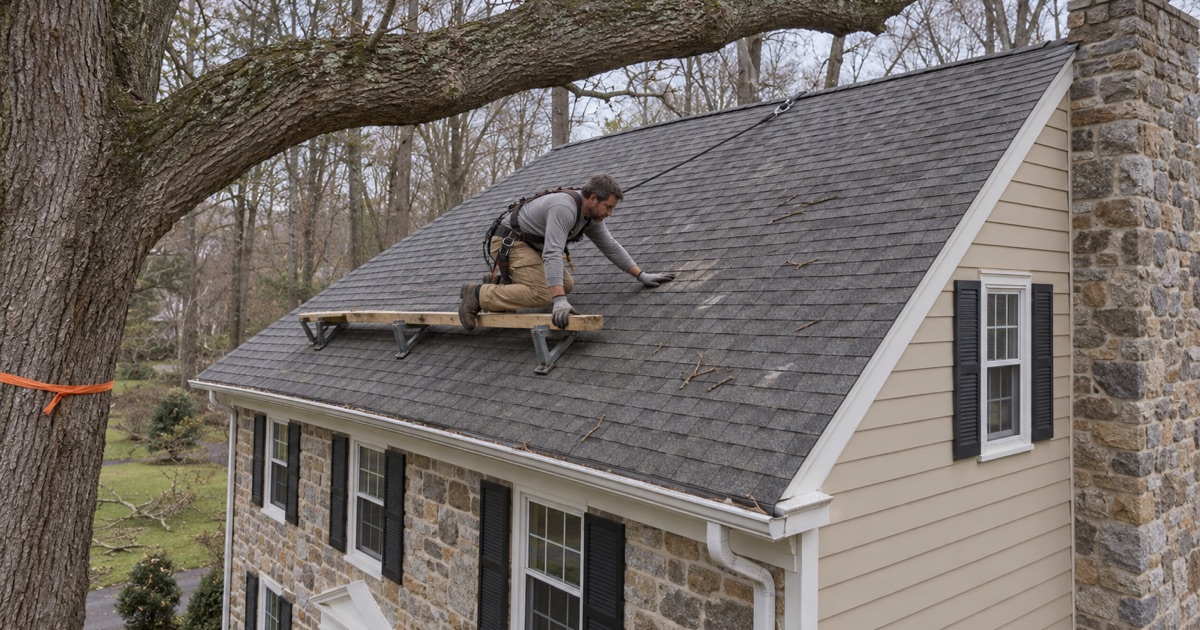
The tree that fell onto a Lower Moreland house that June evening is a reminder that a limb strike is a structural problem first and a roofing problem second. If a trunk or heavy limb is resting on the roof, keep people out of the rooms beneath it and have the tree removed by a tree crew before anyone climbs up.
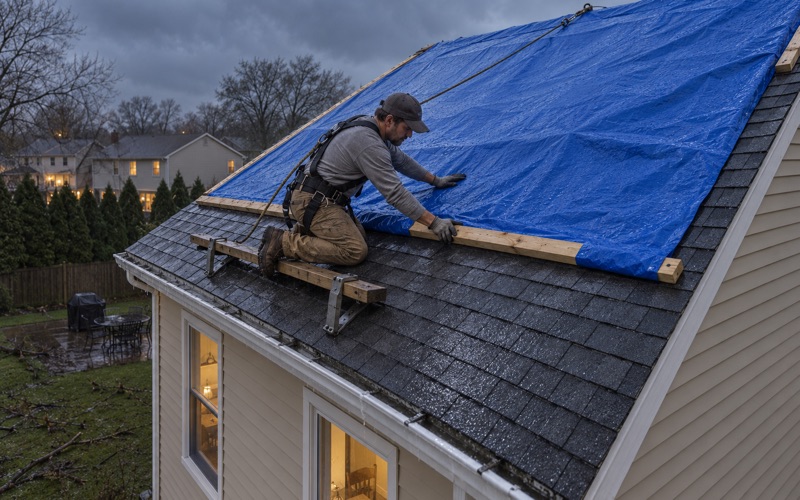
Once the weight is off, the opening needs to be dried in quickly. A tarp fastened over the damaged area, lapped up under the shingles above it, keeps rain out while the full repair is planned. A tarp is a stopgap, and we treat it as one rather than leaving it in place for a season.
Decking and Framing Under the Impact
A falling tree rarely stops at the shingles. It can crack roof sheathing, split rafters and push nails up through the surface well beyond the point of impact. We open the area, check the framing from the attic side and mark every sheet of decking that is broken, delaminated or soaked.
Damaged decking is photographed and shown to you before a single sheet is replaced, and the per-sheet price is set in the contract ahead of time. Nobody learns the cost of hidden damage after the fact. If rafters are cracked, we tell you plainly that framing repair comes before roofing, and the scope says so on its own line.
Paperwork for Your Insurance Claim
Tree and wind damage often goes through the homeowner’s insurance, and a claim is easier to support with clear evidence. We photograph the damage, write it up for your own claim, and meet the adjuster on site when you ask us to. You file the claim and make the decisions; we supply the record of what we found.
Photos taken before cleanup are the most useful, so take your own wide shots of the tree on the roof and the debris in the yard if it is safe to do so. Note the date and time as well. With a measured gust on record for the township that evening, the storm itself is already documented.
Checking a Detached House After a Summer Storm Line
Detached Homes, Exposed Roofs
Lower Moreland is largely a township of detached houses. Census estimates count 4,130 of its 4,838 housing units as one-unit detached homes, and most occupied homes are owner-occupied. A detached house takes wind on every side of its roof, and any mature tree close to the house is part of the risk a bow echo brings.
Many of those houses were built in the 1950s and 1960s, by the township’s census count. Whatever their age, we check the attic for daylight, damp sheathing and staining around nails, because a leak that starts after a storm often shows there before it reaches a ceiling. Ventilation matters here too: a ridge vent with clear soffit intake keeps that sheathing drier between storms.
What You Can Check From the Ground
After a storm line passes, walk the yard before you call anyone. Look for shingle pieces or granules on the lawn and driveway, bent gutters or downspouts, a ridge cap that no longer sits straight, and limbs resting on the roof or hanging over it. Binoculars help; a ladder in wet weather does not.
Inside, check ceilings on the top floor and around chimneys and skylights over the next few rains. If you find anything, or if a limb came down anywhere near the house, call us for an inspection. We would rather confirm a roof is fine than find out about a soft spot two storms later.
Permits, Historic Review and Matching the House
For an ordinary shingle job, the township’s Building Department lists re-shingling a roof among work that does not need a permit. Structural repairs after a tree strike are a separate question, so we check with Code Enforcement at the Township Building on Red Lion Road before structural work starts. Inside the Historic District, the advisory Historical Architectural Review Board reviews exterior work, including roof shingles.
Wherever the house sits, replacement shingles should suit it. We choose color by holding samples up against the actual brick, stone or siding, and on an older house we repair with matching material where it can be sourced instead of whatever happens to be on the truck. At the end of every work day, the yard, driveway and gutters are cleaned and swept with a magnet for nails.
- 20+ Years on Local Roofs
- Repair-First Advice
- Itemized Written Scopes