Cherry Hill Roofing brings more than 20 years in the trade to roofing in Lower Gwynedd, and the first thing we check on any house here is what the current roof is made of. That answer decides whether a new roof can go on top or whether everything has to come off first. In this township, that rule is written down and inspected.
That makes a re-roof here a different job from one where a second layer is simply nailed over the first. We plan for the tear-off from the first visit, price it as its own line, and build the schedule around the township’s inspections instead of discovering them halfway through. Our written scope lists tear-off, decking, underlayment, flashing, ventilation and gutters separately, so a second estimate can be laid beside ours line by line.
Before any of that, we give a straight answer on whether the roof can simply be repaired. Many leaks come down to flashing or a handful of shingles, and in Lower Gwynedd a repair covering less than 20% of the roof needs no permit, though it still has to meet code and the manufacturer’s instructions. Replacement only comes up once repair is honestly off the table.
Estate Country in Gwynedd Valley and Penllyn
Land That Was Assembled, Then Divided
Lower Gwynedd was founded in 1698 by Welsh Quakers, and today it is made up of four villages: Gwynedd, Gwynedd Valley, Penllyn and Spring House. The township is described as an equestrian community with twenty miles of trails, and parts of it are estate land that was later broken up into house lots.
Meadow Farm in Gwynedd Valley shows the pattern. It was assembled in 1922 around a manor house of about 16,000 square feet, with a gatehouse and a stable, and after a 1985 sale the estate was subdivided and the manor itself split into two homes. That leaves older estate buildings and newer houses on the same former grounds.
What We Look At Before Pricing
On a property with that kind of history, we never assume what the roof is made of from the street. We go up, and we go into the attic, because a leak or a worn roof is traced to where the water actually gets in before anything is priced. The attic also shows the rafters and sheathing the new roof will sit on.
We also check the edges, where earlier layers show at the eaves and rakes. We have no count of how many Lower Gwynedd houses carry slate, wood shake or clay tile, so every older roof is a question we answer on site rather than a guess. Whatever we find goes into the written scope before a number does.
Repairing What Can Be Matched
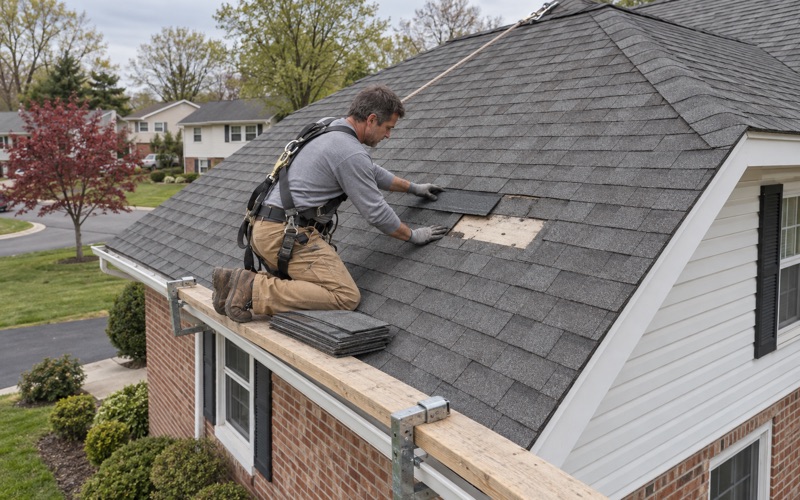
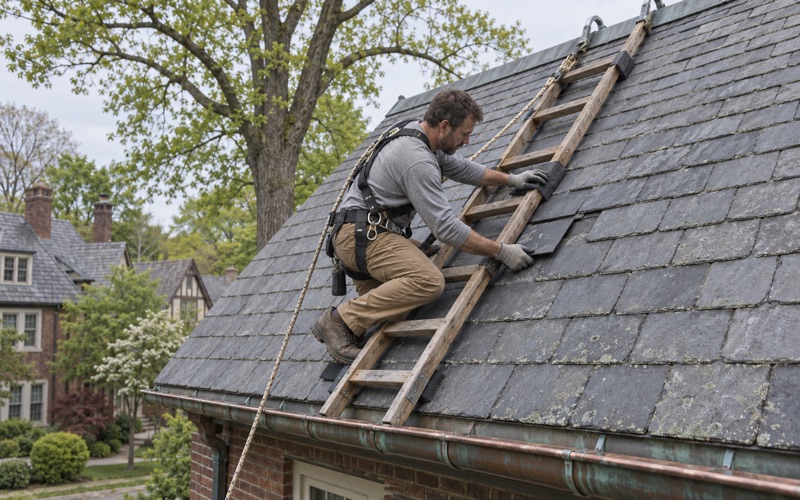
Not every older roof needs to come off. Where a slate roof is sound and only a few pieces are broken or slipped, we repair it with matching material when it can be sourced, using slate hooks rather than patching with whatever is on the truck. That keeps the original roof working and avoids a tear-off nobody needed.
The same goes for wood shake with isolated damage. Once the field of the roof is failing, though, patching only delays the bill, and that is when we talk through replacement and what the township will require of it. We would rather tell you that plainly than sell a string of repairs on a roof that has reached its end.
Looking for roofing closer to Haddonfield? See Roofing in Haddonfield.
Why Slate and Wood Shake Can’t Be Roofed Over Here
The Township’s List
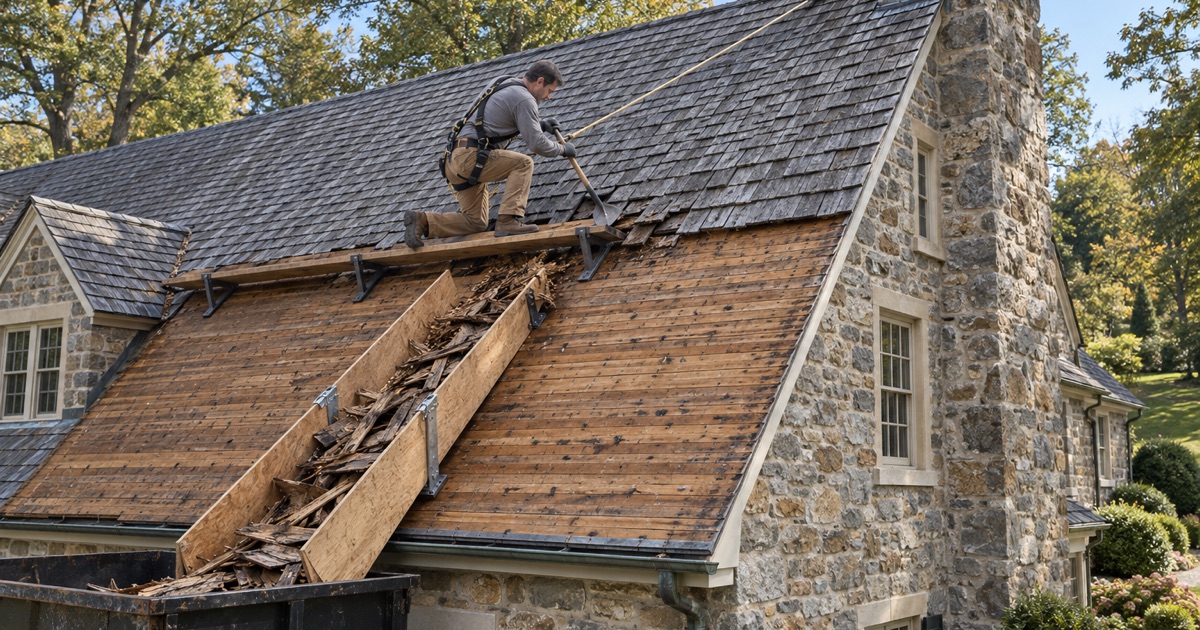
Lower Gwynedd’s Roof and Window Permits guide is direct about it: a new roof may not be installed over slate, wood shake, asbestos or clay tile. If any of those is the current covering, it comes off before new material goes down. There is no overlay option to price for those roofs.
The guide also says replacing a roof requires a Roof permit, and any work on structural parts such as rafters or trusses needs a separate Building Permit. We plan for whichever applies and put both township inspections into the schedule from the start. Neither is something to learn about the morning the crew arrives.
Why Overlaying These Materials Fails
Slate, clay tile and wood shake do not make a flat, even base. Shingles laid over them follow every ridge and gap underneath, and the nails have to pass through a brittle or uneven layer before they reach the deck. The result is a roof that looks wrong and holds poorly.
There is also the weight to think about, and the fact that a covering left in place hides the sheathing from view. Taking the old roof off is the only way to see what the new one will be fastened to, which is exactly what the township wants inspected.
Asbestos and Clay Tile Removal
Asbestos shingles sit on the same list, and their removal is handled with more care than an ordinary tear-off. We tell you up front when we suspect them, and we explain how that changes the schedule and the scope before any work is booked. Nothing about it is left for the crew to discover on the day.
Clay tile is the other material that rules out an overlay. When a tile roof is being replaced rather than repaired, the tiles come off, the deck is opened to inspection, and the new roof is built from the sheathing up. Removing heavy tile appears as its own line in our scope, so you can see what it costs.
The Tear-Off Inspection and the Two-Layer Limit
What the Inspector Sees
The township’s guide calls for a tear-off inspection, done when the old materials are removed, and a final inspection when the work is complete. The first one happens with the deck bare, which is the only moment anyone can see the sheathing, the rafters beneath it and the condition of the roof edges.
The guide sets sheathing at a minimum of 1/2 inch over rafters 16 inches on center, and 5/8 inch with H clips where rafters are spaced farther apart. Ice and water shield has to run at least 24 inches inside the exterior wall, and drip edge goes on at the eaves and gable ends.
Damaged Decking, Shown Before It Is Replaced
Once the old roof is off, some sheathing on an older house often turns out soft, cracked or patched from earlier work. We photograph every damaged section and show it to you before it is replaced, and the per-sheet price is already set in the contract, so the number does not move once the deck is open.
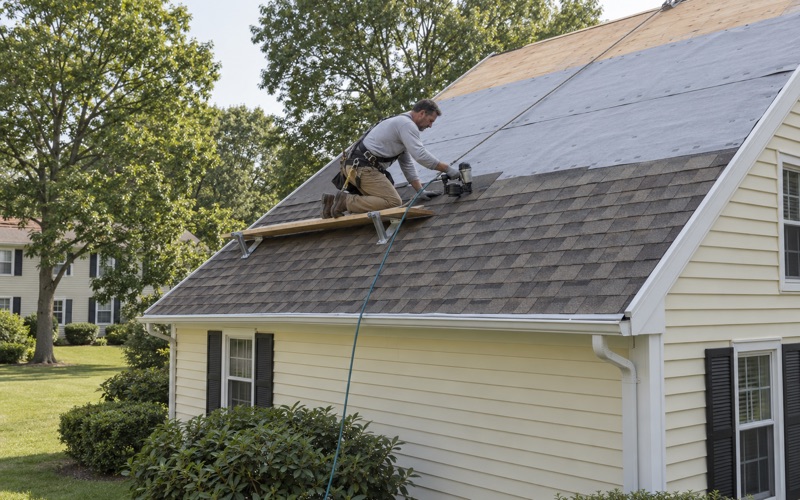
That sequence sits naturally beside the township’s tear-off inspection, since the deck is already exposed and documented. Underlayment and the new roof go down only after the sheathing is sound, and you keep the photos for your own records. Nothing is covered over that you have not seen.
Two Layers, and Not a Third
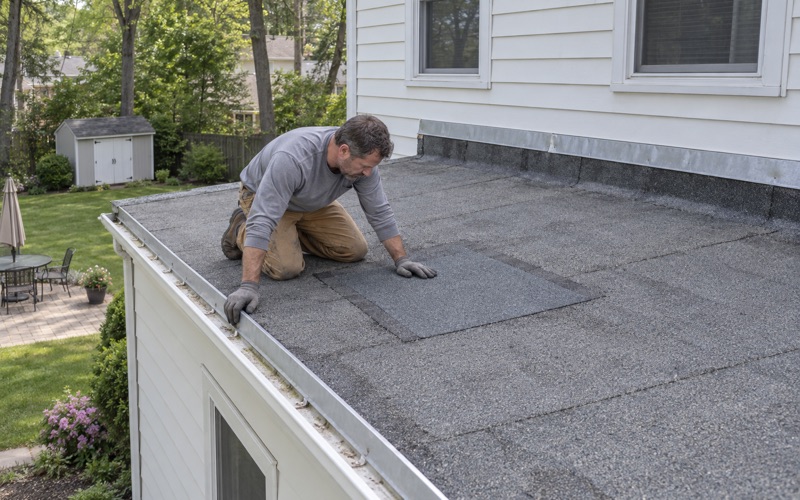
For asphalt, fiberglass and low-slope roofs, the guide allows a maximum of two roofing systems. A house that already carries two layers cannot take a third, so the next roof starts with a full tear-off. A house with a single asphalt layer may be eligible for a second, but that is not automatically the right call.
An overlay leaves the deck unseen, so any rot under the first layer stays there, and it uses up the last layer the township allows. We walk through both options in writing, with tear-off as a separate line, so the choice is yours and made with the full cost in view.
Newer Homes and Townhouses in Lower Gwynedd
A Township That Doubled
Lower Gwynedd’s population roughly doubled between 1970 and 2020, from 6,361 to 12,076, and the housing shows it. Of 5,100 housing units in the Census Bureau’s 2024 five-year estimates, 401 were built in 1939 or earlier, while 1,737 went up between 1980 and 1999. So the houses built before 1940 are a small share of the whole, and a later house brings different questions.
On a house from the 1980s or 1990s, the roof is likely asphalt, and the question is often how many layers are already up there. We count them at the edge and from the attic before we write anything, because a second layer added years ago means the next roof has to start from the deck.
Chimneys, Walls and Skylights
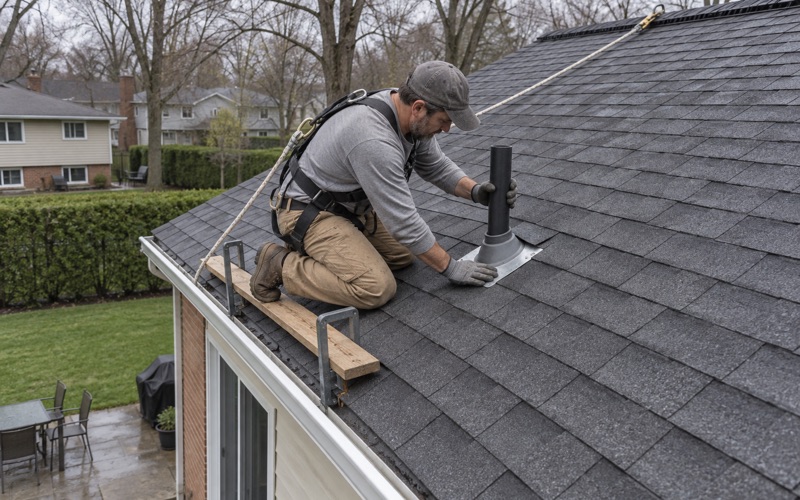
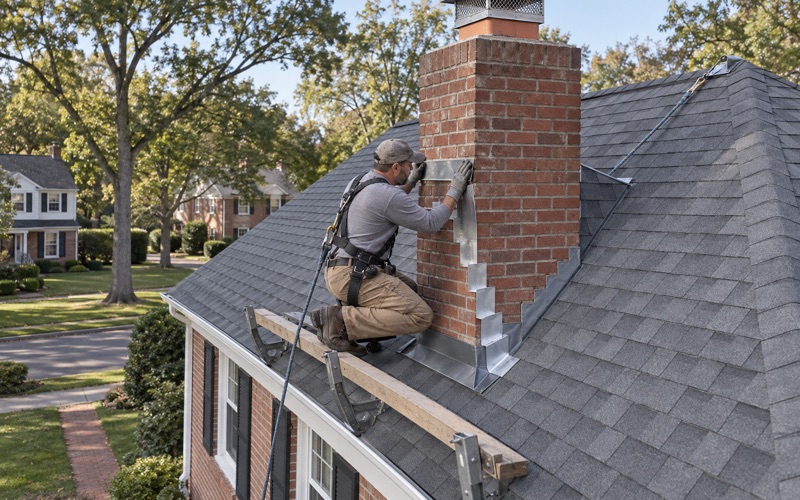
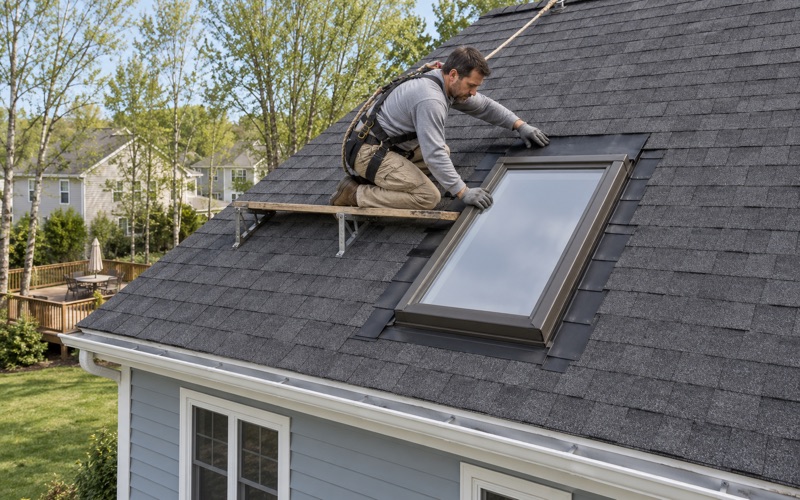
Wherever one roof meets a wall, a chimney or another roof, water has a place to get in. When we redo a roof, the flashing at chimneys, side walls, skylights and roof-to-roof joints is replaced, not caulked over and left for the next storm. The township’s guide names flashing at chimneys, skylights and wall transitions too.
Step flashing, counter flashing and a chimney cricket behind a wide chimney all go into the written scope by name. If a joint has been sealed with roofing cement for years, we show you before we cut it out. Kick-out flashing goes in where a roof edge ends against a wall, so water is turned away from the siding.
Color, Cleanup and Solar Panels
Shingle color is chosen against the brick, stone or siding on your own house, with samples held up on site rather than picked from a brochure. A shade that looks right indoors can read very differently beside the actual walls in daylight. We take the time to get that right before an order goes in.
If solar panels are on the roof, their removal and reinstall go into the schedule before the tear-off date is set. At the end of every work day the yard, driveway and gutters are cleaned and the ground is swept with a magnet for nails, which matters on a property with horses, pets or children.
Storm Damage and the Forecast Zone
Lower Gwynedd sits in the National Weather Service’s Eastern Montgomery forecast zone, served by the Mount Holly office, so that is where the warnings for this township come from. When wind or hail does damage a roof, we photograph it and write it up for your own claim, and we will meet the adjuster on site if you ask.
A storm repair still follows the same township rules as any other job. If the damage reaches past a small repair into a replacement, the Roof permit and the tear-off inspection apply, and an old slate or shake roof still cannot simply be covered over. The scope we write for your claim reflects that.
- 20+ Years on Local Roofs
- Repair-First Advice
- Itemized Written Scopes