Cherry Hill Roofing has spent more than 20 years on roofing in Harrison Township and across South Jersey, and we start every job the same way: by finding out what the roof is actually doing before anyone talks about price. A leak call gets a look in the attic as well as on the shingles, because water rarely shows up inside where it first got in.
Most of the work is what any established neighborhood needs: worn shingles, tired flashing, a gutter run that spills onto a porch roof. Where a repair will hold, we say so plainly before replacement comes up, and when a roof does need replacing, the written scope breaks tear-off, decking, underlayment, flashing, ventilation and gutters into separate lines you can compare against any other estimate.
Some of the work here is heavier than that. A township that came through a major tornado has houses that needed far more than new shingles, and others near the damage that still deserve a careful second look. This page covers both, along with what changes when the job reaches the rafters and walls rather than stopping at the roof covering.
The September 2021 Tornado Through Mullica Hill
The Path Across the Township
On the evening of September 1, 2021, during the remnants of Hurricane Ida, a tornado touched down at 6:10 p.m. about a mile southeast of Harrisonville and crossed Harrison Township, passing through Mullica Hill on its way toward Deptford. The National Weather Service office in Mount Holly surveyed the track afterward and rated it EF-3.
The survey put the estimated peak wind at 150 mph, the path at 12.6 miles and the maximum width at 400 yards. That peak is a single estimate for the strongest point of the storm, not the wind any particular house took, which is part of why damage along the track ran from light to total.
What the Survey Found in Willow Oaks
The Willow Oaks subdivision took some of the worst of it. The survey team reported that several homes there had exterior walls completely collapsed and that a number of homes lost roofs and upper story walls, and one house was left with only a few interior walls standing. That pattern, roof and top-floor walls leaving together, tells a roofer where a house gave way.
When a roof leaves along with the walls under it, the shingles were not the part that failed. The weak point is usually the connection between the roof framing and the wall framing below, where rafters or trusses sit on the top plate. That joint is what a rebuild has to get right, and it is the part a homeowner never sees once the drywall goes back up.
How Many Homes Were Affected
A year after the storm, Harrison Township Fire Chief Matthew Cardile said more than 100 homes had been damaged across the township and 39 were considered total losses. Township officials said about 40 families had been displaced, that some were still rebuilding, and that many were facing supply chain issues. Figures from different sources and dates vary, so we treat them as a measure of scale rather than a precise tally.
Supply delays matter for anyone still finishing work or planning it now. On a structural job we line up framing lumber, sheathing and the roofing system before the old roof comes off, so a house is not left under tarps waiting on a delivery. If an order slips, you hear about it from us before the crew date, not on it.
Looking for roofing closer to Florence? See Roofing in Florence.
Rebuilding a Roof From the Frame Up
Rebuilding after a total loss is a different job from re-roofing. The covering is the last layer, and everything under it, from the wall framing to the deck, has to be right first or the new shingles are only hiding the problem. We plan the roof with whoever frames the house so the two jobs meet cleanly.
Restoring the Roof-to-Wall Connection
Once the walls and ceiling joists are back, the rafters or trusses should be fastened to the wall framing with metal connectors rather than toenails alone. We check that each connector is the one specified for that location and that every nail hole the manufacturer calls for is filled, because a connector missing half its nails will not do the job it was rated for.
That work sits under the roof, so it is easy to cover before anyone has looked at it. Ask whoever does the framing for photographs of the connections before sheathing goes on and keep them, since an insurer or a future buyer may ask how the house was put back together.
Decking, Underlayment and Wind-Rated Shingles
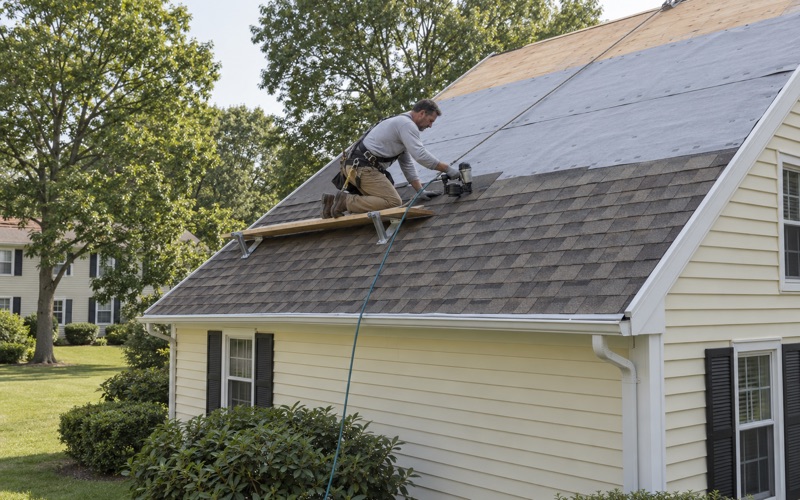
On a new roof deck we start at the edges, where wind gets its first grip: drip edge at the eaves and rakes, and a self-adhering ice and water barrier that meets ASTM D1970 along the eaves and in the valleys. The rest of the deck takes a synthetic underlayment rated to ASTM D8257.
For the covering, we steer homeowners toward architectural shingles tested to ASTM D3161 Class F or ASTM D7158 Class H for wind. Familiar lines include GAF Timberline HDZ, Owens Corning Duration and CertainTeed Landmark, and we confirm the rating on the exact product before it is ordered. A rating does not make a roof storm-proof, but it shows the shingle was tested against uplift.
Ventilation, Flashing and Color
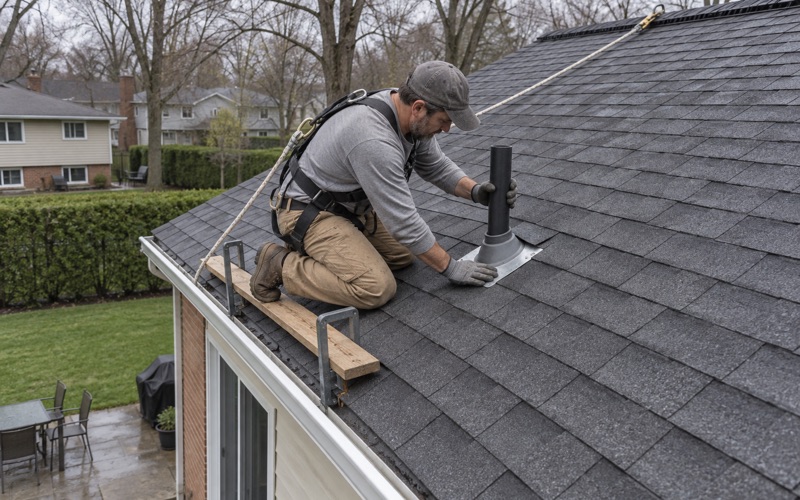
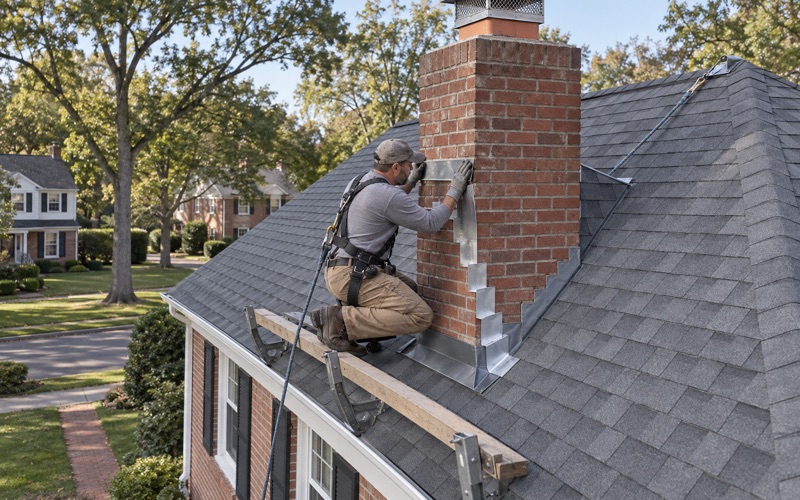
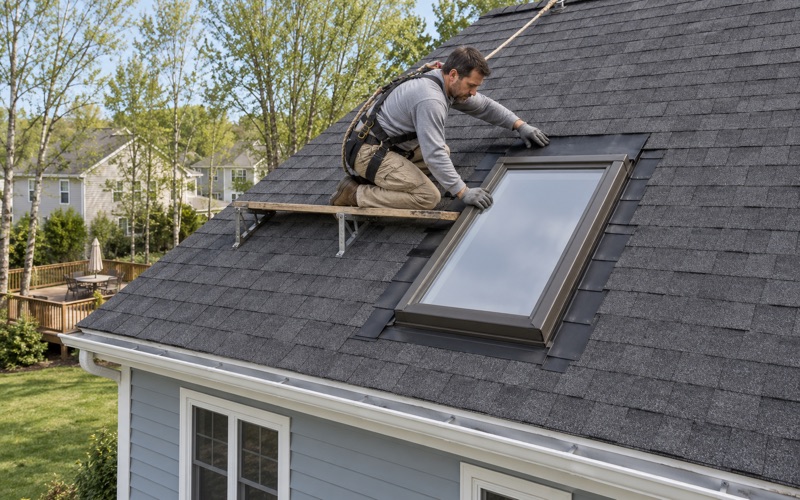
A rebuilt roof gets new flashing everywhere it meets a wall, a chimney or a skylight, and where two roof planes join. We replace step and counter flashing rather than sealing old metal with caulk, add kick-out flashing where a roof edge runs into a sidewall, and pair a ridge vent with soffit intake so the attic breathes.
If a house lost its roof but kept its brick or siding, the new shingle has to sit against what survived. We hold samples up on site against the actual walls before you choose a color, which matters more than usual when the houses on either side kept their original roofs.
Houses on the Edge of the Track
Total losses are obvious, and they are rebuilt from the ground up by necessity. The houses beside them, with a few shingles missing and a gutter bent, are the ones more likely to carry damage nobody went looking for, and an owner may not know to ask.
EF-2 Damage at the Edges
On Salvatore Drive, the weather service found one home completely destroyed and based its EF-3 rating on how consistent the damage was along that street, with EF-2 damage at the edges. A tornado’s worst wind runs through a narrow core, and houses farther out from that core can come through looking better than they are.
Those are the roofs we look at most carefully. A house that kept its shingles may still have rafters that shifted on the top plate, sheathing nails that backed out, or a ridge that no longer runs straight, and none of that shows clearly from the driveway.
What We Check in the Attic
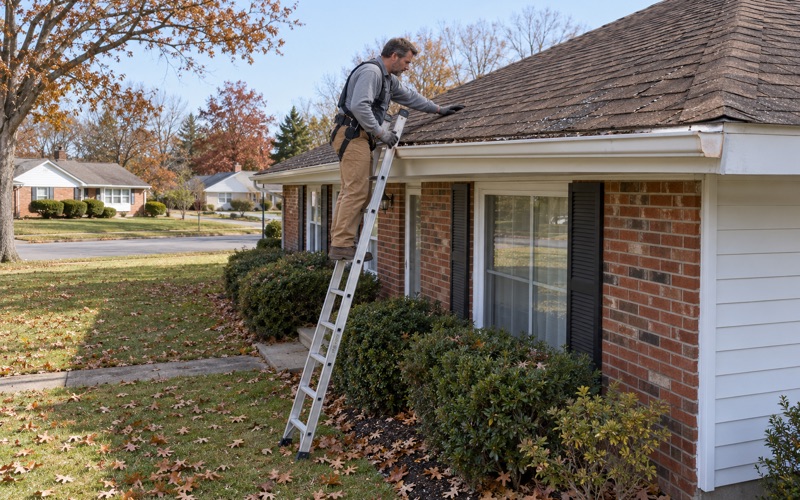
An inspection on a house near the track starts inside. In the attic we look for daylight at the eaves, split or lifted rafter ends, fasteners pulled through the sheathing, and water stains that trace back to a seam rather than a shingle. Then we go up top and match what we saw from below to the outside of the roof.
About two-thirds of the township’s housing was built in 1990 or later, and 3,917 of its 4,465 units are detached houses. A newer roof that looks fine from the street can still have taken a twist in its framing, which is why an outside look alone is not enough this close to the track.
Documenting Damage for a Claim
When we find storm damage, we photograph it and write it up so you have something concrete for your own claim, and if you ask, we will meet your adjuster on site and walk the roof together. The claim stays yours; we describe the roof, and you and your insurer settle it.
New Jersey sets claim settlement deadlines for insurers under N.J.A.C. 11:2-17, and anyone hired to negotiate a claim on your behalf falls under the state’s Public Adjusters’ Licensing Act. Our contracts follow New Jersey’s home improvement rules, including the cancellation notice, so the paperwork on the roofing side is as clear as the photographs.
Farm Buildings, Decking and the Work Day
Bridgeton Pike and Jefferson Road
The tornado did not only cross subdivisions. Along Bridgeton Pike, where the path reached its maximum width, most of the barns and storage buildings at a large commercial farm were destroyed, and near Jefferson Road and Eachus Road a dairy farm lost barns and two grain silos.
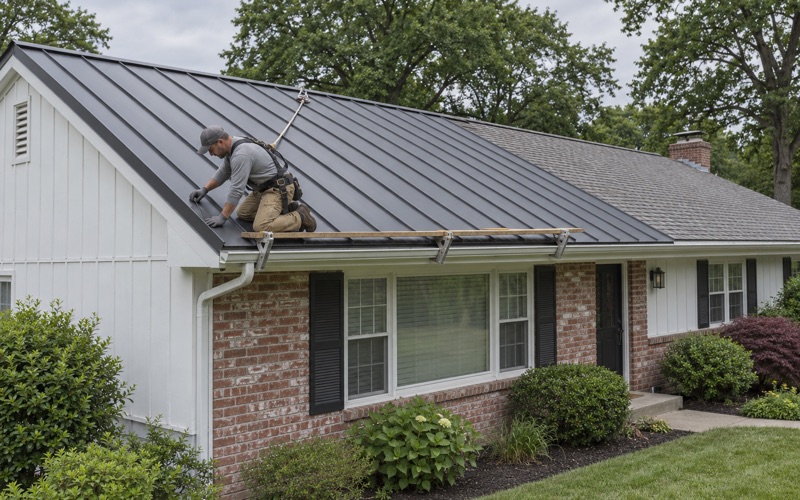
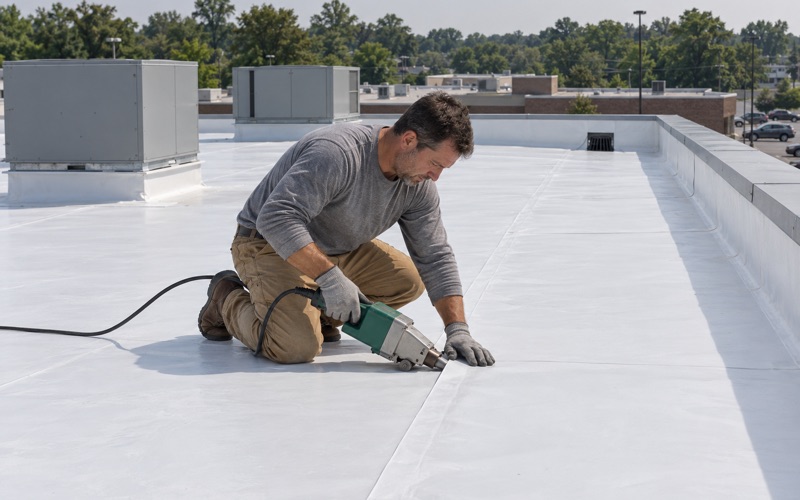
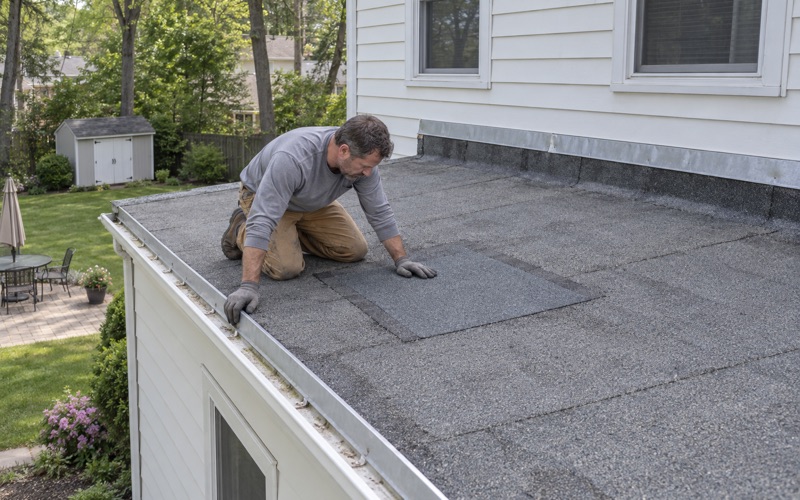
On a barn, shed or detached garage, we write the same itemized scope we use on a house. Standing seam metal, EPDM or a torch-down modified bitumen roof on a low-slope addition is listed by material, labor and flashing, so it can be checked against another bid.
Decking Found Under the Old Roof
On any tear-off, the old covering hides the condition of the deck until it comes off. When we find rotted or storm-cracked sheathing, we photograph it and show it to you before anything is replaced, and the per-sheet price is already written into the contract, so there is no surprise number at the end.
That matters on houses near the track, where a deck can carry damage that never showed through the shingles. It also matters on a roof that simply reached the end of its life, since the price of a tear-off should not depend on what nobody could see when the estimate was written.
Safety and Cleanup on Every Job
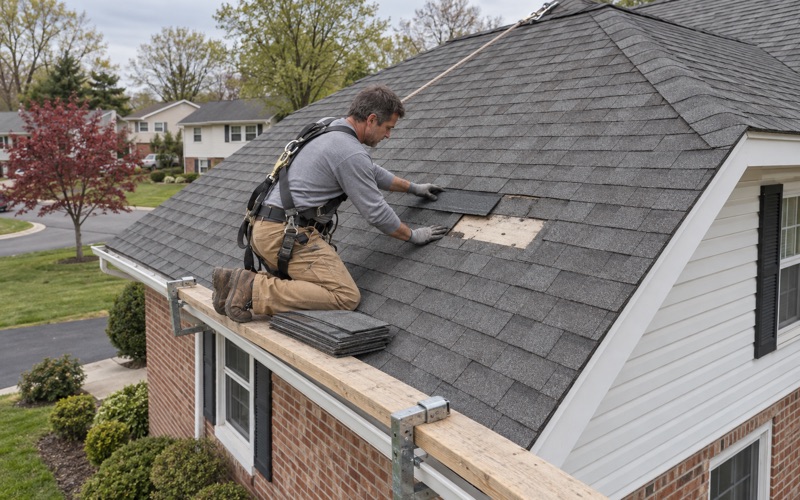
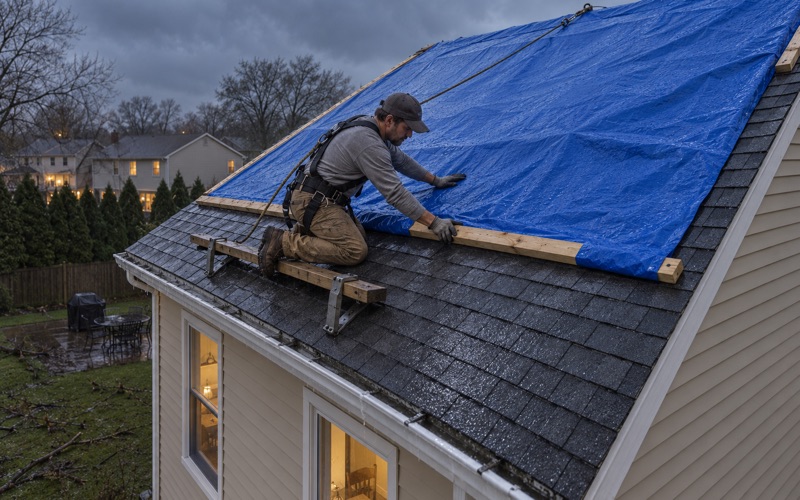
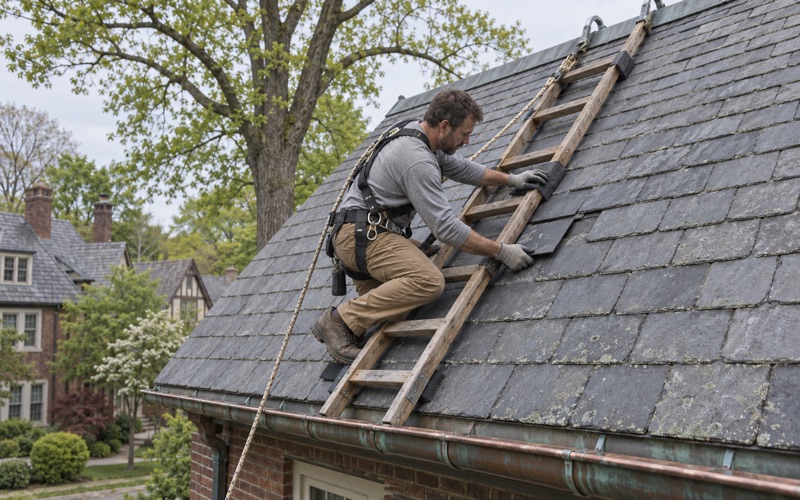
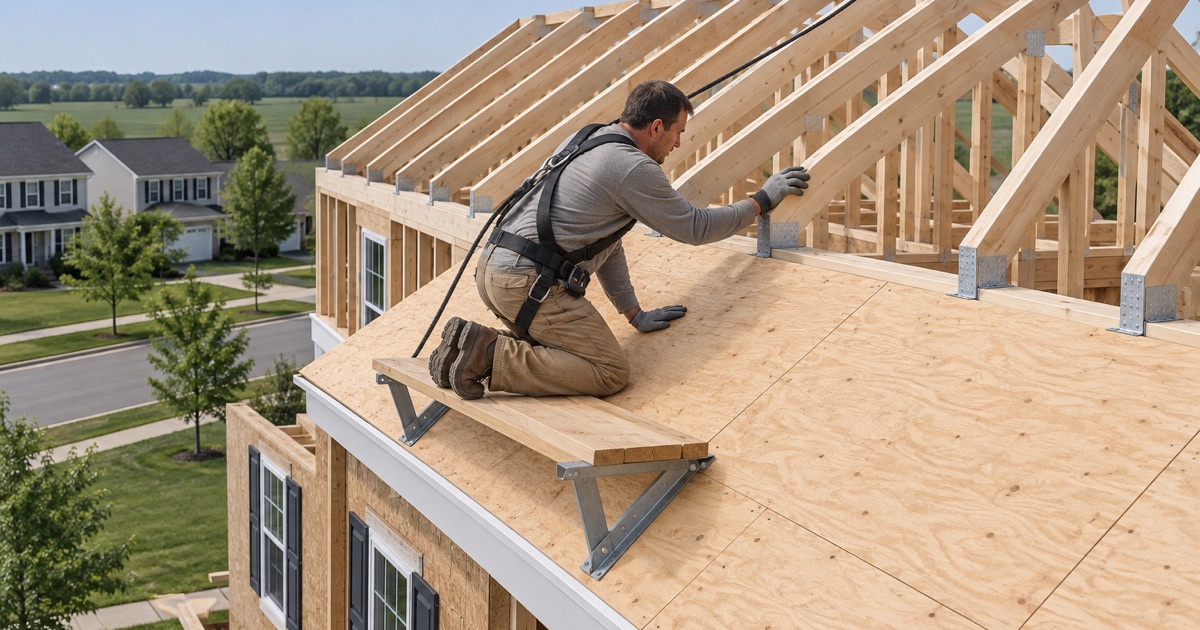
Our crews work under OSHA’s residential roofing fall protection rule, which starts at 6 feet, so harnesses and anchors go up before the first bundle does. On a rebuild with open framing, that setup is planned with the framing crew rather than improvised once the walls are standing.
At the end of each work day we clean the yard, the driveway and the gutters, and we run a magnet sweep for roofing nails. With children, pets and tires on the same driveway, a loose nail is not a small thing, and a job that runs several days should not leave several days of debris behind.
- 20+ Years on Local Roofs
- Repair-First Advice
- Itemized Written Scopes