Cherry Hill Roofing brings more than 20 years of experience to roofing in Hammonton, and much of the work in this town looks different from a typical homeowner job. On a rental, the person who notices a problem is often not the person who pays to fix it. A landlord hears about a leak secondhand, sometimes days after it started, and has to decide what to do from a description over the phone.
That is why we start every leak visit in two places at once: on the roof and in the attic. Water rarely drips straight down from the spot where it enters, so tracing it from inside is how we find the real entry point before we put a number on anything. Owners get a plain answer about whether the roof can be repaired, and replacement only comes up if repair genuinely will not hold.
For landlords, that combination matters more than usual. You are not just fixing a roof; you are protecting a tenant’s ceiling, their belongings and their patience, and often a second household’s as well. The sections below cover how we handle rental roofs in Hammonton, from the first tenant call to the final cleanup.
Hammonton’s Two-Family Rental Houses
Who Lives Under These Roofs
Hammonton has a real stock of two-family houses, and most of them are rented. Census figures from the American Community Survey count 512 occupied homes in two-unit buildings in town, and 443 of those are renter-occupied while only 69 are lived in by their owners. Across all housing, 1,670 of 5,721 occupied homes, or 29.2 percent, are rented.
Those numbers shape how a roof job here usually unfolds. On a two-family rental, the owner usually lives somewhere else, so the roof is something they manage from a distance rather than something they see every day. We plan our communication around that, with photos and written findings the owner can review without driving over.
What Landlords Ask Us First
The first question from a rental owner is usually about cost and timing, but the honest first step is finding the leak. We trace the water from inside before quoting, because a stain over a second-floor bedroom can lead back to flashing several feet away. Pricing a repair before that tracing is done is how owners end up paying twice.
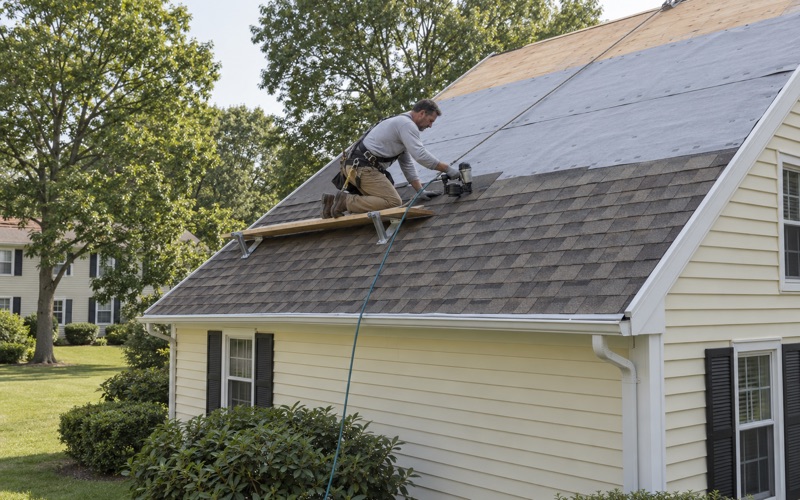
Once we know the cause, the written scope breaks the work into separate lines: tear-off, decking, underlayment, flashing, ventilation and gutters. Owners who manage more than one property can compare our numbers against another contractor’s estimate item by item, which makes the decision easier to make from a distance. Nothing is bundled into a single lump sum that hides where the money goes.
Contracts an Absentee Owner Can Rely On
Our contracts follow New Jersey’s home improvement rules, including the cancellation notice, so an owner signing from out of town knows exactly what they are agreeing to. The contract also sets a per-sheet price for any damaged decking we find once the old shingles come off.
If we do find soft or rotted boards, we photograph them and send the pictures to the owner before replacing a single sheet. On a rental you may never see the bare deck yourself, so those photos are your record of what was found and why it was charged.
Looking for roofing closer to Franklin Township? See Franklin Township Roofing.
When the Tenant Finds the Leak
The Call From Upstairs
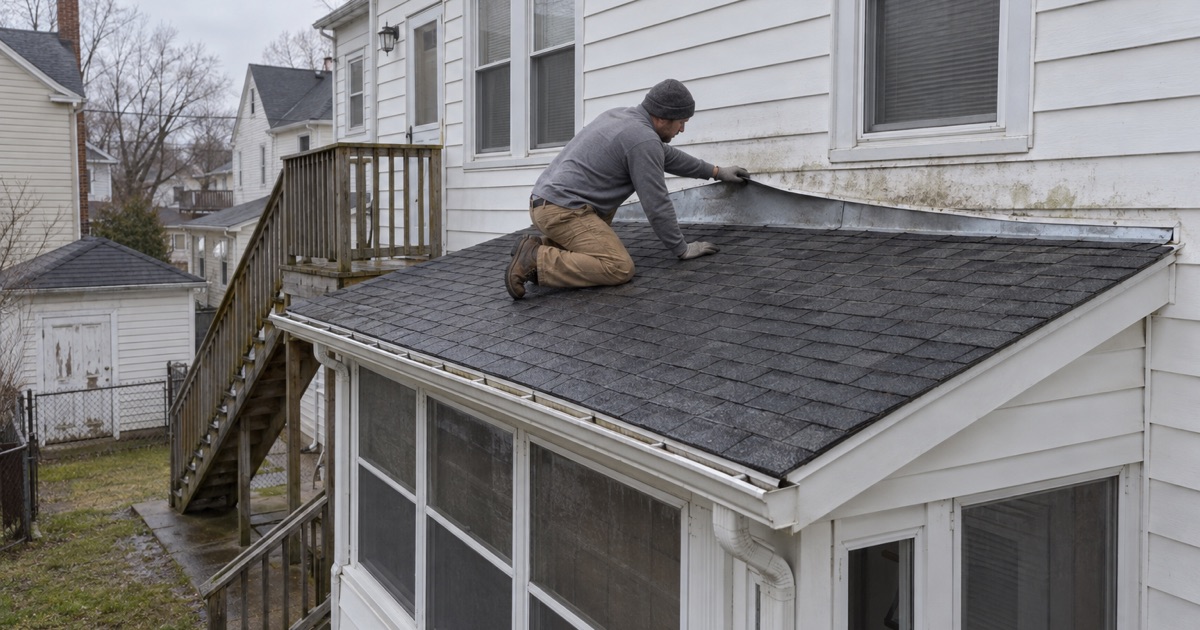
On a two-unit rental, a leak usually announces itself as a tenant’s call about a stain spreading across an upstairs ceiling. By the time it reaches the owner, the water may have been coming in through several rains. We treat those calls as urgent, because a ceiling that is wet today can become plaster or drywall on the floor next week.
When an owner calls us, we can coordinate access directly with the tenant if the owner prefers. We confirm a time, explain that we will need to get into the attic or the top-floor ceiling space, and let the tenant know what to expect so nobody is surprised by a crew on the stairs.
Tracing Water Through a Lived-In Unit
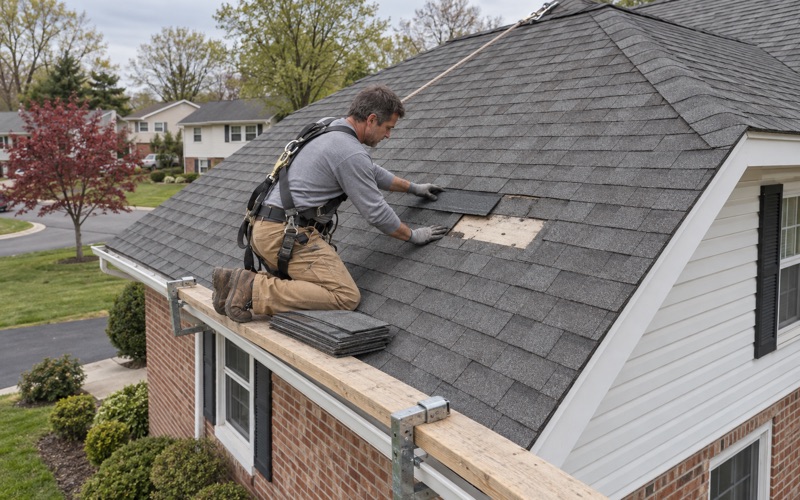
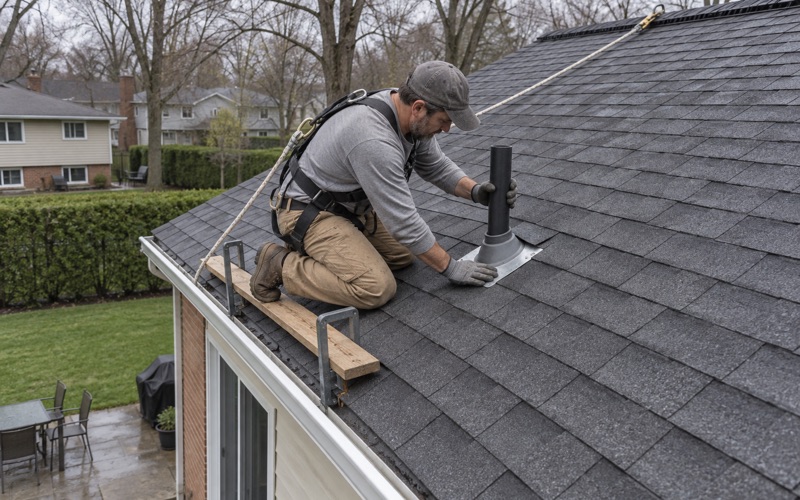
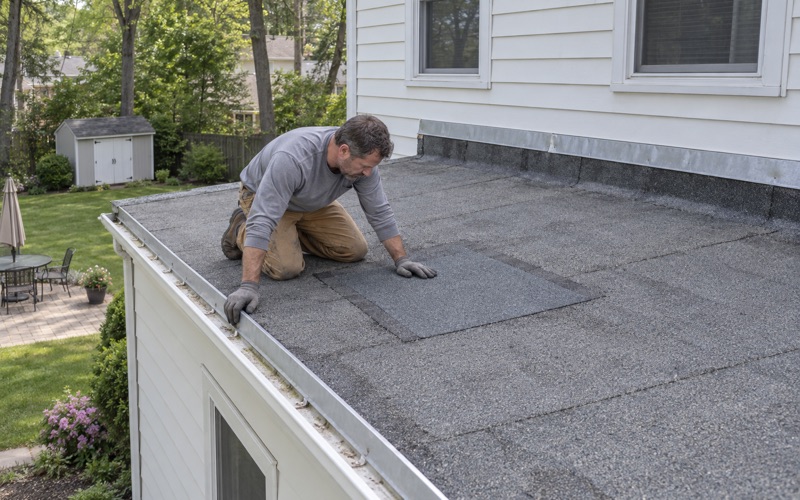
Finding a leak inside an occupied home takes some care. Water can travel along a rafter or the top of a wall before it shows on a ceiling, so the stain is a clue, not an answer. We follow it back from the attic side to the actual point of entry, whether that is a cracked pipe boot, a lifted shingle or failed step flashing against a wall.
That tracing step is what keeps a landlord from paying for the wrong fix. A patch over the stain might stop the call for a month, but if the real entry point is a chimney or a valley, the tenant will be calling again after the next storm. We would rather spend an extra half hour in the attic than send you a second invoice.
Storm Damage and the Owner’s Claim
When a storm is behind the leak, we photograph the damage and write it up so the owner has documentation for their own insurance claim. If the adjuster wants to see the roof in person, our crew will meet them on site when asked, which saves an absentee owner from making the trip.
We document what we see and leave the claim itself in the owner’s hands. Our job is an accurate record of the roof’s condition and a written scope for the repair, so the decision rests on facts rather than guesses made over the phone.
One Roof Over Two Households
Scheduling Around Two Families
A two-family house puts two households under one roof, and a roof job affects both of them. Noise, ladders, a dumpster in the driveway and crews overhead are all part of the work, so we set the schedule with the owner early and give enough notice that both units can plan around it.
Parking, trash pickup and work-from-home tenants all come into it. We confirm where the dumpster will sit, which entrances stay clear, and roughly which days the tear-off will be loudest, so neither household is caught off guard. A tenant who knows the plan is far less likely to call the owner in a panic.
Keeping the Yard Safe for Both Units
Two households usually means more people walking the yard, more cars in the driveway and sometimes children or pets outside. At the end of every work day we clean the yard, driveway and gutters and run a magnet sweep for roofing nails, so tenants are not stepping around debris while the job is still underway.
A stray nail in a tire is a small thing until it becomes a tenant complaint the owner has to deal with. Daily cleanup keeps the site in a condition the owner would accept if they drove by unannounced. It also means the second-floor tenant is not tracking granules up the stairs.
Flashing, Chimneys and Shared Details
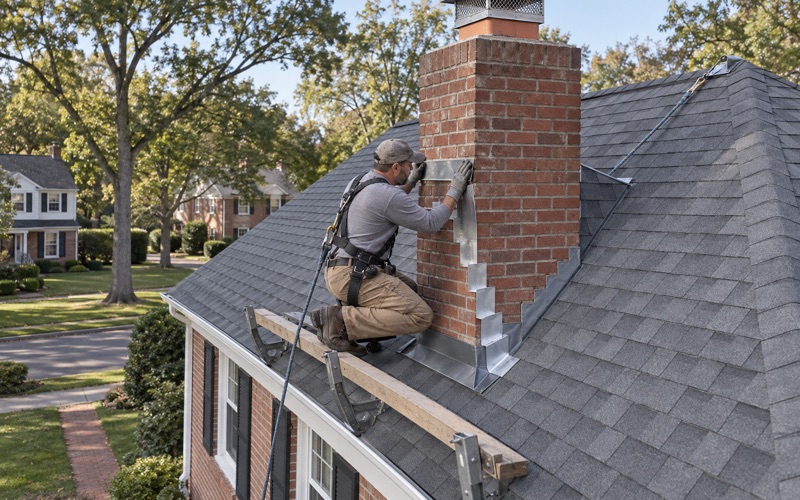
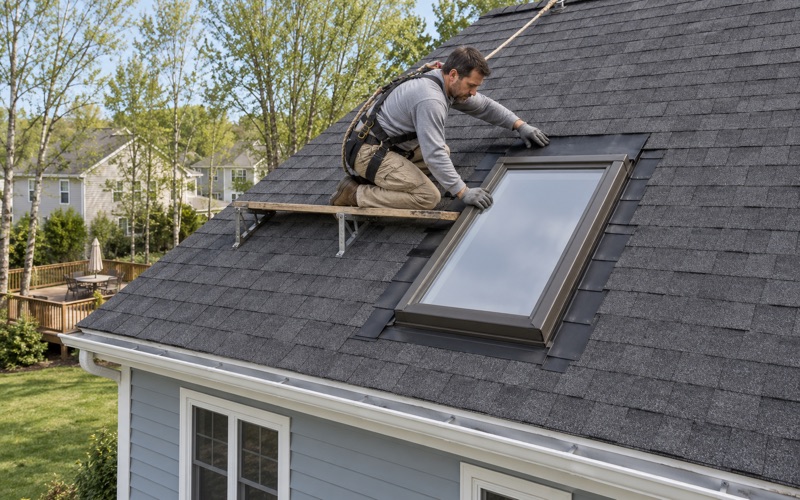
A house built for two households can have more roof joints than a single-family home of the same size: separate entry porches, chimneys, and walls where an addition meets the main roof. Each of those joints is a place water can get in. When we redo a roof, flashing at chimneys, walls, skylights and roof-to-roof transitions is replaced rather than caulked over, because sealant on old metal is a short-term answer.
That matters more on a rental than almost anywhere else. A flashing failure means a tenant’s call, a visit, and a repair the owner has to arrange from a distance, so getting the details right the first time saves everyone a round of disruption.
Ventilation deserves the same attention. A ridge vent only works with enough soffit intake below it, and on an older house with closed-in eaves we check that balance before adding anything, since an attic that cannot breathe shortens the life of new shingles.
Hammonton’s Prewar Town Center and Bellevue Avenue
An Old Core of Homes
Hammonton was incorporated as a town in 1866, and a meaningful share of its housing is old. Census estimates put 1,140 homes, or 18.7 percent of the town’s housing, as built in 1939 or earlier, and nearly a quarter predate 1950. The town is known as the Blueberry Capital of the World, but for a roofer, its prewar housing is the part that matters.
Not every old house in town is a two-family rental, and not every rental is old. Where the two overlap, though, the owner is managing an older roof from a distance, and older roofs tend to hide problems such as worn flashing, tired decking and layers from past reroofs.
Repairing Older Roofs With Matching Material
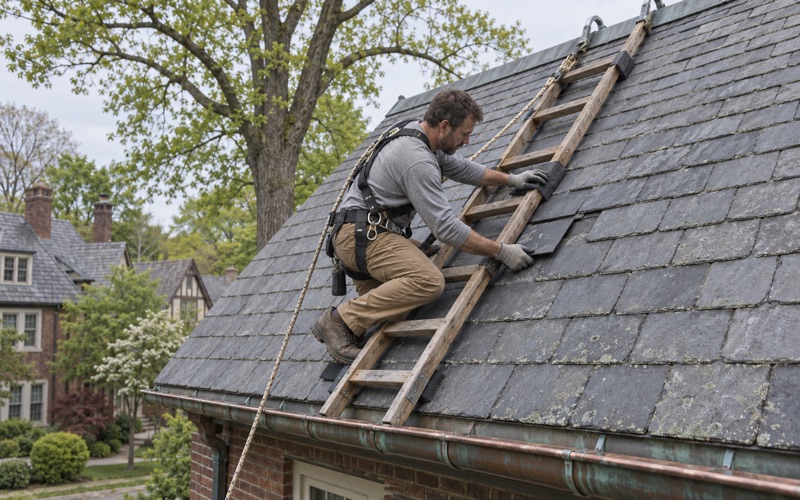
On a prewar house, a repair should look like it belongs. Where slate or another older material is still on the roof, we repair it with matching material when it can be sourced. On slate, replacement pieces go in with slate hooks, not a patch made from whatever happens to be on the truck.
When an older roof is past repair and replacement makes sense, shingle color gets chosen against the actual house. We hold samples up against the brick, stone or siding on site, which matters on older streets where a new roof that clashes stands out for decades.
Older houses also tend to have been reroofed more than once. When we strip a prewar roof, we are prepared to find earlier layers and sometimes board sheathing instead of plywood, and the written scope accounts for that possibility up front rather than surprising the owner mid-job.
Bellevue Avenue’s Older Homes
Bellevue Avenue carries some of the town’s documented history. The William L. Black House at 458 Bellevue Avenue, built around 1884, was added to the National Register of Historic Places in 1993, and a survey of the Bellevue Avenue Historic District is among the sources used by the town’s Historic Preservation Commission.
Whether that commission reviews roofing work is a question for the town, so if your house is on Bellevue Avenue or in the historic business district, ask before choosing materials. The commission meets the fourth Wednesday of each month at 7:00 p.m. at Town Hall, 100 Central Avenue, and we will plan the work around whatever answer you get.
- 20+ Years on Local Roofs
- Repair-First Advice
- Itemized Written Scopes