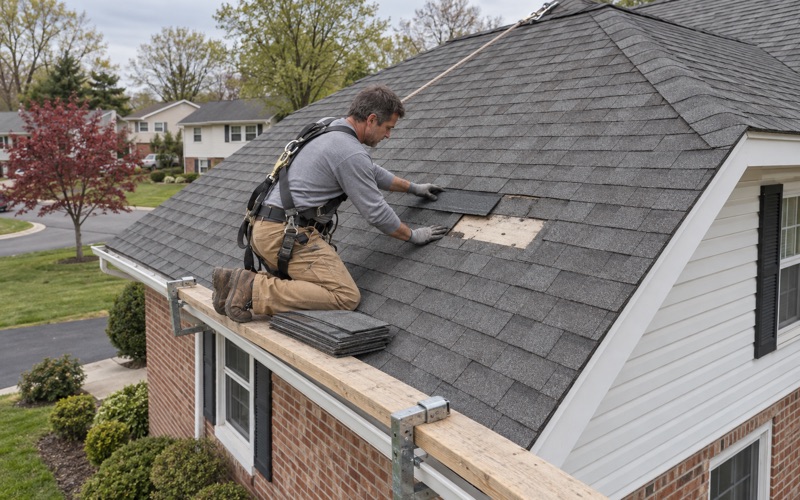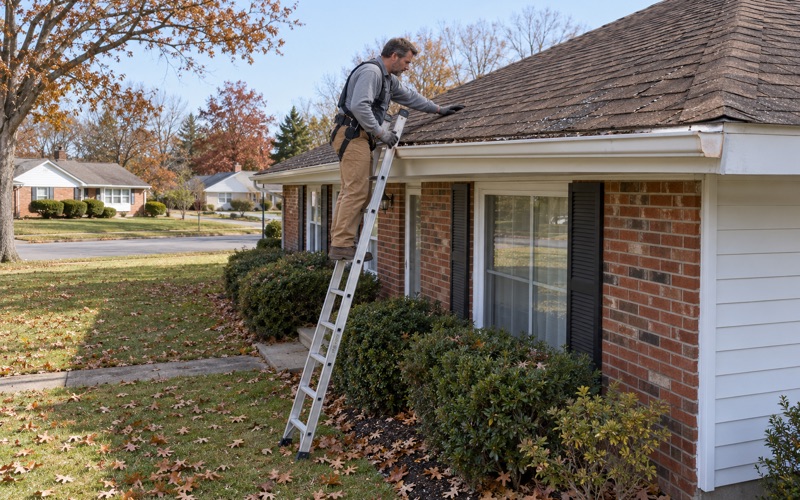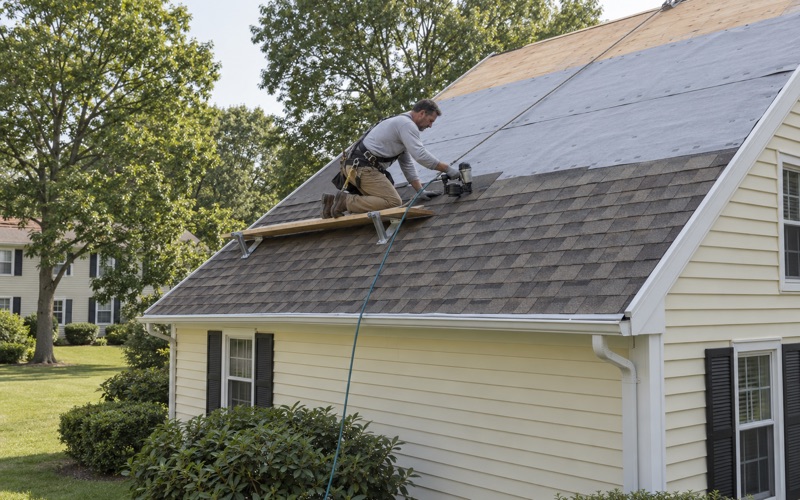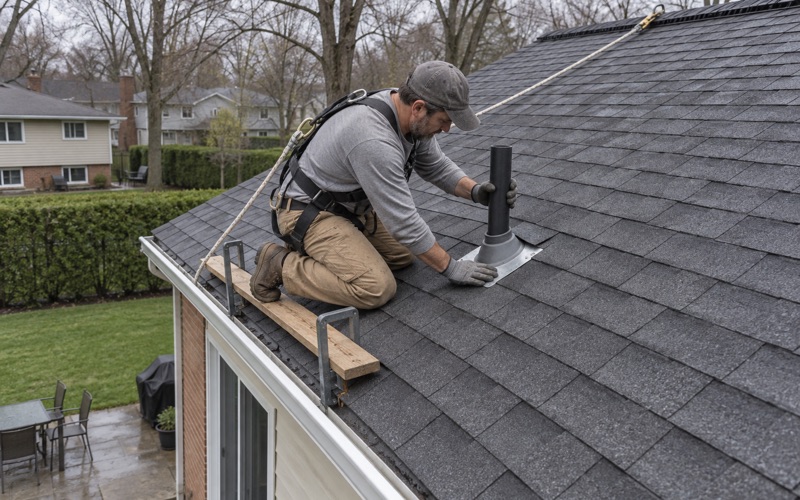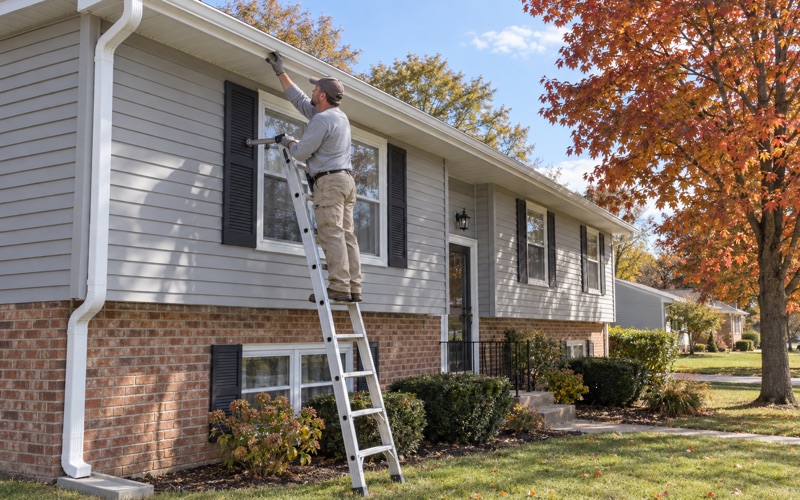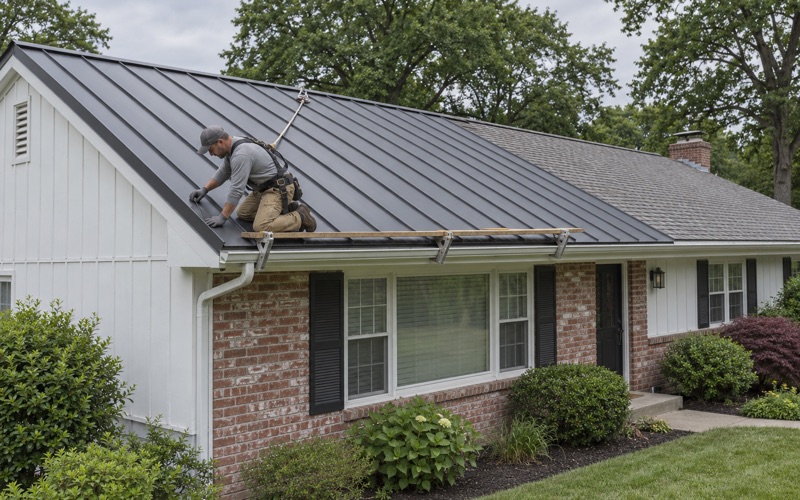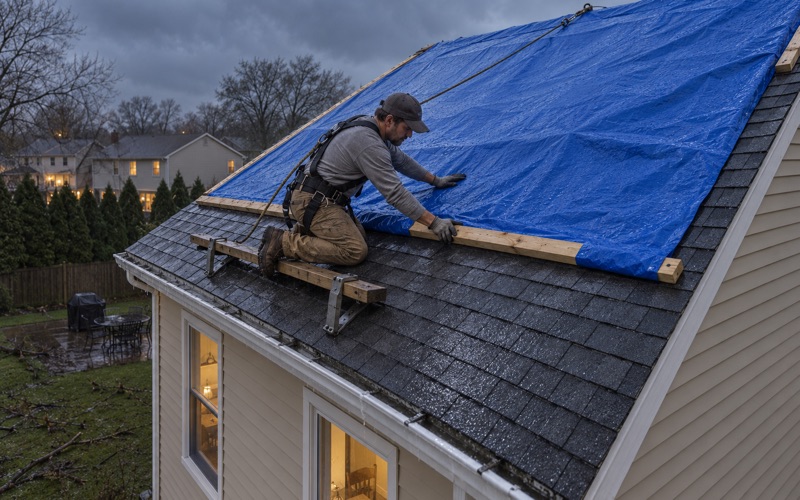
Cherry Hill Roofing has spent more than 20 years on roofing in Haddonfield and the towns around it, and on a good share of these houses the first question is not which shingle to buy. It is whether the roof can stay as it is with careful repair, and if it cannot, what the replacement is allowed to look like.
That order suits the way we already work. We give a straight answer on whether a roof can be repaired before replacement ever comes up, and on a leak we look in the attic as well as on the roof, so the water is traced to the spot where it actually gets in before anything is priced.
When a replacement is the honest answer, the scope we write breaks out tear-off, decking, underlayment, flashing, ventilation and gutters as separate lines. That matters more here than in most places, because the same document is what you will be explaining to a design review before any work starts.
Roofing in Haddonfield’s Historic District
Haddonfield is a borough in Camden County, and part of the borough sits inside a locally regulated historic district. The Haddonfield Historic District was listed on the National Register of Historic Places in 1982, and in 1971 the borough became the second New Jersey municipality after Cape May to establish a historic preservation district.
A design decision before a construction job
The borough’s own Historic Preservation Commission FAQ is direct about it: “roofing, siding or any alteration to the exterior appearance of the structure requires a Certificate of Appropriateness.” On a house inside the district, the look of a new roof is reviewed before a single bundle is delivered.
This applies to houses in the Historic District, not to every address in town. Owners in the district receive an annual letter reminding them their home is inside it, and the district boundaries are set in Chapter 135, Land Development, of the borough code. If you are unsure, that letter and the borough are the places to check before you plan the job.
What the housing stock looks like
The numbers explain why so much roofing here involves original materials. Of Haddonfield’s 4,470 housing units in the Census Bureau’s 2024 five-year survey, 2,238 were built in 1939 or earlier, which is 50.1 percent. About 80.8 percent are detached houses.
That means a large share of the roofs we look at sit on houses with decades of history in their framing, flashing and gutters. It also means slate, metal and built-in gutter systems turn up far more often than they would on a newer street.
Repair comes first in the guidelines
The commission’s Design Guidelines, dated December 28, 2011, put “Repair, not replacement” at the top of the list for historic roofs, along with continued use of the original roofing material. Changing a roof away from the material originally used on the building is listed as not recommended.
We agree with that order on the merits, not just because the guidelines say so. A sound slate or metal roof with a failed flashing detail or a few broken pieces is usually a repair, and we will tell you so before anyone talks about tearing it off.
Looking for roofing closer to Haddon? See Roofing Services in Haddon.
The Certificate of Appropriateness, Step by Step
The path is set by the borough, not by us, and it runs through three offices. Knowing who looks at what helps you prepare a cleaner application and avoid surprises once a roofing date is on the calendar.
Who reviews a roofing application
The application goes to the Construction and Zoning Office in Room 104 of Borough Hall. The Historic Preservation Commission then carries out the design review, and the Planning Board gives final approval before work begins. The FAQ also notes that the commission’s chairperson may decide a proposed job does not need full-commission review.
Roofing applications do reach the commission. Its 2025 docket lists a roofing application on Kings Highway East, dated June 11, 2025, so this is a working process rather than a rule on paper. We have no view into how any particular application was decided, and we do not predict outcomes.
How the state code fits alongside it
Under New Jersey’s construction code, replacing the roof covering on a detached one- or two-family house is ordinary maintenance under N.J.A.C. 5:23-2.7, and no construction permit is needed for it. People sometimes take that to mean nothing needs approval at all.
Inside the district, the Certificate of Appropriateness is a separate, local design approval, and the state maintenance rule does not remove it. The two answer different questions: one is about construction, the other is about how the house looks from the street.
What we hand you for the application
You or your representative file and present the application; we do not file it, attend the meetings or speak for the outcome. What we provide is the material a reviewer tends to ask about: a written scope with each item on its own line, the product or material proposed, and photographs of the existing roof and its details.
Our contracts follow New Jersey’s home improvement rules, including the cancellation notice, and we schedule only after you have the approval you need. That keeps a crew from showing up for a job that cannot yet start.
Once a date is set, we watch the National Weather Service forecast for zone NJZ018, Camden, issued by the Mount Holly office, which is the zone Haddonfield falls in. A historic roof opened for a tear-off should not be caught by rain, so the forecast decides the start day rather than the calendar alone.
Slate, and What the Commission Accepts in Its Place
Slate is where owners worry most, and where the guidelines are more flexible than many people expect. The commission is concerned with how the roof reads, so color, pattern and the original material carry most of the weight.
Replacement in kind is not required
The guidelines say it plainly: “due to the high cost of repair as well as replacement, the HPC does not require replacement in kind.” A worn-out slate roof does not automatically mean a new natural slate roof.
What the guidelines do ask is that the “color and pattern of replacement should duplicate the original closely as possible.” They add that “the new roof must duplicate any decorative patterns in the original house,” so a banded or patterned slate roof needs a replacement that carries the same pattern.
When a slate roof does come off, the boards beneath it have often carried that weight for generations. Any damaged decking we find is photographed and shown to you before it is replaced, at a per-sheet price already set in the contract, so the tear-off does not turn into an open-ended bill.
Substitute materials and how we approach them
Artificial slate and shingles are addressed directly: substitute materials “should be physically and visually compatible” with the building. In practice that means looking at the product beside the house, not in a brochure, and matching scale, texture and color as closely as the material allows.
We choose color with samples held up against the brick, stone or siding on the actual house. On a historic roof that step is not cosmetic; it is part of showing the replacement duplicates the original.
Repairing slate with matching material
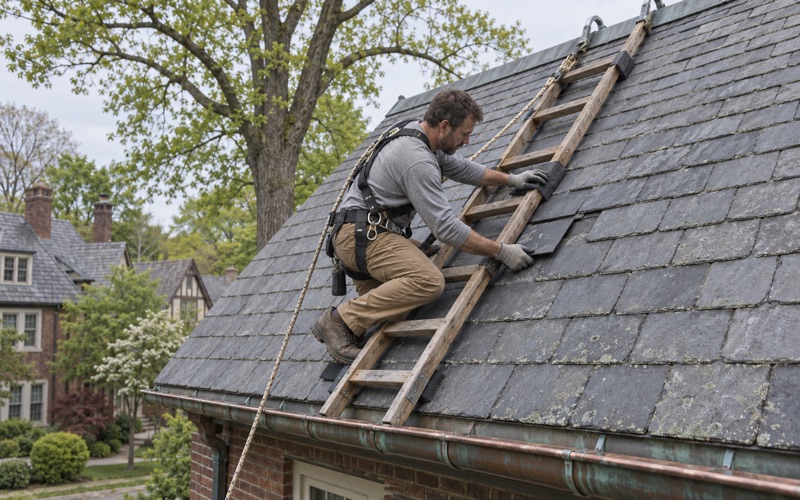
When a slate roof can be saved, we repair it with matching slate where it can be sourced, set with slate hooks, rather than patching with whatever happens to be on the truck. Mismatched pieces are exactly the kind of change a design review notices.
Slates cracked or blown loose in a storm get the same care. We photograph the damage and write it up for your own insurance claim, and when you ask, a member of our crew will meet the adjuster on site to walk the roof with them.
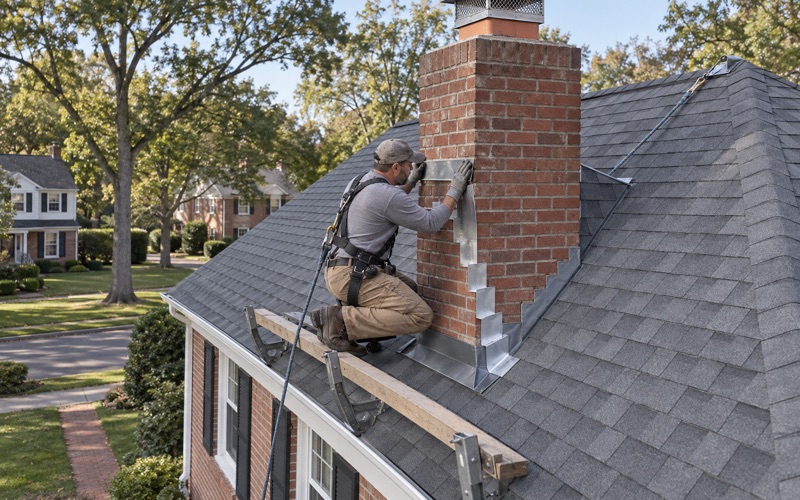
Flashing at chimneys, walls and where two roofs meet is often what fails first on these roofs. When a roof is redone, we replace that flashing with step flashing and counter flashing rather than caulking over the old metal.
Metal, Flat Roofs, Gutters and Solar Under the Guidelines
The same section of the guidelines covers the other materials found on Haddonfield’s historic houses. Each one has its own rule, and each can change the scope and the cost of a job.
Standing seam color and profile
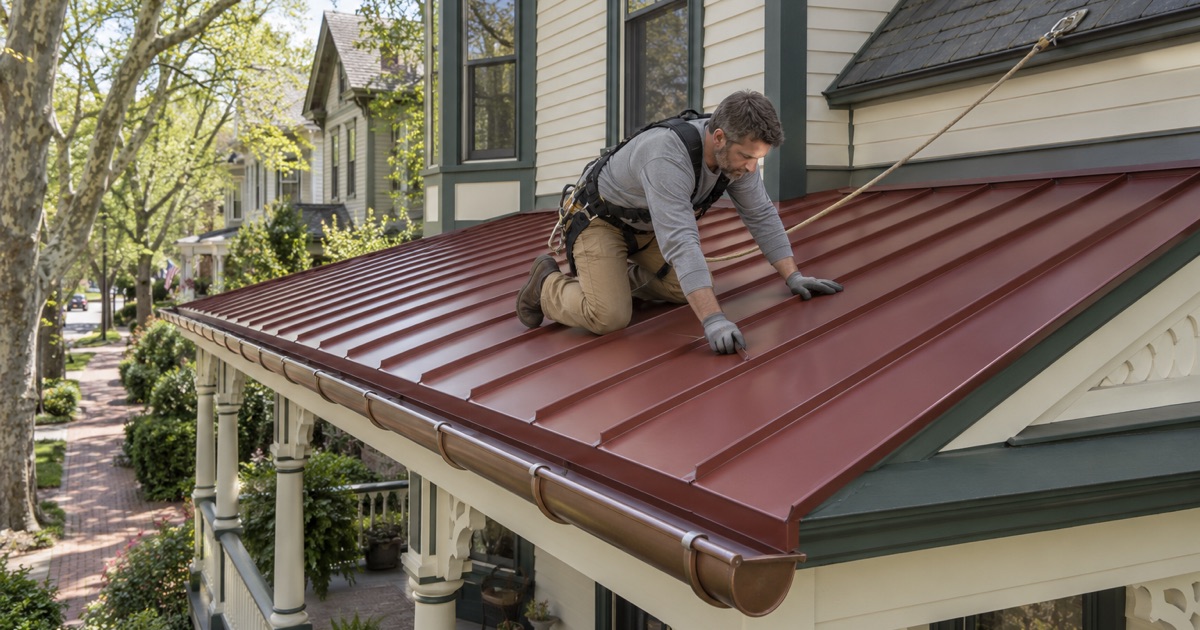
Standing seam tin roofs “must duplicate the traditional colors found in Haddonfield’s historic roofs: dark red, black, silver or dark green.” The guidelines also call for narrow ribs and battens rather than wide ones, so a modern wide-pan panel is a poor fit.
Where a clay or terracotta roof exists, the guidelines call for repair with in-kind replacement of deteriorated elements. That is a sourcing question we raise early, before a price is set.
The same caution applies to the edges of a metal roof. Where a standing seam roof meets a wall or chimney, we look at how the original flashing was formed before proposing new work, because a modern detail that changes the profile at the edge is visible from the street.
Flat roofs out of view
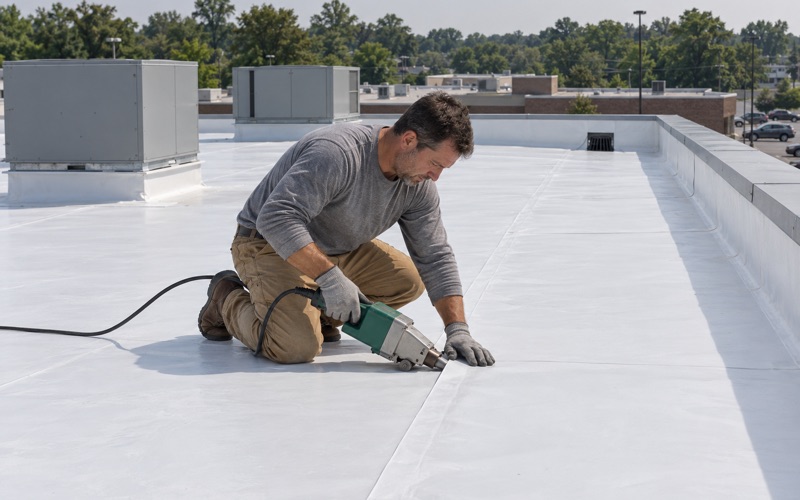
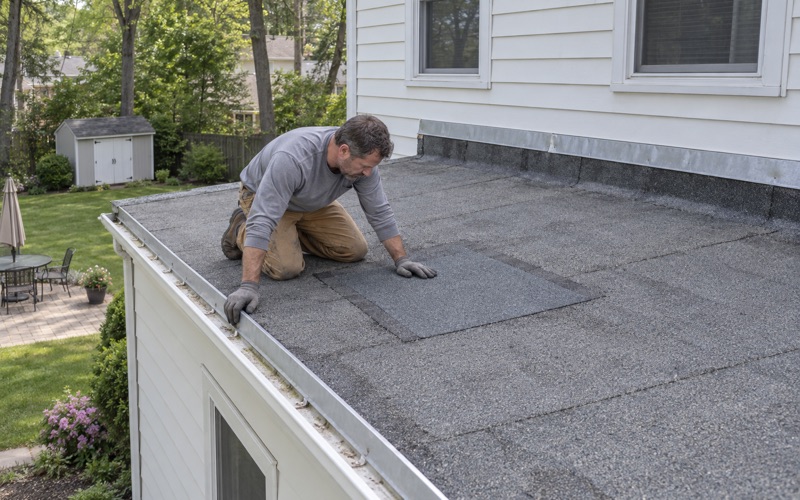
Flat roofs that are not visible may use rolled rubber or elastomeric systems, according to the guidelines. That opens the door to EPDM rubber membrane on a hidden rear section, while the visible slopes keep their historic material.
We confirm what can be seen from the street before proposing a membrane. A low-slope porch roof in plain view is a different conversation from a flat roof hidden behind a parapet.
Gutters and leaders
Original gutters, downspouts and built-in gutters are to be repaired rather than replaced where possible. New gutters should be half-round or quarter-round; modern K gutters are not recommended, and neither is adding gutters to the front elevation.
The guidelines also recommend inspecting the roof, flashing, gutters and downspouts twice a year. On a built-in gutter, that habit catches a lining failure before water reaches the cornice.
Solar panels on a historic roof
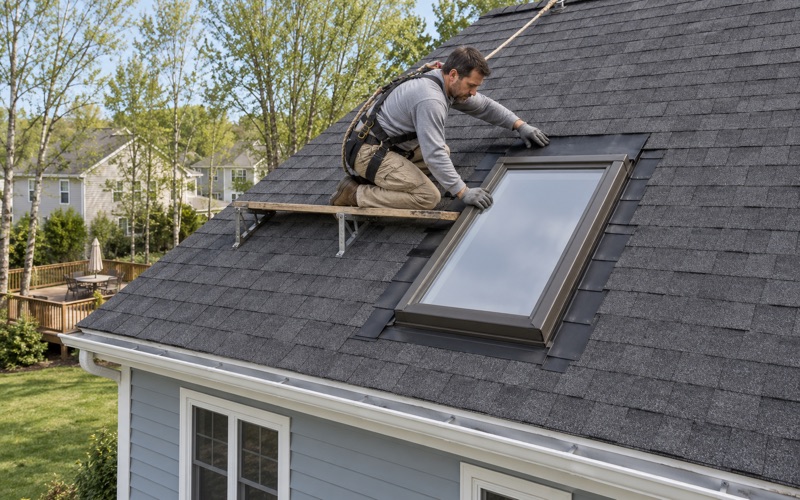
Panels belong in the least visible location, at the rear-most slope where possible, mounted parallel to the roof pitch and kept off steep front-facing gables. Applicants are asked for sightline diagrams from the public right of way.
When a roof under existing panels needs work, we plan the panel removal and reinstall into the schedule from the start. At the end of each work day the yard, driveway and gutters are cleaned, including a magnet sweep for roofing nails.
- 20+ Years on Local Roofs
- Repair-First Advice
- Itemized Written Scopes