
Cherry Hill Roofing provides gutter installation in Cherry Hill, NJ, serving surrounding cities including Haddonfield, Haddon, Collingswood, Bellmawr and Gloucester City. In more than 20 years as roofers, we have seen how many roof problems are really water problems at the edge of the roof, which is why we treat gutters as part of the roofing system rather than an afterthought.
A gutter’s job sounds simple: catch the water coming off the roof and carry it away from the house. When gutters are undersized, pitched wrong or hung too low to catch the runoff, that water rots the fascia, stains the siding, erodes the beds and ends up against the foundation.
We install seamless aluminum gutters and leaders sized to the roof above them, tie them into a properly installed drip edge, and carry the downspouts far enough from the house to keep basements dry. Rotted fascia found along the way is replaced before the new gutters go up.
Residential Gutter Installation
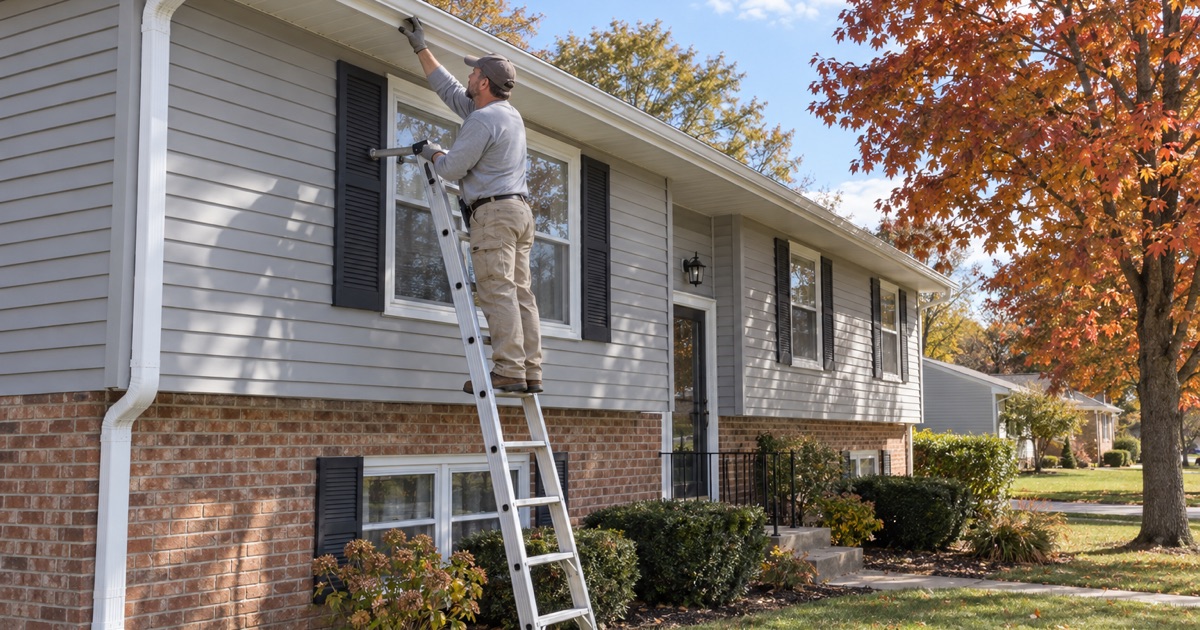
Seamless Aluminum Gutters
Seamless gutters are formed in continuous lengths that run from corner to corner, with joints only at the corners and outlets. Without a seam every few feet, there are far fewer places for sealant to fail and water to drip behind the gutter.
Aluminum is light, does not rust, and holds a baked-on finish for many years. It is available in a wide range of colors, so the gutters can blend with the trim or match the fascia, and it is easy to repair if a ladder or a falling limb dents a section.
Sizing Gutters and Leaders to the Roof
The right gutter size depends on how much roof area drains into it and how steep that roof is. A steep main roof sheds water fast, and a valley can pour the water from two roof planes into one short stretch of gutter.
We size each run for the roof above it and place leaders so no single downspout carries more than it can handle. On long runs or large roof sections, adding a downspout is often cheaper and more effective than oversizing the whole system.
Pitch, Hangers and Fastening
Gutters need a slight, steady slope toward the outlets so water drains instead of standing. Too little pitch leaves water sitting in the trough, where it freezes in winter and breeds mosquitoes in summer, while too much pitch looks crooked from the street.
We fasten gutters with hidden hangers screwed into the fascia and rafter tails, spaced closely enough to carry the weight of water, ice and wet leaves. Old spike-and-ferrule gutters tend to pull loose over time, and replacing them with modern hangers is one of the most common fixes we make.
Half-Round Gutters for Older and Historic Houses
Many older houses in the area were built with half-round gutters, and on those houses a modern K-style profile can look out of place. Half-round gutters with round leaders suit colonial, Victorian and early twentieth-century homes.
In some places it is more than a matter of taste. In Haddonfield’s Historic District, the Historic Preservation Commission’s design guidelines favor half-round or quarter-round gutters and do not recommend modern K gutters or new gutters on the front elevation. We match the profile to the house and any local guidelines that apply.
Gutter Guards
Houses under oaks, maples or pines can fill gutters several times a year. Gutter guards reduce how often the troughs need cleaning and keep downspouts from clogging, which is when gutters overflow and send water behind the fascia.
We recommend guards suited to the trees around your house, since fine needles and seed pods behave differently from broad leaves. No guard makes gutters maintenance-free, and we tell you what upkeep to expect with the type you choose.
Commercial Gutter and Drainage Work
Commercial Gutters, Scuppers and Downspouts
Small commercial buildings often carry more water per gutter than a house, because large roof areas drain to a few edges. They may need larger gutters, oversized downspouts, or scuppers that carry water through a parapet wall.
We size commercial drainage for the roof area it serves and fasten it to handle heavy loads. Where scuppers feed collector boxes and downspouts, the connections are sealed and secured so water stays in the system during a downpour.
Flat Roof Drainage Tie-In
On a flat or low-slope roof, gutters and scuppers only work if water reaches them. Ponding near the edge often means the roof slope, a clogged scupper or a misplaced outlet is holding water back.
When we install commercial gutters, we check how the roof drains to them and correct the edge details, so the membrane, edge metal and gutters work as one system rather than three separate ones.
Gutters and the Roof Edge
Drip Edge and Fascia
Drip edge is the metal strip at the edge of the roof that directs water off the shingles and into the gutter. Without it, water can curl back under the shingle edge and run down behind the gutter, rotting the fascia board and the end of the roof deck.
Before new gutters go up, we check the drip edge and replace any soft fascia. Hanging new gutters on rotted wood means they will pull loose within a few seasons, taking the fascia with them.
Downspout Discharge and Foundations
The water a roof sheds in a heavy storm has to go somewhere. Downspouts that end at the foundation dump that water where it can soak into the basement walls and wash out planting beds.
We extend downspouts to discharge well away from the house, onto ground that slopes away, or connect them to underground drain lines where they exist. That simple change often solves basement dampness that homeowners blame on the roof.
Gutters in Winter
Gutters full of leaves in late fall hold water that freezes into solid ice. The weight pulls gutters loose and can contribute to ice dams that push water back under the shingles at the eaves.
Well-pitched, clean gutters and an ice and water barrier along the eaves reduce that risk. We also check the attic for the ventilation and air leaks that cause ice dams in the first place, since gutters alone cannot prevent them.
Our Step-by-Step Gutter Installation Process
Step 1: Measure and Plan the Runs
We measure every roof edge, note where valleys and steep sections concentrate water, and plan outlet and downspout locations. The plan also accounts for walkways, driveways and patios, so downspouts do not discharge where people walk.
We also walk the ground below each planned outlet. Where the yard slopes back toward the house, a longer extension or an underground line is written into the estimate, so the water the new gutters collect is not simply delivered to the foundation in one spot.
Step 2: Remove Old Gutters and Repair the Fascia
Old gutters come down carefully to avoid damaging the roof edge. We inspect the fascia and drip edge and replace any rotted wood or damaged metal before new gutters are hung.
Rotted fascia is common behind gutters that have overflowed for years, and it is easy to miss until the old trough comes off. We show you any soft boards before replacing them, so the extra work and its cost are agreed rather than added quietly to the bill.
Step 3: Install Seamless Gutters and Leaders
New gutters are cut to fit each run, fastened with hidden hangers at the right pitch, and sealed at the corners and outlets. Leaders are attached securely to the wall and fitted with extensions or tied into drain lines.
At inside corners below valleys, where water arrives fastest, we add a diverter or a larger outlet so the gutter does not overshoot in a heavy storm. Guards, if you chose them, are fitted last and checked to make sure they sit under the drip edge rather than lifting the shingles.
Step 4: Test and Clean Up
We run water through the system to confirm it drains to every outlet without standing or leaking. The work area is cleaned, old gutters are hauled away, and the lawn is swept for fasteners and debris before we leave.
- 20+ Years on Local Roofs
- Repair-First Advice
- Itemized Written Scopes