Cherry Hill Roofing brings more than 20 years in business to roofing in Gloucester City, and the work here starts with one practical question: does your roof stand alone, or does it share an edge with the house next door? The answer changes how we inspect, how we price and how we finish the job.
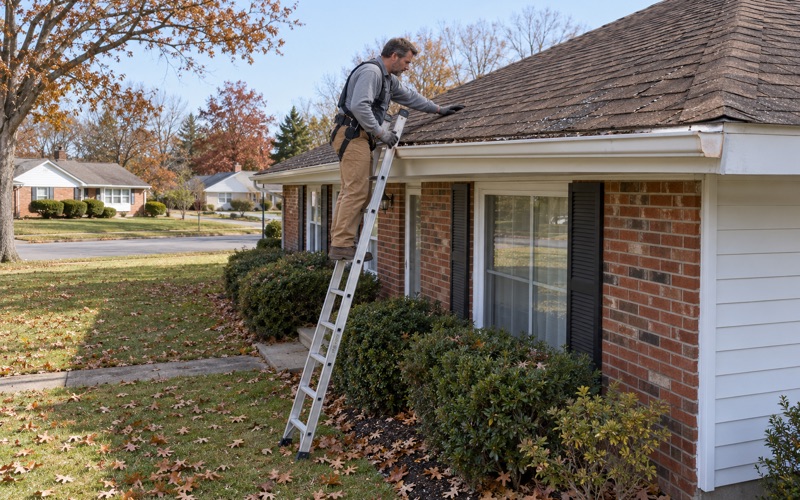
A leak call begins with two views of the problem, one from the roof surface and one from inside the attic, because water on a ceiling is rarely directly below the spot where it got in. Once we know the real entry point, we tell you plainly whether a repair will hold before anyone mentions a new roof.
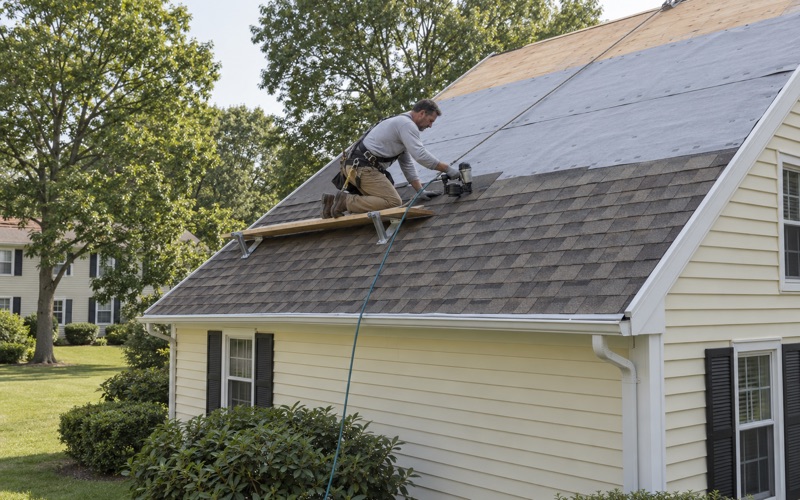
When replacement is the right call, the estimate arrives as a written scope with tear-off, decking, underlayment, flashing, ventilation and gutters on separate lines. That format lets you set our number beside any other contractor’s and compare them item by item, which matters most on attached homes where the edges carry extra work.
Gloucester City’s Row Houses and the Roofs They Share
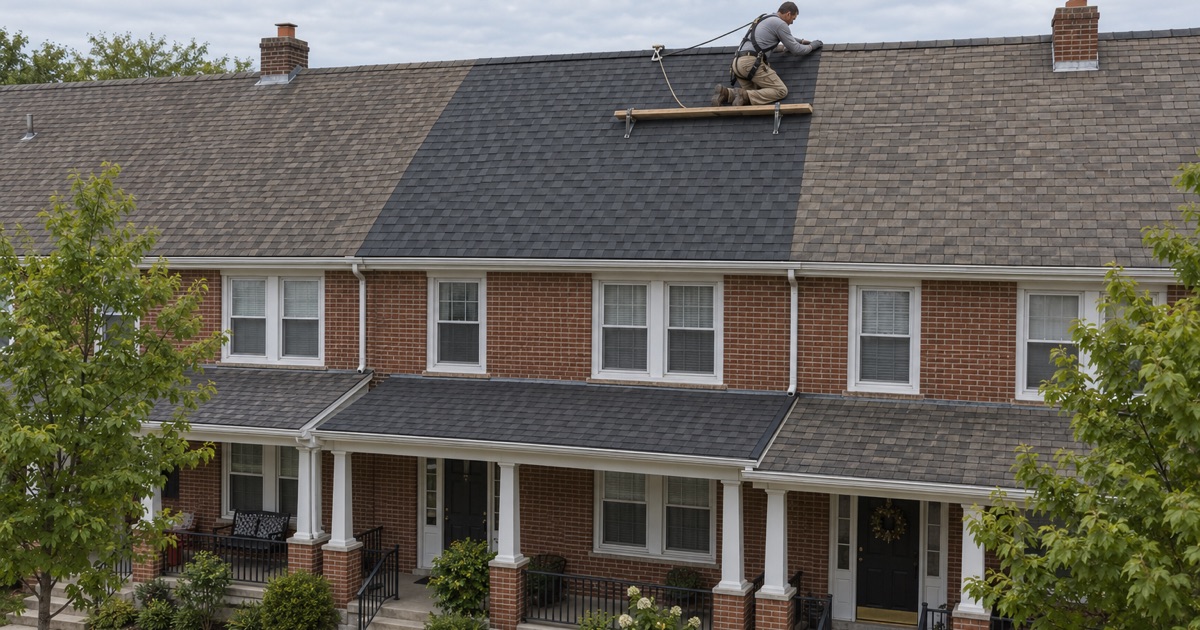
Gloucester City is not a city of freestanding houses alone. The Census Bureau’s 2024 five-year survey counts 1,469 one-unit attached houses among its 4,450 housing units, or 33.0 percent, against 1,896 detached houses, and 754 of those attached homes are owner-occupied. That is a large share of roofs that do not end at the owner’s property line.
Where the Attached Houses Are
A local neighborhood guide sums up the layout as row houses to the west and single-family homes to the east. We treat that as a starting point rather than a rule, because a broad summary never describes every block. The first thing we confirm on a visit is simply which kind of house we are standing on.
Owner-occupied row homes and rented ones raise different questions. An owner living in the house usually wants the longest-lasting fix, while a landlord with tenants inside may need the work scheduled around occupied rooms below. Either way, the roof is attached to someone else’s, and the plan has to account for that.
One Roofline Across Several Houses
On an attached house, the roof surface typically runs straight across the party wall and continues onto the neighbor’s roof. From the street a row can look like one long roof, even though each section belongs to a different owner. There is no gap to work within, so any change at one end reaches the edge of the next house.
That shared line is also where trouble tends to collect. Where two sections meet, materials of different ages and types often butt against each other, and an old seam can open long before either field of roofing has worn out. When we trace a leak on a row house, the party wall line is one of the first places we look from the attic side.
Talking With the Neighbors First
Because the roofs connect, we suggest you speak with the owners on either side before work begins. They do not have to be doing anything to their own roof, but they should know a crew will be working at the shared edge, and they may want to look at the condition of their side while it is exposed.
Sometimes two or three neighbors decide to redo their sections together, which removes a tie-in between them and avoids leaving a fresh roof butted against a failing one. We are glad to write separate scopes for each owner on a shared job, so every household signs for its own section and nothing is blended into one number.
Looking for roofing closer to Cinnaminson? See Cinnaminson Roofing.
Tying a New Roof Into the House Next Door
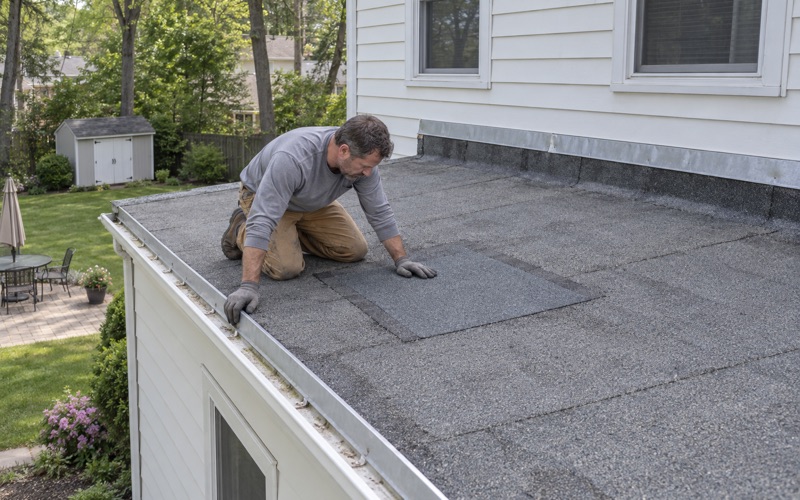
The tie-in is the part of a row house job that separates a lasting roof from one that leaks at both ends. A new roof on an attached home has to meet the neighbor’s roof on one side, and often on both, with a joint that sheds water across a line neither owner fully controls.
Opening the Edge Carefully
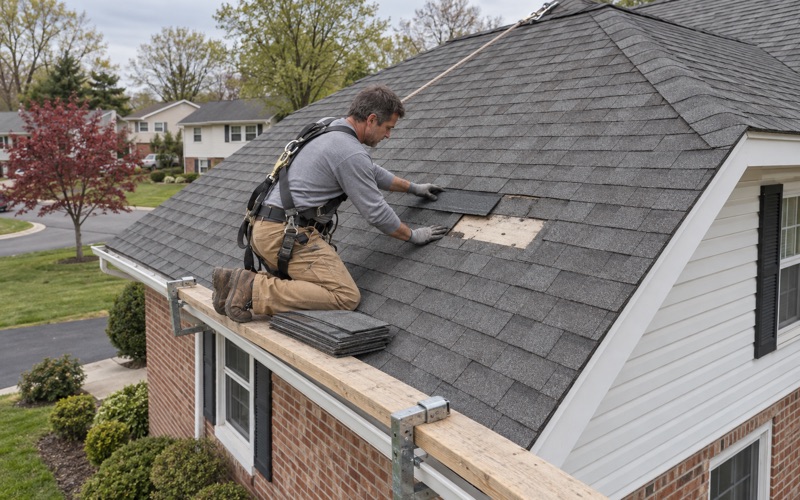
We cut the old roofing back along the party wall line in a controlled strip rather than tearing up to the neighbor’s side and hoping. That leaves their roof undisturbed while exposing enough of the joint to see what was done there before, and whether the decking at the edge is sound. Nothing on the adjoining section is removed without that owner’s agreement.
If the decking under that edge is rotted, we photograph it and show it to you before a single sheet is replaced. The per-sheet price is already written into the contract, so a soft spot at the party wall is a known cost rather than a surprise added at the end of the day.
Sealing the Joint Between Two Roofs
Where the new roof meets the old one, we build the joint from the deck up instead of trusting a bead of sealant. A self-adhering ice and water barrier meeting ASTM D1970 goes down across the seam first, lapped onto sound material, and the new roofing is then worked over it so water runs off rather than into the line.
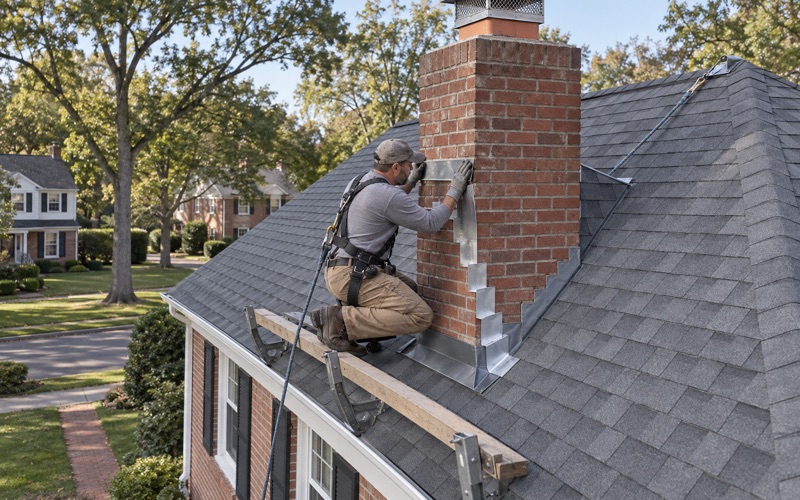
Flashing is part of the same rule. Where a row house roof meets a raised parapet, a chimney stack on the shared wall or the neighbor’s higher section, the old metal comes out and new flashing goes in, rather than a fresh coat of caulk over pieces that have already failed once.
Matching the Look Across the Row
A row reads as one building from the sidewalk, so color matters more here than on a freestanding house. We hold material samples up against the actual brick or siding and next to the neighbor’s roof, so the new section sits comfortably in the row instead of standing out as a patch.
Cleanup matters more on a tight block as well. Debris has nowhere to go but the sidewalk or the neighbor’s yard, so at the end of each work day we clear the yard, driveway and gutters and run a magnet sweep for nails on both sides of the line.
Older Row Homes and What Sits Under the Roofing
Age is the other half of the picture in Gloucester City. The same survey counts 2,017 housing units, or 45.3 percent, built in 1939 or earlier. Its history runs long: the town was laid out in 1689, incorporated as a city in 1868, and during World War I the Pusey & Jones yard built cargo ships, tankers and minesweepers here while New York Shipbuilding expanded into the north end.
Layers You Cannot See From the Street
A roof on a house approaching or past its hundredth year may have been redone several times, and we do not assume what is under the current surface. Until the first section comes off, nobody can say for certain how many coverings are there or what condition the boards beneath them are in.
From the attic side, an older row home often shows its history plainly: stains from leaks that were fixed and leaks that were not, boards replaced in patches, and gaps where daylight shows at the edges. We read all of that before we price anything, because it tells us which problems are live and which are old.
Repair Before Replacement on an Older Roof
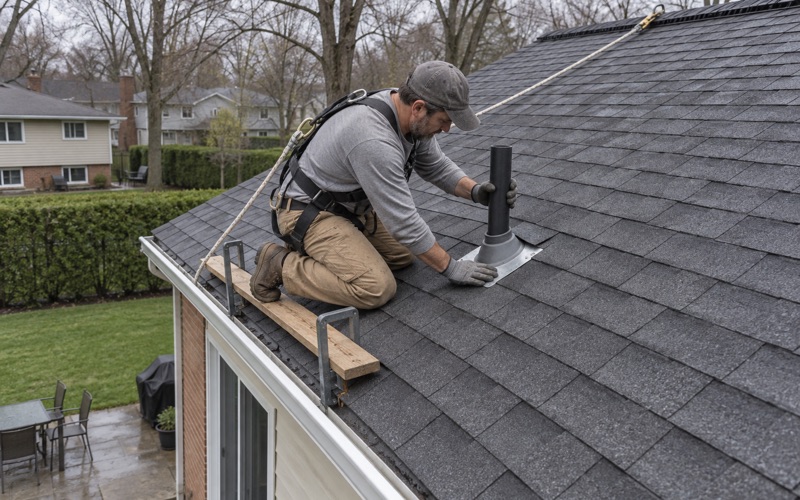
An old roof is not automatically a roof that needs replacing. Plenty of leaks on older houses come from one failed flashing, a cracked pipe boot or a single worn seam, and a targeted repair can buy years of service at a fraction of the cost. We say so when that is the case.
When a repair will not hold, we explain why in terms you can check yourself, such as soft decking you can see from the attic or a surface that has lost its granules across whole sections. The goal is a decision you understand, not one you take on faith.
Matching Original Materials
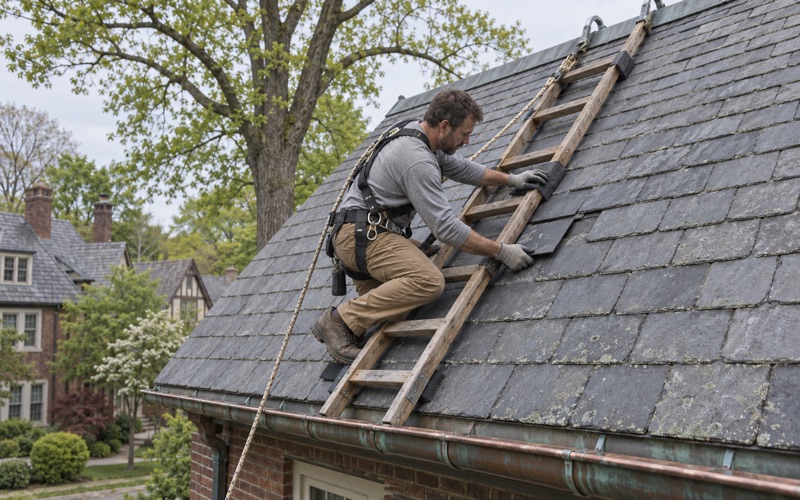
If your house still carries slate or another original material on part of the roof, we repair it with matching material wherever it can be sourced, using slate hooks and pieces sized to the existing courses. Filling a gap with whatever happens to be on the truck is how an old roof ends up as a patchwork.
Detached Houses on the East Side
Detached houses remain the largest single housing type in Gloucester City, and the local guide’s summary places more of them toward the east. A freestanding roof has no party wall to tie into, which simplifies the edges but leaves every eave, rake and valley entirely on one owner’s account.
What Changes Without a Shared Wall
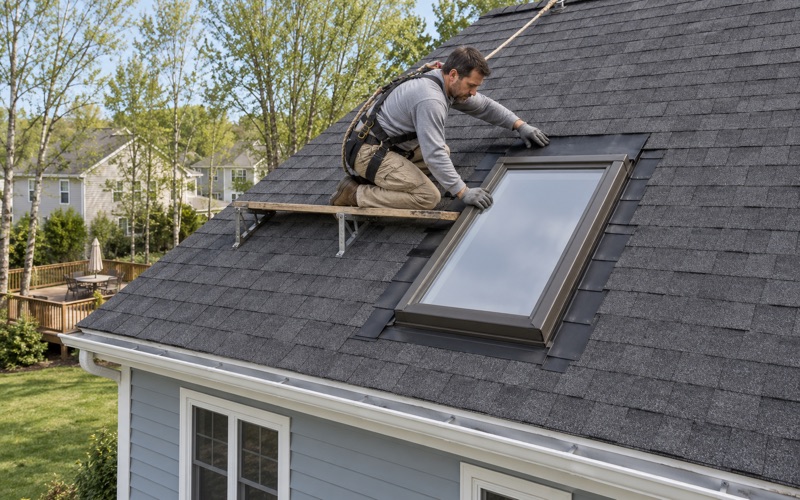
On a detached house the work looks more like a conventional re-roof: drip edge at the eaves and rakes, an ice and water barrier in the valleys and along the eaves, and ventilation balanced between soffit intake and a ridge vent where the framing allows. Each of those appears as its own line on the written scope.
With every edge exposed, a detached roof has more perimeter to keep sealed than a house in the middle of a row, so the edges deserve as much attention as the field. Where wind resistance matters to you, we can quote shingles tested to ASTM D3161 Class F or ASTM D7158 Class H and explain the difference.
Solar Panels and Scheduling
If panels sit on the roof, their removal and reinstallation go into the schedule from the start, so the panel crew and our roofers are not discovering each other on the morning of the tear-off. The same planning applies to any roof carrying panels, attached or detached, and the timing is written down before work starts.
Storm Damage and Your Claim
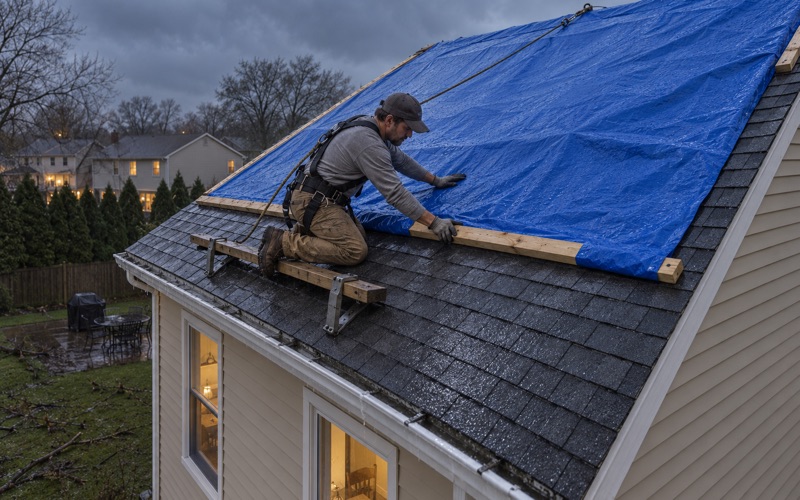
If a storm takes shingles or opens a leak, on either kind of house, we photograph the damage and write it up so you have a record for your own insurance claim. When you ask, a member of our crew will meet the adjuster at the house and walk the roof with them.
Our contracts follow New Jersey’s home improvement rules, including the notice explaining your right to cancel. That notice is part of the paperwork on every job, whether the house stands alone at the east end of town or shares a roofline with two neighbors on the west side.
- 20+ Years on Local Roofs
- Repair-First Advice
- Itemized Written Scopes