
Cherry Hill Roofing provides flat roof repair in Cherry Hill, NJ, serving surrounding cities including Haddonfield, Haddon, Collingswood, Bellmawr and Gloucester City. Over more than 20 years, we have repaired the flat and low-slope roofs that sit over rear additions, enclosed porches, dormers, garages and the back sections of twins and rowhouses throughout the area.
Flat roofs on houses rarely get attention until they leak. They are hard to see from the ground, water does not run off them quickly, and many were built with whatever material was cheapest at the time. The result is a roof that can look fine from the yard while water sits on it for days after every rain.
We repair those roofs with materials that match the membrane already there, fix the drainage problems that cause most failures, and tell you plainly when the membrane has reached the end of its life. A well-made repair can give a flat roof years more service, but only if the cause is addressed along with the leak.
Flat Roofs on Local Houses
Rowhouse and Twin Rear Roofs
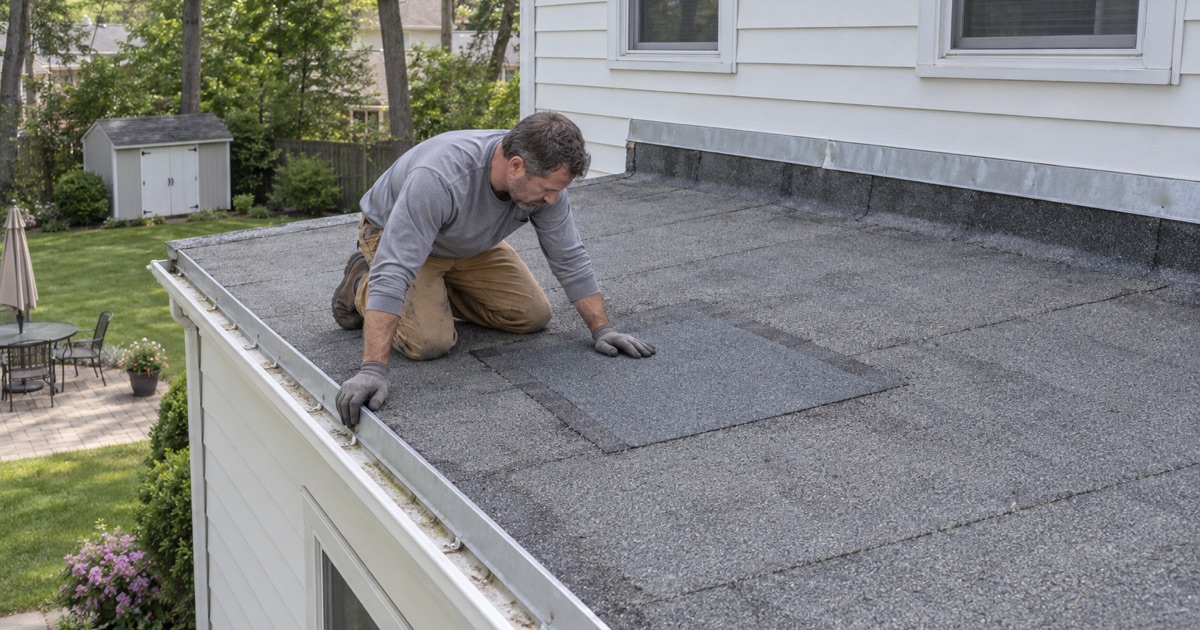
Many twins and rowhouses have a flat or nearly flat roof over the rear section of the house, often sharing a parapet or wall with the house next door. Water drains to the back toward a gutter or scupper, and any low spot along the way collects it.
The joints with neighboring roofs are a frequent leak source. Repairing them means tying new material into the old roof on both sides of the line without creating a seam that sends water into either house, and we talk with the neighbor where that helps.
Porch and Addition Roofs
Porch roofs and one-story rear additions often have just enough slope to drain, but not enough for shingles. Many carry rolled roofing, which lasts far less time than a true membrane, or older built-up tar and gravel that has dried out.
The weakest point on these roofs is usually where the low roof meets the wall of the house. That joint needs flashing tucked under the siding or set into the masonry, and when it fails, water runs into the wall as well as the porch ceiling.
Dormers, Garages and Low Sections
Shed dormers, garage roofs and small low-slope sections between larger roofs collect water from the roofs around them. A dormer roof under a steep main roof can receive a heavy stream during a storm.
We look at where water arrives on these small roofs and add diverters, larger outlets or edge metal as needed. On historic houses, low roofs that are not visible from the street may use rubber or elastomeric systems; Haddonfield’s design guidelines, for example, allow rolled rubber or elastomeric materials on flat roofs that are not visible.
Common Flat Roof Failures
Ponding Water
Ponding is the root of most flat roof trouble. Water that stands after rain finds any weak seam, adds weight to the deck, and speeds up the aging of the membrane under it.
We look for the cause: a clogged scupper or gutter, a deck that has sagged, or a roof built without enough slope. The fix may be as simple as clearing an outlet or as involved as adding tapered insulation during a membrane replacement.
Blisters, Cracks and Alligatoring
On modified bitumen and older built-up roofs, trapped moisture forms blisters, and sun exposure dries the surface until it cracks into a pattern that looks like alligator skin. Small blisters may not leak, but cracked areas eventually let water through.
We cut out and patch failed blisters, repair cracked areas with compatible material, and tell you when the surface has deteriorated so widely that patching is no longer good value.
Flashing at Walls and Parapets
Where a flat roof meets a wall, a chimney or a parapet, the membrane has to turn up and be covered by flashing or counter flashing. These joints move with the seasons and are where many flat roof leaks begin.
We rebuild failed flashing with properly lapped membrane and metal, set counter flashing into the wall where the material allows, and replace coping or cap flashing that has loosened at the top of parapets.
Open Seams and Punctures
On EPDM, seams are held by adhesive and tape that can let go with age. On any membrane, foot traffic, furniture and fallen branches cause punctures that may be hard to spot from above.
We clean and prepare the area, then patch or reseal with material compatible with the existing membrane. On EPDM that means rubber-compatible primers and tapes; on TPO and PVC, a heat-welded patch.
Repair or Replace the Flat Roof
When a Repair Is Enough
A single failed seam, a puncture or a damaged flashing detail on an otherwise sound membrane is a repair. So is a clogged outlet causing water to back up along one edge.
We check the deck for soft areas and look for signs of wet insulation before recommending a repair. If the roof underneath is dry and solid, a good repair can give it years more service.
When Replacement Makes More Sense
Widespread cracking, many old patches, wet insulation or soft decking across large areas mean a repair will only move the leak. At that point, replacing the membrane is better value.
For a house, we typically recommend EPDM, TPO or modified bitumen depending on the roof’s slope, drainage, foot traffic and visibility. We explain each option and give you a written scope with the decking, insulation and flashing work listed separately.
- 20+ Years on Local Roofs
- Repair-First Advice
- Itemized Written Scopes